



You have just brought your newborn baby home. The house is quiet, the nursery is ready, and you are watching over them as they sleep. But something catches your eye—a small bruise on their head that you cannot explain, or a bit of blood on the umbilical cord stump. A wave of panic sets in. Is this normal, or is something wrong?
For most parents, these moments turn out to be harmless. But for a very small number of babies, these can be the first warning signs of a rare and serious condition called Vitamin K Deficiency Bleeding (VKDB). Understanding what VKDB is, why it happens, and how it can be prevented is one of the most important pieces of knowledge you can have as a new parent.
This guide will explain vitamin k deficiency bleeding in clear, simple terms. We will look at why newborns are uniquely vulnerable, the different types of the condition, the symptoms to watch for, and the simple, highly effective way to prevent it. We will also look at how vitamin K deficiency can affect adults, though this is very rare. The goal is to give you the facts, calmly and clearly, so you can make informed decisions for your family’s health.
Important note: This article is for general information purposes only and is not a substitute for professional medical advice, diagnosis, or treatment. Always consult your GP, midwife, or health visitor with any questions or concerns about your baby’s health.
What Is Vitamin K Deficiency Bleeding (VKDB)?
Vitamin K is an essential nutrient that your body needs to make certain proteins that help blood to clot properly. Without enough vitamin K, the blood cannot clot effectively, which can lead to excessive bleeding. In medical terms, this is called a coagulopathy.
Vitamin K deficiency bleeding (VKDB) is the term used when this bleeding occurs due to a lack of vitamin K. It is most commonly seen in newborns and young infants, and was formerly known as Haemorrhagic Disease of the Newborn (HDN). While it can occur in adults, it is very rare in healthy individuals.
Why Are Newborns at Risk?
Newborn babies are born with very low levels of vitamin K. There are three main reasons for this:
- Poor Placental Transfer: Vitamin K does not cross the placenta very well, so babies are not able to build up a good store of it while in the womb.
- A Sterile Gut: The bacteria in our intestines that normally produce vitamin K are not yet present in a newborn’s gut.
- Low Levels in Breast Milk: While breast milk is the best food for a baby, it contains very little vitamin K. Formula milk, on the other hand, is supplemented with vitamin K.
Because of these factors, a newborn’s vitamin K levels drop rapidly in the first few days of life, leaving them vulnerable to bleeding. This is why giving a vitamin K supplement at birth is so important—it provides the baby with the vitamin K they need until they can build up their own supplies.
The Three Types of VKDB in Babies
VKDB in infants is classified into three types, based on when the bleeding occurs. Understanding these types helps doctors and parents know what to look out for.
Early VKDB
This type occurs within the first 24 hours after birth. It is usually seen in babies whose mothers took certain medications during pregnancy, such as anticonvulsants (for epilepsy) or drugs for tuberculosis, which can interfere with vitamin K metabolism.
Classic VKDB
This is the most common type and happens between day 1 and day 7 of life. The bleeding is often mild and typically occurs from the nose, mouth, gums, or the umbilical cord stump. It can also appear as easy bruising.
Late VKDB
This is the most serious form and occurs between 2 weeks and 12 weeks (and sometimes up to 6 months) of age. It is more likely to involve internal bleeding, particularly into the gut or the brain, which can cause severe, permanent disability or even death. Late VKDB is most commonly seen in exclusively breastfed babies who did not receive vitamin K at birth or who did not complete the full course of oral supplements.
The Symptoms: What to Look Out For
The symptoms of VKDB can vary depending on the severity and location of the bleeding. Because early signs can be subtle, it is important to know what to look for. You should seek medical help immediately if your baby shows any of the following signs:
- Bleeding from the umbilical cord stump, nose, mouth, or gums.
- Easy bruising, especially around the head and face.
- Blood in the stool (which may appear as black, tarry stools) or vomiting blood.
- Pale stools (poo) or dark urine.
- Jaundice (yellowing of the skin and eyes) that persists beyond the first two to three weeks of life.
- Unexplained irritability, seizures, excessive sleepiness, or repeated vomiting, which can be signs of bleeding in the brain.
Any bleeding from a previous medical intervention, such as a heel prick test, should also be checked. Remember that minor bleeds or bruising at any time in the first six months of life must be looked at urgently by a medical professional.
Prevention: The Vitamin K Injection
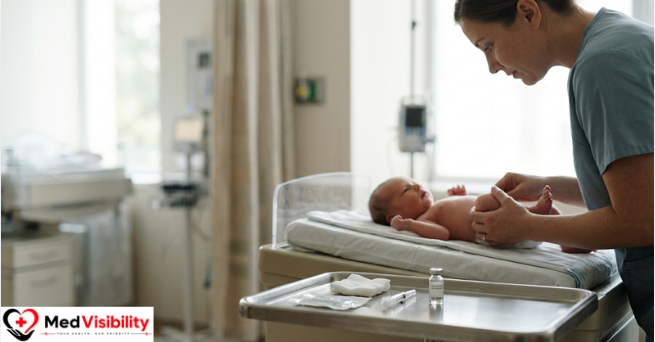
The good news is that VKDB is almost entirely preventable. The most effective and reliable method of prevention is a single intramuscular injection of vitamin K, given to the baby shortly after birth.
How It Works
The injection is given by a midwife into the muscle of the baby’s thigh. A single dose is all that is needed for healthy, full-term babies. This method is recommended by the National Institute for Health and Care Excellence (NICE) and is considered the gold standard for prevention.
The Oral Alternative
If parents prefer their baby not to have an injection, vitamin K can also be given by mouth. However, this method is not as effective as the injection because it is not absorbed as reliably, and it requires multiple doses to be given over the first few months of life.
For oral vitamin K, the schedule is:
- A first dose at birth.
- A second dose at 4 to 7 days of age.
- A third dose at 4 weeks of age for exclusively breastfed babies.
It is absolutely vital that the full course of oral vitamin K is completed. If doses are missed or vomited, the baby is not fully protected against VKDB. Babies who are premature, unwell, or have liver problems should always receive the injection, as oral vitamin K may not be suitable for them.
Safety and Side Effects
Extensive research has shown that vitamin K is safe for babies. Older studies suggested a possible link to childhood cancer, but more recent and comprehensive reviews have found no evidence of an increased risk of cancer or leukaemia from vitamin K supplementation.
The Risks of Not Having Vitamin K
Some parents worry about the vitamin K injection, but it is important to understand the risks of not having it. If a baby does not receive vitamin K, the risk of developing VKDB is real.
- Incidence: VKDB occurs in approximately 1 in 10,000 babies who do not receive vitamin K. Some sources suggest it may be as high as 1 in 8,500 full-term babies.
- Severity: While some cases are mild, VKDB can have devastating consequences. In rare cases, it can be fatal. For babies who develop VKDB, the risk of death is around 7 in 100. About 30 out of 100 babies with VKDB are left with a neurological impairment due to bleeding into the brain.
These numbers are small, but the consequences are severe. The vitamin K injection reduces the risk of VKDB by about 98%, making it a highly effective and safe intervention.
Adult Vitamin K Deficiency Bleeding
While VKDB is primarily a concern for newborns, adults can also develop vitamin K deficiency, though it is very rare in healthy individuals. In adults, vitamin K deficiency is almost always secondary to another health issue. vitamin k deficiency bleeding.
Causes in Adults
The most common causes of vitamin K deficiency in adults include:
- Malabsorption disorders: Conditions that affect the gut’s ability to absorb fat-soluble vitamins, such as cystic fibrosis, coeliac disease, ulcerative colitis, or short bowel syndrome.
- Liver disease: The liver is where clotting factors are made, and it also stores vitamin K. Liver disease can therefore disrupt this process. vitamin k deficiency bleeding.
- Medications: Certain drugs, particularly anticoagulants like warfarin, interfere with vitamin K metabolism. Long-term use of some antibiotics can also disrupt the gut bacteria that produce vitamin K. vitamin k deficiency bleeding.
- Alcoholism: Chronic alcohol misuse can lead to poor nutrition and liver damage, both of which contribute to vitamin K deficiency. vitamin k deficiency bleeding.
- Severe malnutrition: In cases of prolonged fasting or inadequate dietary intake.
Symptoms in Adults
The symptoms of vitamin K deficiency in adults are related to impaired blood clotting. They include: vitamin k deficiency bleeding.
- Easy bruising.
- Nosebleeds (epistaxis).
- Bleeding gums.
- Heavy menstrual periods (menorrhagia).
- Blood in the urine (haematuria) or stool.
- Prolonged bleeding from minor cuts.
If you are experiencing any of these symptoms, you should consult your GP for a proper evaluation. A simple blood test can check your clotting function (prothrombin time).
When to See a Doctor
For parents of newborns, you should seek urgent medical attention if your baby has any signs of bleeding, no matter how minor they seem. vitamin k deficiency bleeding.
For babies, call your GP, midwife, or take your baby to the nearest emergency department if they have: vitamin k deficiency bleeding.
- Any unexplained bruising, especially on the head or face.
- Bleeding from the umbilical cord, nose, mouth, or bottom.
- Blood in their nappy or vomit. vitamin k deficiency bleeding.
- Jaundice that is lasting beyond two weeks of age.
- Excessive sleepiness, irritability, or seizures.
For adults, you should see a GP if you experience unexplained or easy bruising, frequent nosebleeds, or any other unusual bleeding. vitamin k deficiency bleeding.
FAQs
What is Vitamin K Deficiency Bleeding (VKDB)?
VKDB is a rare but serious condition where a baby bleeds because they do not have enough vitamin K to make their blood clot properly. It occurs most often in newborns during the first few months of life and can be prevented by giving a vitamin K supplement at birth.
Why are newborns at risk of VKDB?
Babies are born with very low stores of vitamin K because it does not cross the placenta well. Their gut bacteria, which produce vitamin K, are not yet established, and breast milk contains only small amounts of the vitamin. vitamin k deficiency bleeding.
How is VKDB prevented?
The most effective prevention is a single injection of vitamin K into the baby’s thigh, given shortly after birth. An oral alternative is available, but it requires multiple doses over the first few months and is not as reliable. vitamin k deficiency bleeding.
Is the vitamin K injection safe for my baby?
Yes. Extensive research has shown that the vitamin K injection is very safe. There is no evidence of an increased risk of cancer or other serious side effects from vitamin K supplementation in newborns. vitamin k deficiency bleeding.
What are the symptoms of VKDB in a baby?
Symptoms include bleeding from the umbilical cord, nose, mouth, or bottom; easy bruising; blood in the stool or vomit; pale stools; and prolonged jaundice. In severe cases, bleeding can occur in the brain, causing seizures or excessive sleepiness. vitamin k deficiency bleeding.
Can adults get vitamin K deficiency bleeding?
Yes, but it is very rare in healthy adults. It is usually seen in people with malabsorption disorders, liver disease, or those taking certain medications like warfarin. vitamin k deficiency bleeding.
Final Thoughts
Vitamin K Deficiency Bleeding is a rare condition, but it is one that every parent should be aware of. The most important takeaway is that it is almost entirely preventable with a simple, safe, and highly effective intervention—a vitamin K injection at birth. This single dose can protect your baby from a potentially devastating bleeding disorder. vitamin k deficiency bleeding.
If you are expecting a baby, take the time to discuss vitamin K with your midwife. Make an informed decision that is right for your family, knowing that you have the facts about the risks and the benefits. For adults, remember that vitamin K deficiency is rare, but if you have any concerns about unusual bleeding or bruising, do not hesitate to speak to your GP.
Medical Disclaimer: This article is provided for general information purposes only and is not intended as medical advice, diagnosis, or treatment. Always seek the advice of your doctor or other qualified health professional with any questions you may have regarding a medical condition. Never disregard professional medical advice or delay in seeking it because of something you have read online.
For more updates visit: medvisibility.co.uk

Other Articles
5 Martin Lewis Best 1 Year Fixed Rate Bonds for Wellness





No Comment! Be the first one.