



Quick Answer
This article is for general information only and is not a substitute for professional medical advice. If you have concerns about your blood pressure or your health, please speak to a GP, pharmacist, or qualified healthcare professional.
You’ve probably heard high blood pressure symptoms uk called “the silent killer.” It’s a dramatic name, but there’s a reason for it most people with high blood pressure feel completely fine. No warning signs. No obvious clues. That’s exactly what makes it worth understanding, especially since it’s estimated that around a third of adults in the UK have it, and a large number don’t even know.
This article breaks down what high blood pressure symptoms uk actually is, what symptoms (if any) to look out for, what the numbers on a blood pressure reading mean, and when it’s time to get checked. It’s written to inform, not to diagnose if you’re worried about your own blood pressure, a GP or pharmacist is the right person to speak to.
What Is High Blood Pressure?
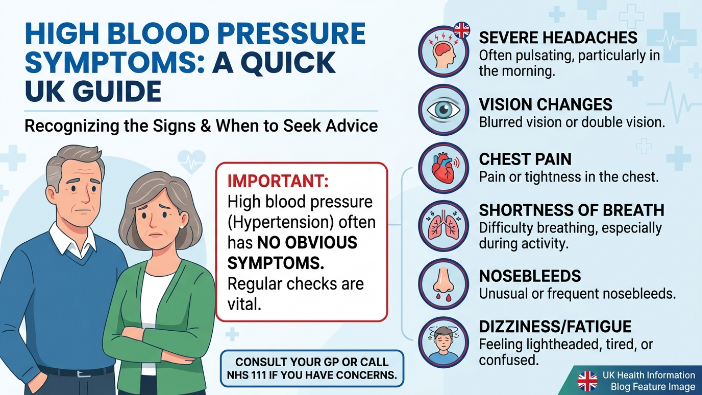
high blood pressure symptoms uk, or hypertension, happens when the force of blood pushing against your artery walls stays too high over time. Your heart has to work harder to pump blood around your body, and over months or years, that extra strain can damage your blood vessels, heart, and other organs.
In the UK, a blood pressure reading is generally considered high if it’s:
- 140/90 mmHg or higher when checked by a healthcare professional
- 135/85 mmHg or higher when measured at home
A reading has two numbers systolic (the pressure when your heart beats) over diastolic (the pressure when your heart rests between beats). So a reading of “130 over 80” means a systolic pressure of 130 and a diastolic pressure of 80.
Do High Blood Pressure Symptoms Actually Exist?
Here’s the part that surprises a lot of people: high blood pressure symptoms uk usually doesn’t cause any noticeable symptoms at all. You could have it for years without feeling any different. This is precisely why regular checks matter more than waiting to “feel” unwell.
That said, in rare cases usually when blood pressure has climbed very high — some people do notice symptoms. These can include:
- Headaches, particularly ones that keep coming back
- Blurred or disturbed vision
- Chest pain that comes and goes
- Shortness of breath
- Dizziness or feeling light-headed
- Nosebleeds (less common, but sometimes reported)
It’s worth stressing that these symptoms are not reliable indicators of high blood pressure symptoms uk on their own they can be caused by many other things too. The only accurate way to know your blood pressure is to have it measured.
High Blood Pressure Symptoms vs Normal Blood Pressure Readings
| Category | Reading (Clinic) | Reading (Home) | Typical Symptoms |
|---|---|---|---|
| Normal | Below 120/80 | Below 120/80 | None expected |
| Elevated / borderline | 120/80–139/89 | Similar range | Usually none |
| high blood pressure symptoms uk | 140/90 or higher | 135/85 or higher | Usually none; occasionally headaches, blurred vision |
| Very high (urgent) | 180/120 or higher | 180/120 or higher | Chest pain, breathlessness, severe headache, visual disturbance |
This table is a general guide, not a diagnostic tool always confirm any reading with a healthcare professional, since blood pressure naturally fluctuates and one high reading doesn’t automatically mean you have hypertension.
What Raises Your Risk of High Blood Pressure?
Several factors are linked to a higher chance of developing high blood pressure symptoms uk, including:
- Getting older
- Having close relatives with high blood pressure symptoms uk
- Being of Black African, Black Caribbean, or South Asian ethnic background
- Eating a diet high in salt
- Carrying excess weight
- Smoking
- Regularly drinking more alcohol than recommended
- Long-term stress
- Low levels of physical activity
Having one or more of these doesn’t guarantee you’ll develop high blood pressure symptoms uk but it does mean regular checks are a sensible habit, particularly from your 40s onward.
When to See a Doctor
Get your blood pressure checked at a pharmacy or GP surgery if:
- You think you might be at risk of high blood pressure symptoms uk
- You’re 40 or over and haven’t had it checked in the last 5 years
Many pharmacies in the UK offer free blood pressure checks for people aged 40 and above.
Contact NHS 111 (or use the online service) if:
- You get frequent headaches or blurred vision
- You have chest pain that comes and goes
- You have other symptoms you’re worried might be related to high blood pressure symptoms uk
Call 999 immediately if you experience:
- Sudden chest pain or pressure that doesn’t ease off
- Pain spreading to your arm, neck, jaw, back, or stomach
- Chest pain along with sweating, nausea, breathlessness, or feeling faint
These could be signs of a heart attack, which needs emergency treatment right away. Don’t drive yourself call for help.
Why It’s Called the “Silent Killer”
Left untreated, high blood pressure symptoms uk gradually puts strain on your blood vessels and organs. Over time, this raises the risk of serious conditions, including:
- Heart disease and heart attacks
- Stroke
- Heart failure
- Kidney disease
- Vascular dementia
The encouraging part is that even a small reduction in blood pressure can meaningfully lower these risks which is why early detection through regular checks matters so much more than watching for symptoms that may never appear.
Everyday Habits That May Help
None of this replaces medical treatment, but general lifestyle habits that are commonly associated with supporting healthy blood pressure include:
- Cutting back on salt try flavouring food with herbs and spices instead of adding salt at the table
- Staying active aiming for roughly 150 minutes of moderate exercise a week, like brisk walking or cycling
- Watching alcohol intake staying within the recommended 14 units a week
- Maintaining a healthy weight even modest weight loss can make a difference for some people
- Cutting down on caffeine if you drink a lot of tea, coffee, or cola
- Not smoking
- Managing stress where possible, through rest, sleep, and activities you enjoy
If lifestyle changes aren’t enough, or if your blood pressure is very high, a GP may prescribe medication. The right treatment depends on individual factors like age, ethnicity, and how high the reading is — which is exactly why this is a conversation to have with a healthcare professional rather than something to self-manage from an article.
Key Takeaways
- high blood pressure symptoms uk usually causes no symptoms — regular checks are the only reliable way to detect it
- A reading of 140/90 or higher (clinic) or 135/85 or higher (home) is generally considered high in the UK
- Rare symptoms can include headaches, blurred vision, and chest pain — but these aren’t reliable indicators on their own
- A reading of 180/120 or higher, especially with chest pain or breathlessness, needs urgent medical attention
- Lifestyle changes can help manage blood pressure, but medical advice is essential for diagnosis and treatment
- Free blood pressure checks are available at many UK pharmacies for people 40 and over
Conclusion
high blood pressure symptoms uk is common, manageable, and unlike many health conditions genuinely easier to deal with the earlier it’s caught. Since it rarely announces itself with symptoms, the simplest and most effective thing you can do is get it checked, especially if you’re over 40 or haven’t had a reading taken in a while.
FAQs
Can you feel high blood pressure?
Most of the time, no. high blood pressure symptoms uk typically has no noticeable symptoms, which is why it often goes undiagnosed for years.
What is considered high blood pressure in the UK?
A reading of 140/90 mmHg or higher when checked by a healthcare professional, or 135/85 mmHg or higher when measured at home, is generally considered high.
What are the warning signs of dangerously high blood pressure?
Severe headache, chest pain, breathlessness, and blurred vision can signal a hypertensive emergency, particularly with readings around 180/120 or above. This needs urgent medical attention.
Who should get their blood pressure checked regularly?
Anyone over 40, anyone with a family history of high blood pressure, and anyone with risk factors like being overweight, smoking, or a diet high in salt should get checked regularly.
Can stress cause high blood pressure?
Long-term stress is associated with higher blood pressure, though the relationship is complex and still studied. Short-term stress can temporarily raise a reading without indicating chronic hypertension.
Is high blood pressure reversible?
For many people, lifestyle changes can significantly lower blood pressure, and some may reduce or come off medication under medical guidance. This varies by individual and should be managed with a GP.
For more updates visit: medvisibility.co.uk

Other Articles



[…] has one of the stronger evidence bases among natural remedies used for nausea, particularly travel sickness and pregnancy-related morning sickness (though pregnant readers […]
[…] PEOPLE CAN ALSO READ THIS: High Blood Pressure Symptoms UK What to Watch For […]