



It usually starts small. A scratchy throat before a big week, a stomach that won’t settle, a night of staring at the ceiling at 2am. Before reaching for the pharmacy shelf, a lot of people in the UK reach for something more familiar first a mug of ginger tea, a spoonful of honey, a warm bath with lavender oil.
That instinct isn’t strange. Natural remedies UK searches spike every winter, and for good reason: people want options that feel gentle, accessible, and rooted in something older than a prescription pad. But “natural” is a slippery word. It doesn’t automatically mean safe, and it definitely doesn’t mean proven.
This guide walks through the most commonly used natural remedies in the UK, what the evidence actually says about them, where the real risks sit, and just as importantly when it’s time to put the herbal tea down and ring the GP instead.
What Counts as a “Natural Remedy”?
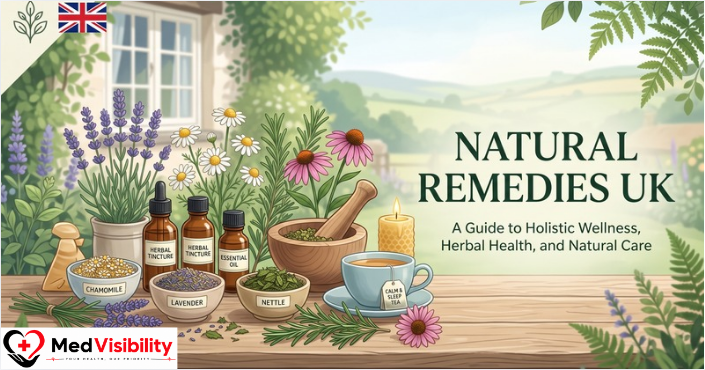
In the UK, the term generally covers a wide net: herbal medicines (like echinacea or valerian), traditional plant-based preparations, dietary supplements, and everyday kitchen staples used medicinally (honey, ginger, garlic). It can also stretch to complementary therapies such as acupuncture or aromatherapy, though those work through a different mechanism entirely and aren’t covered in depth here.
The NHS draws a clear line worth remembering: herbal medicines are not available on the NHS, and the evidence behind most of them is described as limited, with many products used based on tradition rather than robust clinical trials. That doesn’t mean they’re useless it means the certainty is lower than pharmaceutical medicine, and expectations should be set accordingly. natural remedies UK.
Popular Natural Remedies in the UK and What the Evidence Says
Ginger
Ginger has one of the stronger evidence bases among natural remedies used for nausea, particularly travel sickness and pregnancy-related morning sickness (though pregnant readers should always check with a midwife or GP before adding any supplement). It’s also commonly used for mild digestive discomfort, where it may help by encouraging stomach emptying. natural remedies UK.
Realistic use: a cup of fresh ginger tea or a small amount of crystallised ginger before travelling.
Turmeric (Curcumin)
Turmeric is everywhere in wellness content right now, largely thanks to curcumin, its main active compound. Some trials suggest modest benefits for joint discomfort and mild digestive symptoms when taken consistently over several weeks, though results vary and curcumin is poorly absorbed on its own (which is why it’s often paired with black pepper in supplements). natural remedies UK.
Worth knowing: turmeric is not a treatment for arthritis, and claims about it “curing” inflammation or preventing serious disease go well beyond what the current evidence supports.
Chamomile
A long-standing bedtime favourite, chamomile tea is widely used to wind down in the evening and to soothe mild stomach unease. Much of its reputation comes from traditional use and small studies rather than large-scale trials, but it’s generally considered low-risk for most adults when drunk as tea.
Honey
Honey has reasonable evidence behind it for soothing a sore throat and calming a cough, and it’s actually recommended by UK health guidance as a first-line option for short-term coughs in adults and children over one year old, ahead of over-the-counter cough medicines. It should never be given to babies under 12 months due to the risk of infant botulism. natural remedies UK.
Echinacea
Frequently used at the first sign of a cold, echinacea’s evidence is mixed — some studies suggest a modest reduction in cold duration, others show no meaningful effect. It’s one of the herbal ingredients specifically referenced in UK medicines guidance because of its potential to interact with certain conventional treatments.
Valerian Root
Used for mild sleep difficulties and restlessness, valerian has some supporting evidence but nothing conclusive. It can cause drowsiness the next day in some people and shouldn’t be combined with sedative medication or alcohol. natural remedies UK.
Peppermint Oil
Peppermint oil, particularly in enteric-coated capsule form, has more evidence than most herbal products for one specific use: symptoms of irritable bowel syndrome (IBS), including cramping and bloating. This is one of the few natural remedies where the evidence is genuinely encouraging. natural remedies UK.
READ MORE: Menopause Symptoms UK What to Expect and When to Get Help
Quick Comparison: Common Natural Remedies at a Glance
| Remedy | Commonly Used For | Strength of Evidence | Key Caution |
|---|---|---|---|
| Ginger | Nausea, travel sickness | Moderate | Check with GP if pregnant |
| Turmeric/Curcumin | Joint discomfort, mild inflammation | Mixed/modest | Not a treatment for diagnosed conditions |
| Chamomile | Sleep, mild digestive upset | Limited/traditional | Rare allergy in those sensitive to ragweed |
| Honey | Sore throat, short-term cough | Reasonable | Never for babies under 12 months |
| Echinacea | Cold prevention/duration | Mixed | Can interact with immune-related medicines |
| Valerian root | Mild sleep issues | Limited | Avoid with sedatives or alcohol |
| Peppermint oil | IBS symptoms | Moderate-good | Can worsen acid reflux in some people |
The Benefits — and the Real Limitations
There’s a reason natural remedies remain popular across the UK. They’re generally accessible, often affordable, and for some people they genuinely ease mild, everyday symptoms as part of a wider routine that includes rest, hydration, and a balanced diet. natural remedies UK.
But there are real limitations worth being honest about:
- Regulation is patchy. Not all herbal products sold in the UK are licensed, and products made outside the UK may not meet UK safety standards at all. natural remedies UK.
- “Natural” doesn’t mean risk-free. Herbal products act on the body the same way conventional medicines do, and they can cause side effects or interact with prescribed medication.
- Evidence is often thin. Many natural remedies haven’t been tested to the same standard as pharmaceutical treatments, so effectiveness claims should be read with some caution.
- They’re not a substitute for diagnosis. Using a natural remedy to manage a symptom is different from knowing what’s actually causing it. natural remedies UK.
Practical, Realistic Tips for Using Natural Remedies Safely
- Introduce one remedy at a time, so if something doesn’t agree with you, it’s easy to identify.
- Buy from registered UK pharmacies or reputable retailers rather than unregulated websites, where mislabelled or contaminated products are more likely. natural remedies UK.
- Tell your GP or pharmacist about any herbal remedies or supplements you’re taking, especially if you’re on prescribed medication — some combinations genuinely matter. natural remedies UK.
- Stop taking herbal remedies before surgery if advised, as some can affect bleeding or interact with anaesthesia.
- Give any remedy a fair but limited trial (a few weeks, not months) before deciding whether it’s helping.
- Be sceptical of “miracle cure,” “detox,” or “cures everything” language — genuine health information rarely talks that way.
When to See a Doctor
Natural remedies are best suited to mild, short-term, everyday symptoms. It’s time to speak to a GP or pharmacist rather than relying on a home remedy if:
- A symptom lasts longer than a couple of weeks or keeps coming back
- You have unexplained weight loss, persistent pain, or bleeding
- Symptoms are severe, sudden, or getting rapidly worse
- You’re pregnant, breastfeeding, or considering a remedy for a child
- You’re already taking prescribed medication, particularly blood thinners, immunosuppressants, or medication for long-term conditions
- You experience an unexpected reaction after starting a new remedy or supplement
If in doubt, treat it as a reason to check in with a healthcare professional rather than searching for a stronger remedy.
READ MORE: Digital Marketing for Doctors in the UK A Practical Compliant Guide
Conclusion
Natural remedies have an understandable, enduring appeal in the UK they feel gentle, familiar, and within reach. Some, like ginger for nausea, honey for a sore throat, or peppermint oil for IBS symptoms, have reasonable evidence behind them and can genuinely help with mild, everyday complaints. Others carry more tradition than proof, and that’s worth knowing before building a routine around them.
Used sensibly, as one part of a wider approach to health that includes sleep, diet, and movement, natural remedies can be a useful addition. Used as a replacement for proper diagnosis or treatment, they can quietly delay care that’s actually needed. The goal isn’t to choose between “natural” and “medical” it’s to know which situations call for which, and to loop in a doctor or pharmacist whenever there’s genuine uncertainty.
FAQs
Are natural remedies regulated in the UK?
Some are, some aren’t. Homeopathic products must be registered with UK regulatory schemes, but many herbal remedies and supplements are regulated as foods rather than medicines, meaning they don’t go through the same safety testing as pharmaceutical products.
Can I take natural remedies alongside my prescribed medication?
Sometimes, but not always safely. Herbal products can interact with conventional medicines, so it’s important to check with a GP or pharmacist before combining them, particularly if you’re on regular prescription medication.
Are natural remedies safe during pregnancy?
Not automatically. Many herbal remedies haven’t been well studied in pregnancy, and some are best avoided altogether. Always speak to a midwife or GP before starting anything new while pregnant or breastfeeding.
Do natural remedies work as well as conventional medicine?
For some mild, everyday symptoms, certain remedies (like peppermint oil for IBS or honey for a cough) have reasonable supporting evidence. For most other uses, the evidence is weaker than for licensed medicines, so they’re better viewed as a complement rather than a replacement.
Where can I buy safe herbal remedies in the UK?
Registered UK pharmacies and reputable, well-known retailers are the safest sources. Products bought from unregulated websites, especially those made outside the UK, carry a higher risk of being mislabelled, contaminated, or containing undisclosed ingredients.
What should I do if a natural remedy causes side effects?
Stop taking it and speak to a pharmacist or GP. Side effects and suspected reactions to herbal medicines can also be reported through the UK’s Yellow Card Scheme, which helps identify safety issues with these products.
For more updates visit: medvisibility.co.uk

Other Articles

Mediterranean Diet UK A Simple, Realistic Guide


[…] someone searches for symptoms of a stroke, misleading or vague content isn’t just a poor user experience it could delay someone getting urgent care. That’s exactly why Google treats health topics […]
[…] because inaccurate medical information can cause real harm. A marketing company that doesn’t understand this can accidentally get a clinic’s website penalised or its ads rejected. medical digital […]
[…] black cohosh are popular, they lack uniform regulatory oversight unless marked with a Traditional Herbal Registration (THR) mark in the UK, and they can interact with other prescription […]
[…] UK context matters here too. Shorter daylight hours in winter, a food culture built around convenience, and a famously unpredictable climate all shape what […]
[…] NHS wants people to manage minor illness, mainly because GP capacity is stretched and most colds, coughs, and stomach upsets simply don’t need a doctor’s involvement. home remedies […]
[…] most healthy adults, starting a gentle beginner programme like the one above is low-risk. However, it’s sensible to speak to a GP or […]
[…] algorithms are trained to recognize patterns associated with particular outcomes — for example, combinations of vital signs that tend to precede a complication, or imaging features associated with a […]
[…] nutrition science, not a diagnosis or a personalised recommendation — individual needs vary based on diet, health conditions, and any medication you’re […]