



More people in the UK are reaching for the spice rack before the medicine cabinet. Whether it’s stirring turmeric into warm milk before bed, brewing ginger tea when a cold creeps in, or dropping a valerian capsule to ease a sleepless night, interest in plant-based wellbeing has never been higher. A 2023 market analysis found that herbal supplement sales in the UK rose by 9% that year, and that trend has only continued since.
Medically reviewed note: This article contains general health and wellness information. It should be reviewed by a qualified health professional before publication, particularly the sections on herb-drug interactions, contraindications, and NHS guidance, as clinical recommendations may be updated. Information on CBD FSA guidance and MHRA THR registration was accurate as of September 2026.
This content is for informational purposes only and does not constitute medical advice, diagnosis, or treatment. Always consult a qualified healthcare professional before making changes to your health routine.
But with so many products on shop shelves, and so much conflicting information online, it can be hard to know what’s genuinely useful and what’s wishful thinking wrapped in nice packaging. This guide cuts through the noise. We look at the most popular natural health remedies UK adults actually use, what the research honestly says about them, how to choose products you can trust, and when a trip to your GP matters more than any supplement.
A quick note before we begin: this article is for general information only. It is not a substitute for professional medical advice, diagnosis, or treatment. Always speak to your GP or a qualified healthcare professional before starting any supplement, especially if you are pregnant, breastfeeding, taking prescription medicines, or managing a long-term health condition.
What Do We Mean by “Natural Health Remedies”?
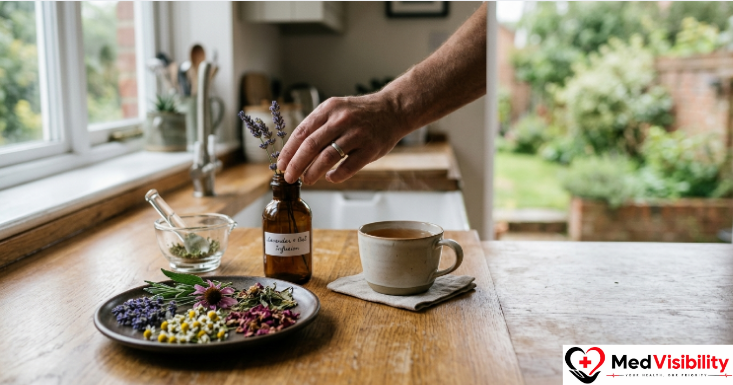
The term covers a broad spectrum herbal supplements, plant-based teas, food-derived compounds, essential oils, and lifestyle practices rooted in traditional medicine. Some have centuries of anecdotal evidence behind them. A growing number also have modern clinical research.
It’s worth being clear about something many labels gloss over: “natural” does not automatically mean “safe”. Just as many pharmaceutical drugs originate from plant compounds (aspirin from willow bark; digoxin from foxglove), natural substances can have real effects on the body — including interactions with prescription medicines and side effects of their own.
In the UK, the Medicines and Healthcare Products Regulatory Agency (MHRA) runs a Traditional Herbal Registration (THR) scheme. Products carrying the THR logo have met defined standards of safety and quality, and their labelling is regulated. If you’re buying an herbal supplement in the UK, looking for the THR mark is one of the most reliable ways to check it meets acceptable standards. Products with a PL number placed on the UK market since January 2025 must also carry a ‘UK only’ statement on their packaging.
8 Popular Natural Health Remedies Used in the UK — and What the Evidence Says
1. Ginger
Ginger (Zingiber officinale) is probably the most widely used natural remedy in British kitchens. It belongs to the same plant family as turmeric and has been valued for its anti-inflammatory and antioxidant properties for centuries.
What research suggests:
- Ginger is well supported by clinical evidence for reducing nausea — particularly morning sickness during pregnancy, motion sickness, and chemotherapy-related nausea. A 2014 Cochrane-reviewed analysis confirmed its effectiveness here.
- Its anti-inflammatory compounds (gingerols and shogaols) may help with mild digestive discomfort.
- Some research suggests it may support immune response by increasing T-cell activity, though more large-scale studies are needed.
How people use it in the UK: Fresh ginger in hot water with lemon and honey is a go-to home remedy for sore throats and cold symptoms. It’s also available as capsules, tinctures, and teas.
Things to be aware of: Ginger may thin the blood slightly. People taking anticoagulants (like warfarin) should speak to a doctor before using high-dose ginger supplements. Large amounts can cause heartburn in some people. natural health remedies UK.
2. Turmeric and Curcumin
Turmeric’s golden pigment — curcumin — is its most researched active compound. It blocks the action of inflammatory molecules in the body and has attracted significant scientific interest in recent years.
What research suggests:
- Several studies show curcumin may be helpful for joint pain and stiffness, particularly in people with osteoarthritis. Some trials have found it comparable to ibuprofen for mild knee pain, though evidence is still mixed and study sizes are often small. natural health remedies UK.
- Early studies have explored curcumin’s potential role in supporting brain health, including possible effects on markers associated with Alzheimer’s — but this research is still very much in early stages and far from conclusive. natural health remedies UK.
- Curcumin is poorly absorbed on its own; it’s better absorbed when taken with black pepper (piperine), which many formulations now include. natural health remedies UK.
How people use it in the UK: In cooking, in golden milk (turmeric lattes), and as standardised curcumin supplements.
Things to be aware of: High-dose turmeric supplements may interact with blood-thinning medications and should be used with caution before surgery. Cooking with turmeric as a spice is generally safe and beneficial as part of a balanced diet. natural health remedies UK.
3. Echinacea
Echinacea is among the most studied herbal remedies for upper respiratory tract infections. It’s been used for centuries, originally in Native American medicine, and is now one of the best-selling herbal supplements in the UK. natural health remedies UK.
What research suggests:
- Evidence from clinical trials is genuinely mixed. Some well-regarded reviews suggest echinacea may modestly reduce the risk of catching a cold and may slightly shorten its duration.
- A commonly cited review found it could reduce the risk of getting a cold by around a quarter to a third and reduce duration by roughly a day — but results vary widely between studies, partly because different products use different species, plant parts, and extraction methods. natural health remedies UK.
- It appears to work by stimulating white blood cell activity and supporting the body’s inflammatory response.
How people use it in the UK: As tablets, tinctures, or teas, typically taken at the first sign of a cold. Products registered under the MHRA’s THR scheme are widely available in pharmacies. natural health remedies UK.
Things to be aware of: Children, pregnant or breastfeeding women, and people with autoimmune conditions should avoid echinacea without medical guidance. It should not be used continuously for long periods.
4. Garlic
Garlic (Allium sativum) is arguably the most studied food-based natural remedy in the world. It contains allicin and a range of sulphur compounds with demonstrated biological activity. natural health remedies UK.
What research suggests:
- There is reasonable evidence that regular garlic consumption may contribute to modest reductions in blood pressure and cholesterol, particularly LDL (“bad”) cholesterol, though it’s rarely strong enough to replace prescribed medication. natural health remedies UK.
- Regarding colds: a 2014 Cochrane Review found that while one small trial suggested garlic might help prevent the common cold, the evidence overall was insufficient to draw firm conclusions. More rigorous research is needed. natural health remedies UK.
- Its antimicrobial properties are real at a biochemical level, though translating that into clinical benefit in humans is more complicated. natural health remedies UK.
How people use it in the UK: Raw, cooked, or as odourless garlic capsules. For cardiovascular support, raw or lightly cooked garlic is thought to preserve more of the active compounds than heavily processed supplements. natural health remedies UK.
Things to be aware of: Garlic can increase bleeding risk and interact with anticoagulants. It should be stopped at least two weeks before any planned surgery. natural health remedies UK.
5. Valerian Root
Valerian (Valeriana officinalis) has been used as a sleep and anxiety remedy since ancient Greek and Roman times. It remains one of the most popular herbal sleep aids available in UK pharmacies today.
What research suggests:
- Valerian is thought to work by increasing GABA (gamma-aminobutyric acid) levels in the brain—the same calming neurotransmitter targeted by prescription sleep medications. natural health remedies UK.
- Randomised controlled trials have shown it can improve sleep quality and reduce the time it takes to fall asleep, with effects that tend to build over a few weeks of use rather than occurring immediately.
- A placebo-controlled trial found meaningful improvements in sleep quality for postmenopausal women experiencing insomnia. natural health remedies UK.
How people use it in the UK: As capsules, tablets, or tinctures. Standard research doses typically fall in the 400–600 mg range taken 30 minutes to an hour before bed, though packaging instructions should always be followed.
Things to be aware of: Valerian should not be combined with alcohol or sedative medications. It can impact anaesthetic doses, so stop use at least two weeks before surgery. Not recommended for children or during pregnancy. natural health remedies UK.
6. Lavender
Lavender is one of the most versatile plants in natural wellness — and it’s well supported by research in specific areas. natural health remedies UK.
What research suggests:
- Clinical trials have found oral lavender oil preparations (licensed and standardised products) to be effective for generalised anxiety, with results from some trials comparable to low-dose pharmaceutical anxiolytics.
- Lavender aromatherapy has demonstrated the ability to reduce anxiety and promote relaxation in hospital settings and has been shown to increase slow-wave (deep, restorative) sleep.
- A review in the journal Phytomedicine concluded that oral lavender oil significantly reduced anxiety scores compared to placebo. natural health remedies UK.
How people use it in the UK: As pillow sprays, essential oil diffusers, bath additives, and herbal teas. Oral lavender oil supplements are also available but should only be used under guidance, as they’re not appropriate for everyone. natural health remedies UK.
Things to be aware of: Essential oils are for external use only — they should never be ingested unless in specifically designed oral formulations. Lavender essential oil can irritate skin if applied undiluted.
7. Chamomile
Chamomile tea is a staple of British cupboards — and it has more going for it than just taste.
What research suggests:
- Chamomile contains apigenin, an antioxidant that binds to receptors in the brain associated with sedation and anxiety reduction. natural health remedies UK.
- Clinical studies have found chamomile extract effective at reducing symptoms of generalised anxiety disorder (GAD), and research has shown it can improve sleep quality in postpartum women.
- It may also help with mild digestive discomfort, IBS-related cramping, and bloating.
How people use it in the UK: As herbal tea — the most accessible and widely available form. Chamomile is one of the gentlest remedies on this list, making it suitable for most adults as a daily wind-down ritual.
Things to be aware of: People with allergies to plants in the Asteraceae family (including ragweed, daisies, and chrysanthemums) may react to chamomile. High doses may interact with blood-thinning medication.
8. Peppermint
Peppermint’s active compound — menthol — gives it both its distinctive scent and several of its health properties. natural health remedies UK.
What research suggests:
- Peppermint oil is one of the better-evidenced natural remedies for irritable bowel syndrome (IBS). Several meta-analyses have confirmed that enteric-coated peppermint oil capsules can reduce abdominal pain, bloating, and cramping in IBS sufferers. natural health remedies UK.
- Menthol works by relaxing the smooth muscles of the gastrointestinal tract.
- Inhaled peppermint vapour has been shown to act as a natural decongestant, supporting clearer airways during cold and flu season. natural health remedies UK.
How people use it in the UK: As herbal tea, enteric-coated capsules (for IBS), and topical preparations or steam inhalation for respiratory support.
Things to be aware of: Peppermint tea can worsen acid reflux in some people. Standard peppermint capsules (not enteric-coated) may irritate the oesophagus; for IBS relief specifically, the enteric-coated form matters.
Newer Remedies Making Waves in the UK in 2026
Alongside these well-established options, a few newer natural remedies are growing rapidly in popularity across the UK: natural health remedies UK.
Functional Mushrooms (Lion’s Mane, Reishi)
Functional mushrooms are among the fastest-growing corners of the herbal supplement market. Lion’s mane is attracting attention for cognitive support, with a 2025 pilot study from Northumbria University finding improved response times after a single dose, alongside a trend towards lower stress after 28 days of regular use. The evidence is promising but still early, and larger trials are needed. Reishi is associated with immune modulation and stress reduction. natural health remedies UK.
Adaptogens (Ashwagandha, Rhodiola)
Adaptogens — herbs thought to help the body manage stress more effectively — are increasingly mainstream. Ashwagandha has the strongest evidence base of the group, with clinical trials showing reductions in perceived stress and cortisol levels. Rhodiola has been studied for mental fatigue. Both are available in capsule form in most UK health food stores. natural health remedies UK.
CBD (Cannabidiol)
Hemp-derived CBD remains one of the most widely used plant extracts in the UK. It’s sold as oils, capsules, and topicals, marketed for anxiety, sleep, and pain relief. The evidence base is growing but remains mixed, and product quality varies enormously. The Food Standards Agency (FSA) recommends that healthy adults consume no more than 70 mg of CBD per day and notes it is not suitable for pregnant or breastfeeding women. Always choose a product from a reputable supplier with third-party testing.
A Simple Guide to Popular Remedies
| Remedy | Primary Use | Evidence Strength | Key Caution |
|---|---|---|---|
| Ginger | Nausea, digestion | Strong (for nausea) | Blood thinners |
| Turmeric / Curcumin | Inflammation, joint pain | Moderate | Surgery, blood thinners |
| Echinacea | Cold prevention/reduction | Moderate (mixed) | Autoimmune conditions |
| Garlic | Immune support, blood pressure | Moderate | Surgery, blood thinners |
| Valerian | Sleep, anxiety | Moderate | Sedatives, surgery |
| Lavender | Anxiety, sleep | Moderate-strong | Not for internal use (unless licensed) |
| Chamomile | Sleep, digestion, anxiety | Moderate | Asteraceae allergy |
| Peppermint | IBS, congestion | Strong (for IBS) | Acid reflux |
How to Choose a Safe, Quality Herbal Product in the UK
With hundreds of products on the market, quality really does vary. Here’s what to look for:
- Look for the THR mark. Products registered under the MHRA’s Traditional Herbal Registration scheme meet defined UK safety and quality standards. The THR logo appears on the label.
- Check the MHRA’s THR register. The MHRA publishes a regularly updated list of herbal medicines that have been granted THR status (updated as recently as October 2025 on gov.uk).
- Read the full label. Look for clear ingredient lists, dosage guidance, and contraindication information. Vague or exaggerated claims are a warning sign. natural health remedies UK.
- Buy from reputable stockists. High street pharmacies, established health food chains, and well-known supplement brands generally sell regulated or better-quality products than anonymous online marketplaces.
- Avoid products making extraordinary claims. If something promises to cure a serious disease, treat a condition without a doctor’s input, or produce dramatic results overnight — be very sceptical.
- Tell your GP or pharmacist what supplements you’re taking, especially if you’re on any prescribed medication. natural health remedies UK.
Natural Lifestyle Practices Worth Taking Seriously
Some of the most effective “natural remedies” aren’t found in a supplement bottle at all.
Sleep hygiene remains one of the most powerful tools for overall health — supporting immune function, mood, cognition, and even weight regulation. Simple steps like keeping consistent sleep and wake times, limiting screen exposure before bed, and keeping your bedroom cool and dark can make a significant difference.
Movement — even gentle movement — is among the best-evidenced natural interventions for mental and physical health. A daily 30-minute walk, yoga, or Pilates can reduce cortisol levels, improve mood, and support cardiovascular health. A 2026 wellness survey found that slow or soft movement topped the list of health practices UK adults planned to adopt—suggesting a cultural shift towards sustainable, gentler approaches.
Dietary choices are foundational. A diet rich in whole foods, vegetables, oily fish, legumes, and whole grains provides many of the anti-inflammatory compounds people seek through supplements — in naturally balanced, bioavailable forms. Vitamin D, in particular, is something most UK adults are likely to be deficient in during autumn and winter months; the NHS recommends a 10 micrograms (400 IU) daily supplement for everyone from October to March.
Stress management practices — including breathing exercises, time in nature, and social connection — have solid evidence behind them as genuinely effective health supports. natural health remedies UK.
When to See a Doctor
Natural health remedies can complement a healthy lifestyle, but they are not a replacement for medical care. Please see your GP or seek professional health advice if: natural health remedies UK.
- Your symptoms are severe, persistent, or getting worse
- You are experiencing chest pain, difficulty breathing, severe headaches, or other sudden symptoms
- You have a diagnosed long-term condition (diabetes, heart disease, autoimmune disorders, etc.)
- You are pregnant, breastfeeding, or trying to conceive
- You are taking any prescription medication — many herbal remedies interact with prescribed medicines, including warfarin, antidepressants, and thyroid medications
- You are considering using natural remedies as an alternative to, rather than alongside, conventional medical treatment
- A child under 18 is involved — many herbal remedies are not tested or appropriate for children
- You are over 65 — some supplements are metabolised differently in older adults
Remember: delaying an accurate diagnosis by self-treating with natural remedies can sometimes mean that an underlying condition goes untreated for longer than it should. If in doubt, always get checked out.
Conclusion
Interest in natural health remedies in the UK reflects something genuinely positive — a desire to take an active role in personal wellbeing and to understand what we’re putting into our bodies. The best of these remedies, used sensibly, can form a meaningful part of a healthy lifestyle. natural health remedies UK.
READ MORE: Natural Remedies UK What Actually Works, and What’s Just Marketing
The key word is sensibly. “Natural” doesn’t mean risk-free. “Traditional” doesn’t mean proven. And no supplement replaces a balanced diet, regular movement, good sleep, and proper medical care when you need it. But ginger for nausea, peppermint oil for IBS, chamomile tea before bed, or lavender to ease an anxious mind — there’s real evidence behind these, used in the right context, for the right person, at sensible doses.
The most useful approach is an honest one: use what works for you, stay sceptical of miracle claims, look for regulated products, and keep your GP in the loop. natural health remedies UK.
FAQs
Are natural health remedies safe to use with prescription medication?
A: Not always. Many herbal supplements can interact with prescription drugs. St John’s Wort, for example, is known to reduce the effectiveness of several medications, including the contraceptive pill, antidepressants, and anticoagulants. Garlic, ginger, and ginkgo biloba can increase bleeding risk. Always tell your GP or pharmacist about any supplements you’re taking.
Can I take herbal remedies during pregnancy?
Most herbal remedies should be avoided during pregnancy unless specifically recommended by a healthcare professional. Very few have been tested for safety in pregnancy, and some (including high-dose ginger, valerian, and echinacea) are not recommended. The NHS advises caution with herbal products during pregnancy.
What’s the difference between a THR product and an unlicensed herbal supplement?
A product with a Traditional Herbal Registration (THR) mark has been assessed by the MHRA and meets defined standards of safety, quality, and labelling. An unlicensed product has not been through this process — its quality and safety have not been independently verified. THR products are not guaranteed to be effective (registration is based on traditional use, not always on clinical proof), but they’re a safer starting point than unregulated alternatives.
How do I know if a “natural” health claim is trustworthy?
Look for references to specific, peer-reviewed research, not just anecdotes. Be wary of absolute language (“cures”, “guaranteed”, “miracle”). Credible sources include the NHS, PubMed, Cochrane Reviews, and established medical organisations. If a claim sounds too good to be true, apply healthy scepticism — the quality of evidence for natural remedies varies enormously.
Does the NHS support the use of herbal remedies?
The NHS does not prescribe or routinely recommend most herbal remedies and notes that being “natural” does not guarantee safety. Some NHS trusts offer access to integrative medicine services, and the NHS acknowledges that many people use complementary products alongside conventional care. The key message from NHS guidance is to inform your GP of any supplements you take and to never use them as a substitute for prescribed treatment without medical advice.
Are expensive supplements better than cheaper ones?
Price alone is not a reliable indicator of quality. What matters more is whether the product is registered (look for the THR mark), from a reputable manufacturer with transparent ingredient sourcing, and whether the formulation is appropriate for your needs. Some high-quality products are modestly priced; some expensive products offer poor evidence and low-grade ingredients. natural health remedies UK.
For more updates visit: medvisibility.co.uk

Other Articles
Herbal Remedies UK What Actually Works, What to Watch Out For
Google Business Profile Manager The Complete 2026 Guide for UK Businesses


No Comment! Be the first one.