



Walk into any Holland & Barrett, Boots, or independent health shop in the UK and you will find entire shelves dedicated to herbal tinctures, teas, capsules, and tablets. Pick up your phone and search “herbal remedies UK for sleep” or “herbs for anxiety”, and you will find thousands of results, from enthusiastic wellness blogs to cautious NHS pages. Clearly, something is happening here millions of Britons are curious about plants as medicine, and that curiosity is growing.
But what is actually worth knowing? Which herbs have decent evidence behind them, which ones carry real risks, and how do you shop safely in a market where regulation is not as watertight as many people assume? This guide cuts through the noise.
The UK’s Growing Appetite for Herbal Medicine
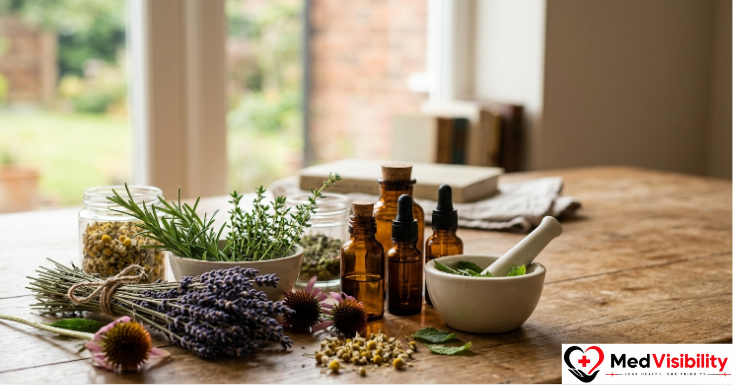
The UK herbal market has grown steadily for decades. Retail value sales of herbal and traditional products are set to continue growing significantly in the UK, driven primarily by strong demand for herbal dietary supplements, which account for more than half of total category sales. This growth is being underpinned by rising consumer preference for natural and preventative health solutions, increased awareness of holistic wellness, and a shift towards clean-label and plant-based ingredients. herbal remedies UK.
The pandemic alone led to a 19% rise in supplement usage, with nearly 20 million UK adults now taking food supplements. herbal remedies UK.
This shift reflects something broader than trend-chasing. Many people feel that conventional medicine does not always address the whole picture stress, sleep, low energy, mild mood changes — and herbal remedies feel like a gentler, more accessible starting point. Others are drawn by the idea of tradition: plants have been used medicinally for thousands of years across every culture on earth, and there is a comfort in that continuity.
That said, “natural” does not automatically mean safe or effective. Understanding what herbal medicine actually is and is not is the most useful thing you can do before spending money on supplements.
What Is Herbal Medicine? A Plain-English Explanation
Herbal medicine (also called phytotherapy or botanical medicine) uses plants — their leaves, roots, flowers, bark, or seeds — to support health or manage mild symptoms. The practice spans traditional Chinese medicine, Ayurveda, European folk medicine, and many other traditions, all of which have their own approaches and plant pharmacopoeia. herbal remedies UK.
In modern Western practice, herbal remedies are typically sold as: herbal remedies UK.
- Capsules or tablets (standardised extracts or dried herb)
- Tinctures (herb extracted into alcohol) herbal remedies UK.
- Teas and infusions (dried herbs steeped in hot water)
- Topical creams, gels, and oils
Some of these are backed by clinical trials. Many are not. The honest answer is that the evidence base for herbal medicine is uneven — strong for certain herbs and certain conditions, weak or absent for others. That is not unique to herbs; plenty of conventional over-the-counter products also have modest evidence behind them.
How Herbal Remedies Are Regulated in the UK
This is the part that surprises most people, and it is genuinely important.
<cite index=”7-1″>In the UK, the Medicines and Healthcare Products Regulatory Agency (MHRA) allows herbal products to be marketed for minor health conditions that do not need to be treated by a doctor, provided they have a Traditional Herbal Registration (THR). However, herbal treatments do not have a full medicines licence from the MHRA, which means they may not have been tested to ensure they are efficacious, safe, and manufactured to high standards. herbal remedies UK.
<cite index=”9-1″>Herbal products in the UK can be granted a Traditional Herbal Registration (THR) or a Marketing Authorisation (MA). It is no longer lawful to sell a mass-produced herbal medicine without one of these. The MHRA currently lists over 350 herbal medicines that have been granted a THR. However, many herbal products sold in health food shops or online may not have a marketing authorisation or a THR and would therefore be classed as unlicensed products. herbal remedies UK.
<cite index=”12-1″>The THR Certification Mark indicates that the herbal medicine has been registered with the MHRA under the Traditional Herbal Registration scheme and meets the required standards relating to quality, safety, evidence of traditional use, and other criteria set out in the Human Medicines Regulations 2012. </cite>
The practical takeaway: When buying any herbal product in the UK, look for the THR logo on the packaging — it looks like a small leaf with the letters THR inside. It does not guarantee that the product works, but it does mean that safety, quality, and manufacturing standards have been assessed. Products without this mark — common online and in some independent shops — have not been through that process.
Popular Herbal Remedies in the UK: Evidence, Uses, and Cautions
Below is an honest look at some of the most widely used herbal remedies in the UK, based on available research. Evidence levels vary significantly, and this section reflects that honestly. herbal remedies UK.
Echinacea — For Colds and Immune Support
Echinacea is one of the UK’s most recognised herbal names, especially during winter. <cite index=”13-1″> t is usually taken as a tea or supplement, and today it is primarily used to treat or prevent the common cold. One review in over 4,000 people found a potential 10–20% reduced risk of colds from taking echinacea, but there is little to no evidence that it treats a cold after you have already caught it. herbal remedies UK.
<cite index=”15-1″>Reviews have found some evidence supporting echinacea for reducing cold incidence and duration in certain groups, but overall results remain inconsistent due to variability in preparations and study quality. herbal remedies UK.
It is worth knowing that not all echinacea products are the same. Different species (E. purpurea, E. angustifolia, and E. pallida), different plant parts, and different extraction methods all produce different compounds. This is one reason why studies reach different conclusions. If you want to try echinacea, choose a THR-registered product, use it at the start of symptoms rather than throughout winter continuously, and be aware that people with autoimmune conditions or allergies to daisy-family plants should speak to a pharmacist or doctor first. herbal remedies UK.
Ginger — Nausea and Inflammation
Ginger has some of the most consistent clinical evidence of any herbal remedy. <cite index=”5-1″>Ginger at one gram per day or more reduces nausea effectively. Clinical trials show consistent results across pregnancy-related nausea and chemotherapy-induced nausea. herbal remedies UK.
For everyday digestive discomfort, ginger tea made from fresh root is a genuinely useful and low-risk option. It is also anti-inflammatory, and some research suggests modest benefits for joint pain — though the evidence is not strong enough to recommend it as a replacement for established arthritis treatments.
If you are pregnant, keep ginger intake within reasonable culinary amounts and check with your midwife or GP before taking supplements. If you take blood-thinning medication such as warfarin, discuss this with your pharmacist — <cite index=”16-1″>ginger can affect coagulation</cite> at higher doses. herbal remedies UK.
Turmeric and Curcumin — Inflammation and Joints
Turmeric has had enormous popular attention in recent years. The active compound curcumin has been studied extensively in laboratory settings, and it does appear to have anti-inflammatory properties. The challenge is absorption — curcumin on its own is poorly absorbed by the body, which is why many supplements combine it with black pepper extract (piperine) to improve bioavailability.
<cite index=”17-1″>Turmeric and its active compound curcumin have been studied for inflammation-related symptoms, yet results vary depending on the product and formulation. herbal remedies UK.
As a culinary spice in cooking, turmeric is safe for most people. As a supplement, especially at high doses, caution is needed. <cite index=”27-1″> urmeric and its main active constituent, curcumin, have the potential to interact with conventional medicines and other herbal supplements. The risk of bleeding might be increased because turmeric may interfere with clotting by decreasing platelet aggregation. </cite> If you are on blood-thinning medication or immunosuppressants, this is a conversation to have with your doctor before adding a turmeric supplement to your routine. herbal remedies UK.
Lavender — Anxiety and Sleep
Lavender’s role in sleep and relaxation is well known in everyday use — sachets, pillow sprays, and essential oils. But oral lavender supplements have also been studied for anxiety with some encouraging results.
<cite index=”1-1″>Ashwagandha and standardised lavender oil (Silexan, sold as Lasea or Kalms Lavender One-A-Day) have the best evidence for anxiety support among herbal options in 2026. Look for the MHRA Traditional Herbal Registration symbol on packaging. herbal remedies UK.
The oral lavender oil (Silexan) preparation has THR registration in the UK for anxiety relief, which means it has cleared the regulatory hurdle that most herbal products have not. It is a reasonable option for mild, short-term anxiety related to stress — but it is not a treatment for clinical anxiety disorder.
Lavender aromatherapy is pleasant and safe for most people, though it is worth knowing that essential oils should not be taken internally unless specifically formulated and tested for oral use.
Ashwagandha — Stress and Adaptogenic Support
Ashwagandha (Withania somnifera) is an adaptogenic herb from Ayurvedic tradition that has attracted significant research interest. <cite index=”1-1″>A series of randomised controlled trials of 300 to 600 mg of standardised extract daily for six to eight weeks have shown clinically meaningful reductions in self-reported stress and anxiety. herbal remedies UK.
It is now one of the most popular supplements in UK health shops. Most people tolerate it well at the tested doses. However, it should be avoided during pregnancy, and anyone with thyroid conditions or on immunosuppressant therapy should seek medical advice before using it. herbal remedies UK.
Ashwagandha supplements vary considerably in quality. Look for products specifying the extract type (KSM-66 and Sensoril are commonly researched formulations) and opt for THR-registered or, at minimum, third-party tested products. herbal remedies UK.
St John’s Wort — Mood and Mild Depression
St John’s Wort (Hypericum perforatum) has a reasonable evidence base for mild to moderate depression — but it also has the most significant safety concerns of any commonly used herbal remedy in the UK, and this cannot be overstated.
<cite index=”23-1″>The MHRA has warned about adverse effects and drug-herb interactions involving St John’s Wort. Problems are especially prevalent among older patients, who are both more likely to use herbal remedies and less likely to report side effects. herbal remedies UK.
The core issue is how St John’s Wort affects the liver’s drug-processing enzymes. <cite index=”23-1″>St John’s Wort is a strong inducer of drug-metabolising cytochrome P450 enzymes. It can significantly reduce the effectiveness of various medications, including oral contraceptives. herbal remedies UK.
<cite index=”30-1″>When combined with other serotonergic agents, there is a risk of serotonin syndrome. Regarding oral contraceptives, induction of CYP3A4 and P-glycoprotein lowers hormone levels, creating a clinical concern around breakthrough bleeding, contraceptive failure, and unintended pregnancy. </cite>
<cite index=”16-1″>Acute rejection episodes following heart, renal, or liver transplant have been reported in patients stabilised on immunosuppressants who were taking St John’s Wort. herbal remedies UK.
The bottom line: if you are taking any prescription medication — particularly antidepressants, the contraceptive pill, antiretroviral drugs, blood thinners, or immunosuppressants — do not take St John’s Wort without explicit guidance from your doctor or pharmacist. For people who are not on other medications and are looking for mild mood support, it may have a role, but the conversation should happen with a healthcare professional first.
Chamomile — Digestion and Relaxation
Chamomile tea is one of the most benign and widely consumed herbal drinks in the UK. It has a long history of use for digestive discomfort, mild anxiety, and sleep. <cite index=”5-1″>Peppermint oil taken in enteric-coated capsules shows consistent results for tension headaches and irritable bowel symptoms, and chamomile is commonly used alongside similar complaints. </cite>
The evidence for chamomile specifically is modest but supportive for mild, short-term digestive and relaxation use. It is generally very safe — the main caution is for people with ragweed or daisy-family allergies, who may react to it. herbal remedies UK.
Valerian — Sleep
Valerian root is widely sold in UK pharmacies as a sleep aid. The evidence is mixed but leaning towards modest benefit for sleep latency (how long it takes to fall asleep) rather than sleep quality overall.
<cite index=”16-1″>Valerian can cause central nervous system depression</cite>, which means it should not be combined with sedative medications or alcohol. It is also one of the herbs flagged in pharmacological reviews for potential interactions and should be discontinued before surgery.
A Quick Reference: Common Herbs, Uses, and Key Cautions
| Herb | Common Use in the UK | Evidence Level | Key Caution |
|---|---|---|---|
| Echinacea | Cold prevention | Moderate (inconsistent) | Avoid autoimmune conditions and daisy allergy. |
| Ginger | Nausea, digestion | Good | May affect clotting; caution in pregnancy (supplements) |
| Turmeric/Curcumin | Inflammation, joints | Emerging (variable) | Bleeding risk: check with GP if on blood thinners. |
| Lavender (oral) | Mild anxiety | Good (THR registered) | Not for clinical anxiety disorders |
| Ashwagandha | Stress, adaptogen | Moderate to good | Avoid in pregnancy; check with GP for thyroid issues. |
| St John’s Wort | Mild depression | Moderate | Major drug interactions — consult GP/pharmacist first |
| Chamomile | Digestion, relaxation | Modest | Daisy allergy caution |
| Valerian | Sleep onset | Modest | Avoid sedatives or alcohol. |
| Peppermint oil | IBS, headaches | Moderate | Use enteric-coated form for IBS; avoid with heartburn. |
What “Natural” Does Not Mean
The word “natural” is one of the most overloaded terms in the supplement world. Herbal products are natural. So is arsenic. So is the foxglove that gave us digoxin — a powerful heart medication. The origin of something tells you very little about its safety or effectiveness. herbal remedies UK.
<cite index=”23-1″>Reported adverse effects from drug-herb interactions include elevated liver enzymes, gastrointestinal disturbances, disruption of international normalised ratio in patients taking warfarin, and kidney damage. </cite> herbal remedies UK.
None of this means herbal remedies are inherently dangerous — most, used appropriately, are not. But the risk-free image that natural products often carry is not entirely accurate, particularly for people on prescription medication. herbal remedies UK.
A few honest rules worth knowing:
- More is not better. Exceeding recommended doses of herbal supplements does not increase benefits and often increases risk. High-dose turmeric supplements, for example, have been linked to liver problems in rare cases. herbal remedies UK.
- Duration matters. Most herbal supplements have been studied over weeks, not years. Taking them indefinitely is a different proposition from a six-week course.
- Interactions are real. Herbs and pharmaceutical drugs can interact in ways that alter how both work. <cite index=”20-1″>St John’s Wort alone interacts with over 50% of all drugs. </cite>
- Pregnancy is a special case. <cite index=”20-1″> ery few herbal remedies have been adequately studied for safety during pregnancy. Ginger up to 1,000 mg per day is generally considered safe for pregnancy-related nausea and is supported by clinical evidence. </cite> Beyond that, caution is the right approach.
How to Buy Herbal Remedies Safely in the UK
This is where practical steps genuinely matter.
1. Look for the THR mark. The MHRA’s Traditional Herbal Registration logo is your quickest quality signal when buying over-the-counter herbal products. Products with this mark meet safety and quality manufacturing standards, even if clinical efficacy is not guaranteed. herbal remedies UK.
2. Buy from reputable retailers. Large pharmacies, registered herbalists, and well-established health retailers are safer bets than random online marketplaces where product quality and authenticity are harder to verify.
3. Tell your GP and pharmacist what you are taking. <cite index=”23-1″>Drug-herb interactions may go underreported because patients often do not disclose herbal use and clinicians do not routinely ask. </cite> Mention herbal supplements at every appointment, and always before starting a new prescription medication.
4. Be honest about your health context. Chronic health conditions — particularly liver or kidney disease, heart conditions, autoimmune disorders, hormone-sensitive conditions, and anything requiring immunosuppressant therapy — change the risk picture for herbal use.
5. Start with one supplement at a time. Multiple herbal products together raise the complexity of potential interactions and make it harder to identify the cause if you experience any side effects.
6. Give it time — but not too much time. Most herbs that do something will show a noticeable effect within four to eight weeks. If nothing has changed, continuing indefinitely is unlikely to help.
Herbal Remedies vs. Conventional Medicine: Where Do They Fit?
Herbal remedies are not a replacement for conventional medical care. They are probably best thought of as a complement — useful for mild, self-limiting conditions and general wellness support and as part of a broader healthy lifestyle, not as primary treatment for diagnosed medical conditions. herbal remedies UK.
Where they fit well:
- Mild digestive discomfort (ginger, peppermint, chamomile)
- Short-term stress and sleep difficulty (lavender, ashwagandha, valerian)
- Seasonal immune support (echinacea, elderberry)
- General anti-inflammatory lifestyle support (turmeric, ginger as food)
Where conventional medicine should take priority:
- Any diagnosed health condition
- Symptoms that are new, severe, persistent, or unexplained
- Mental health conditions beyond mild everyday stress
- Anything involving chest pain, breathlessness, significant weight changes, or neurological symptoms
When to See a Doctor
Herbal remedies are not appropriate as a first response to concerning symptoms. See your GP if you experience any of the following: herbal remedies UK.
- Symptoms that have lasted more than two to three weeks without improvement
- Any chest pain, palpitations, or breathlessness
- Significant or unexplained changes in weight, appetite, or bowel habits
- Persistent or worsening low mood, anxiety, or sleep problems
- Any symptom affecting your ability to work, socialise, or manage daily life
- Side effects or reactions you suspect may be linked to an herbal product — report these to the MHRA’s Yellow Card scheme at yellowcard. mhra.gov.uk
If you are on prescription medication and want to try herbal supplements, a pharmacist can often give quick, free advice on interactions before you commit to a purchase. herbal remedies UK.
The Role of Herbalists in the UK
Qualified herbalists are practitioners trained in the use of medicinal plants. In the UK, professional herbalists may register with the National Institute of Medical Herbalists (NIMH) or the College of Practitioners of Phytotherapy (CPP). These organisations have codes of practice and minimum training standards.
A consultation with a registered herbalist is different from buying a product off a shelf. An herbalist will take a detailed health history, consider your medications and lifestyle, and tailor a recommendation to you specifically. If you are interested in herbal medicine as a more integrated approach rather than self-treating with supplements, this is worth exploring. herbal remedies UK.
Conclusion
Herbal remedies in the UK occupy an interesting space — somewhere between culinary tradition, wellness culture, and evidence-based medicine. Some herbs, for some conditions, have genuinely useful clinical evidence behind them. Others are popular primarily by tradition and word of mouth, with the science still catching up. Most are safe when used appropriately, but “appropriate use” requires knowing what you are taking, why, and what might interact with it. herbal remedies UK.
READ MORE: Natural Remedies That Actually Work A UK Guide
The good news is that the UK has a regulatory framework (the MHRA’s THR scheme) that offers meaningful quality assurance for over-the-counter herbal products. The caution is that many products — particularly those bought online — fall outside that framework entirely.
Used thoughtfully, as part of a lifestyle that also includes good nutrition, movement, sleep, and regular health checks, herbal remedies can play a reasonable supporting role in day-to-day wellness. The key word, as always, is thoughtfully. herbal remedies UK.
FAQs
Are herbal remedies regulated in the UK?
Yes, but not all of them equally. The MHRA regulates herbal medicines through the Traditional Herbal Registration (THR) scheme. Products with the THR mark have met standards for safety, quality, and manufacturing. However, many herbal products sold in shops and online — particularly as food supplements — are not covered by this scheme and have not undergone the same level of scrutiny.
Can I take herbal remedies alongside prescription medication?
Sometimes, but not always safely. Some herbs — particularly St John’s Wort — interact with a wide range of prescription drugs and can reduce their effectiveness or cause adverse effects. Always tell your GP and pharmacist about any herbal supplements you are taking or plan to take. This is especially important if you are on blood thinners, antidepressants, contraceptives, immunosuppressants, or antiretroviral medication.
Are herbal remedies safe during pregnancy?
Most herbal supplements have not been studied in pregnant women. The general recommendation is to approach them with significant caution. Culinary amounts of ginger and chamomile tea occasionally — these are generally considered low-risk. Herbal supplements in capsule or tincture form are a different matter. Always speak to your midwife or GP before taking any supplement during pregnancy or while breastfeeding.
Which herbal remedy has the strongest evidence in the UK?
Evidence levels vary by herb and by condition. Ginger has consistent evidence for nausea. Standardised oral lavender oil (Silexan/Kalms Lavender One-A-Day) has good clinical support for mild anxiety and is THR-registered in the UK. Ashwagandha has a growing trial base for stress reduction. St John’s Wort has evidence for mild depression but carries significant interaction risks. No single herb tops every category.
How do I know if an herbal product is of good quality?
Look for the THR certification mark on packaging — this is the clearest quality signal for herbal medicines sold in the UK. Beyond that, choose products from reputable retailers, check for clear ingredient labelling and dosing information, and be cautious about very cheap products from unknown online sellers.
Can children take herbal remedies?
Most herbal remedies have not been tested in children. Unless a product is specifically formulated and labelled for children’s use, the general advice is to avoid giving them adult herbal supplements. Always consult a paediatrician or pharmacist before giving any herbal product to a child. herbal remedies UK.
For more updates visit: medvisibility.co.uk

Other Articles

Anti-Inflammatory Diet UK A Practical Food Guide
Natural Remedies That Actually Work A UK Guide

[…] processed foods and a wide variety of plant foods. It is broadly similar to Mediterranean-style eating, although there is no universally defined “anti-inflammatory […]
[…] 25-year-old may warrant investigation, even though it sits technically within the standard “normal” band — context and age-specific averages matter as much as reference […]