



When people search for natural cures UK, they are often looking for something simple: a food, herb, routine or home remedy that might help them feel better without immediately reaching for medicine.
Medical disclaimer: This article is for general informational purposes only and is not a substitute for professional medical advice, diagnosis or treatment. Always seek advice from a qualified healthcare professional about symptoms, medicines, supplements or medical conditions.
That interest is understandable. Everyday problems such as a mild cold, poor sleep, occasional stress or an unsettled stomach can sometimes improve with sensible self-care. But there is an important distinction between a natural approach that supports wellbeing and a “cure” that claims to treat or eliminate a medical condition.
Natural does not automatically mean safe, effective or suitable for everyone. Herbal products can interact with medicines, and some supplements can cause harm when taken in excessive amounts. The NHS also warns that herbal medicines and complementary therapies are not tested in exactly the same way as standard medicines.
This guide explains what people in the UK should know about natural remedies, which everyday approaches may be reasonable for minor problems, how herbal products are regulated, and when professional medical advice is more appropriate.
What Does “Natural Cure” Actually Mean?
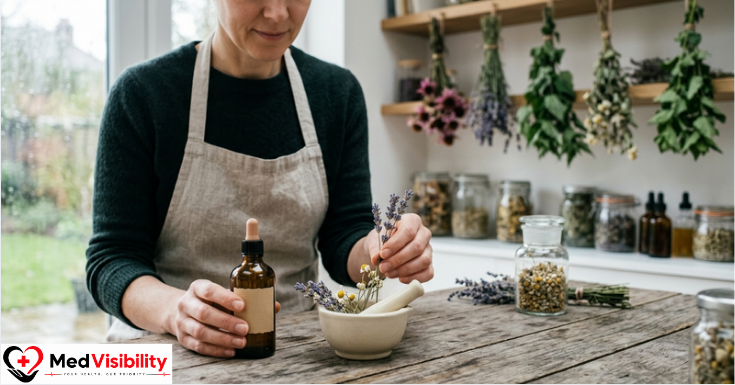
“Natural cure” is not a formal medical term.
People may use it to describe anything from drinking ginger tea and improving their diet to taking herbal capsules, using essential oils, practising relaxation techniques or trying complementary therapies.
The problem is that these approaches are not interchangeable.
A balanced diet, adequate sleep and regular physical activity are established parts of maintaining health. An herbal supplement, by contrast, contains biologically active substances that can affect the body and potentially interact with medicines.
There is also a difference between traditional use and proven clinical effectiveness.
For example, the UK has a Traditional Herbal Registration (THR) scheme for certain herbal medicinal products. The MHRA explains that THR products must meet requirements around quality, safety and traditional use. However, a traditional registration does not mean that a product has been proven to work as an effective treatment for a medical condition in the same way as a medicine supported by clinical efficacy evidence.
So, a safer way to think about natural remedies is:
Natural approaches can sometimes support comfort, healthy habits or general wellbeing, but they should not automatically be considered cures for disease.
Natural Remedies vs Medical Treatment
A useful starting point is to separate three different ideas.
| Approach | What it may involve | Main consideration |
|---|---|---|
| Healthy lifestyle | Balanced food, sleep, movement and stress management | Generally supports overall health |
| Home self-care | Rest, fluids, soothing foods or drinks | Mainly appropriate for minor, short-lived problems |
| Herbal or complementary products | Herbal medicines, supplements, acupuncture and other therapies | Evidence and safety vary considerably. |
| Medical treatment | Medicines, procedures or other clinically recommended care | Used according to a person’s medical condition |
This distinction matters because delaying effective treatment can be harmful.
If you have persistent symptoms, severe pain, unexplained weight loss, breathing difficulties, unusual bleeding, neurological symptoms or other worrying changes, looking for a natural remedy should not replace appropriate medical assessment.
The NHS recommends speaking to a GP about symptoms that do not go away or keep coming back rather than relying solely on complementary therapists.
Everyday Natural Approaches That Can Support Wellbeing
Not every useful health habit needs to come in a bottle.
For many people, the most sensible “natural” approach is to strengthen the basics that support normal health.
Eat a Balanced Diet
Food provides the nutrients your body needs to function.
A varied diet containing vegetables and fruit, wholegrains, protein-rich foods and appropriate sources of dairy or alternatives can help provide a broad range of nutrients.
This does not mean a particular food will cure a disease.
For example, adding more vegetables to meals can contribute to a healthy diet, but it should not be presented as a treatment for cancer, diabetes, arthritis or another medical condition.
Supplements are not automatically better than food. Guy’s and St Thomas’ NHS Foundation Trust notes that most people can obtain necessary nutrients through a balanced diet, although some people may need particular supplements because of deficiency or specific circumstances.
Stay Physically Active
Regular movement is another important part of healthy living.
Walking, cycling, swimming, strength exercises or other activities that suit your ability can contribute to physical fitness and general wellbeing.
You do not need an elaborate programme to start. For someone who has been inactive, building activity gradually may be more realistic than attempting a dramatic lifestyle change.
People with certain health conditions or physical limitations should seek appropriate professional guidance before starting a new exercise programme.
Protect Your Sleep
Sleep is sometimes overlooked when people search for supplements and natural remedies.
A consistent sleep routine, a comfortable sleeping environment and reducing stimulating activities close to bedtime can be useful habits.
If persistent insomnia is affecting your daily life, however, it is worth discussing the problem with a healthcare professional rather than repeatedly experimenting with supplements.
Manage Stress
Stress can affect sleep, concentration, appetite, muscle tension and general wellbeing.
Simple techniques such as slow breathing, relaxation exercises, walking outdoors, mindfulness or making time for enjoyable activities may help some people manage everyday stress.
These approaches are not substitutes for professional help when someone is experiencing significant or persistent mental health symptoms.
Herbal Medicines in the UK
Herbal medicines deserve particular attention because “plant-based” products can sound harmless.
They are not automatically harmless.
The NHS explains that herbal medicines are made from plants or parts of plants and that not all herbal medicines are safe or suitable for everyone. It advises people who are already taking medicines to check with a pharmacist before taking an herbal medicine.
The MHRA regulates certain herbal medicinal products through the Traditional Herbal Registration scheme.
What Does the THR Mark Mean?
A THR mark indicates that a traditional herbal medicinal product has been registered under the relevant UK scheme.
According to MHRA guidance, a traditional herbal registration is intended for products used for minor health conditions where medical supervision is not required. Applicants must provide evidence concerning quality, safety and traditional use.
READ MORE: Natural Remedies That Actually Work A UK Guide
The MHRA also maintains a list of herbal medicines holding a THR.
However, consumers should not interpret a THR mark as proof that a product can cure a serious disease.
That distinction is particularly important when reading online marketing claims.
Are Herbal Remedies Always Safe?
No.
The word “natural” describes the source of an ingredient, not its safety profile.
Some plant substances have powerful effects on the body. An herbal product may also contain several ingredients, and its effects can change depending on the person’s age, health, medicines and other supplements.
Guy’s and St Thomas’ NHS Foundation Trust notes that herbal products can affect the body and may interact with conventional medicines.
The NHS similarly advises people taking medicines to speak to a pharmacist before using herbal medicines.
Potential concerns include:
- interactions with prescription medicines
- side effects
- allergic reactions
- inappropriate use during pregnancy
- unsuitable products for children
- excessive intake of particular nutrients
- contaminated or counterfeit products
- delaying proper diagnosis or treatment
The Food Standards Agency also advises consumers to read supplement labels carefully, follow instructions and seek professional advice before taking supplements if they are pregnant, breastfeeding, have a medical condition or take regular prescribed medicines.
Supplements: When “More” Is Not Better
Vitamin and mineral supplements can be useful in specific circumstances.
But taking large quantities without a reason is not necessarily beneficial.
Some vitamins and minerals can cause problems when consumed in excessive amounts. Taking several products at the same time can also make it difficult to recognise how much of a particular ingredient you are consuming.
The NHS Specialist Pharmacy Service recommends considering the total amount of ingredients when people use multiple complementary products because combining products can increase exposure to ingredients beyond recommended levels.
A simple rule is to avoid assuming that a higher dose produces a greater health benefit.
If you think you have a nutritional deficiency, it is better to discuss the issue with a healthcare professional than to guess which supplement you need.
Popular Natural Remedies: What Should You Know?
Some ingredients appear repeatedly in conversations about natural health.
Their traditional popularity does not necessarily mean that they are proven treatments.
Ginger
Ginger is commonly used in food and drinks and is often associated with digestive comfort and nausea.
As a food ingredient, it can be part of an ordinary balanced diet. Concentrated ginger supplements are different because they deliver larger and more consistent amounts of active compounds.
Anyone taking medicines or considering concentrated supplements should check whether the product is appropriate for them.
Turmeric and Curcumin
Turmeric is widely used as a culinary spice, while curcumin is one of its better-known compounds.
You may see strong claims online about turmeric supplements and inflammation, joint health or other conditions.
Those claims should be treated carefully. A supplement containing a concentrated extract is not the same thing as eating turmeric in normal food quantities. natural cures UK.
If you are considering a concentrated product, particularly alongside medication, discuss it with a pharmacist or doctor.
Peppermint
Peppermint is commonly consumed as a tea or used in food.
Some peppermint preparations are also used in relation to digestive symptoms. However, different products have different concentrations and uses. natural cures UK.
Persistent digestive symptoms should not simply be attributed to something you ate or treated indefinitely with home remedies. natural cures UK.
Chamomile
Chamomile tea is often associated with relaxation and bedtime routines.
For many people, drinking a warm, non-caffeinated beverage can be a pleasant part of an evening routine.
That does not mean chamomile is a proven cure for insomnia or anxiety. natural cures UK.
If sleep problems or anxiety are persistent, consider discussing them with a healthcare professional.
Echinacea
Echinacea is another popular herbal product, particularly around cold and flu season.
Some UK herbal medicines containing echinacea have THR registration for traditional use relating to minor cold symptoms. However, registration based on traditional use should not be confused with proof that the product prevents or cures an infection. natural cures UK.
The UK’s Committee on Toxicity has also highlighted concerns about echinacea use during pregnancy and breastfeeding because of limited reliable human evidence concerning safety. natural cures UK.
This illustrates why “natural” products still require careful consideration. natural cures UK.
What About Homoeopathy?
Homoeopathy is sometimes included in searches for natural cures.
It is important to distinguish homoeopathic products from herbal medicines.
The NHS describes homoeopathy as a complementary approach involving highly diluted substances. The NHS Specialist Pharmacy Service notes that NHS guidance states there is no good-quality evidence that homoeopathy is effective as a treatment for any health condition. natural cures UK.
People should therefore be cautious about websites claiming that homoeopathy can cure serious illnesses or replace conventional treatment. natural cures UK.
What About Complementary Therapies?
Natural health does not always mean taking a supplement.
Complementary therapies include approaches such as acupuncture, hypnotherapy, osteopathy and other practices. natural cures UK.
Evidence differs considerably between therapies and conditions.
The NHS states that some complementary therapies may be available on the NHS in specific circumstances where evidence and cost-effectiveness support their use. Herbal medicines themselves are not available on the NHS. natural cures UK.
This is an important distinction: a therapy being described as “complementary” does not automatically mean it is ineffective, but neither does its popularity establish that it works for every condition.
How to Choose Natural Health Products More Safely in the UK
If you are considering an herbal medicine or supplement, a few practical checks can reduce avoidable risks.
1. Check What the Product Actually Is
Is it:
- a food?
- a food supplement?
- a traditional herbal medicine?
- a homoeopathic product?
- another complementary therapy?
Different categories have different regulatory requirements.
2. Look for Relevant UK Registration
For traditional herbal medicinal products, check for the appropriate THR information on the packaging.
The NHS advises consumers considering herbal medicines to check for a Traditional Herbal Registration mark and product code from the MHRA. natural cures UK.
3. Read the Label
Look at:
- ingredients
- warnings
- recommended use
- allergens
- manufacturer information
- registration or licence details where applicable
Do not assume that an attractive label is evidence of effectiveness. natural cures UK.
4. Be Careful With Online Purchases
The FSA warns consumers about counterfeit products, particularly online products sold at unusually low prices, and recommends checking labels and authorised health claims. natural cures UK.
The NHS also advises against buying unlicensed herbal medicines online because they may not be safe.
5. Tell Your Healthcare Professional
If you use an herbal medicine or supplement, tell your GP, pharmacist or other healthcare professional.
This becomes particularly important when you: natural cures UK.
- take prescription medicines
- Take several supplements
- have a long-term condition
- are pregnant or breastfeeding
- are preparing for surgery
- are considering a product for a child
Natural Remedies and Medication Interactions
One of the biggest mistakes is assuming that natural products cannot interact with medicines.
They can. natural cures UK.
The NHS Specialist Pharmacy Service provides professional guidance on managing interactions involving complementary products, herbal medicines, dietary supplements and conventional medicines.
The exact risk depends on the product and medicine involved. natural cures UK.
That is why a generic internet list of “safe supplements” cannot replace individual advice.
Do not stop a prescribed medicine because an online article recommends a natural alternative.
The NHS specifically advises people not to stop prescribed medicines without first talking to their doctor.
When to See a Doctor
Natural self-care may be reasonable for some minor, short-term problems, but there are situations where medical assessment matters. natural cures UK.
Speak to a healthcare professional if:
- symptoms are persistent or repeatedly return
- symptoms are getting worse
- You have unexplained weight loss
- You have severe or unusual pain
- You have difficulty breathing
- You experience unexplained bleeding
- You develop a new lump
- You have persistent vomiting
- You have significant neurological symptoms
- You are concerned about a new or unexplained symptom
Do not use a natural remedy to delay assessment of a potentially serious condition.
A natural product may be something you use alongside appropriate care, but it should not become a reason to avoid that care. natural cures UK.
Common Mistakes to Avoid
Assuming Natural Means Safe
This is probably the most important misconception.
Plants contain chemicals, and some can have significant biological effects.
Replacing Prescribed Treatment
A supplement or herbal tea should not be treated as a replacement for prescribed medicine unless a qualified healthcare professional has advised you to change your treatment. natural cures UK.
Taking Several Supplements Together
Combining products can make it easy to consume excessive amounts of particular ingredients.
Trusting “Miracle Cure” Claims
Claims such as “cures cancer”, “detoxes the body”, “reverses diabetes” or “replaces medication” should raise immediate concerns. natural cures UK.
Serious medical claims require strong evidence.
Ignoring the Difference Between Food and Extracts
Eating a herb as part of a meal is not necessarily equivalent to taking a concentrated extract in capsule form.
Buying From Unknown Sellers
Cheap products from unknown online sellers may create additional risks around authenticity, quality and ingredients.natural cures UK. natural cures UK.
A Simple Way to Evaluate a Natural Remedy
Before trying something, ask five questions:
- What problem am I trying to address?
- What evidence shows that this product or approach helps?
- Could it interact with my medicines or health conditions?
- Is the product properly regulated or appropriately labelled?
- Would trying it delay medical diagnosis or treatment?
If you cannot answer these questions confidently, speak to a pharmacist, GP or another qualified healthcare professional. natural cures UK.
Natural Cures UK: What Is a Sensible Approach?
For readers searching for natural cures in the UK, the safest approach is not to look for one magical remedy.
Instead, think about natural health in layers. natural cures UK.
First, focus on the fundamentals: nutritious food, physical activity, adequate sleep, stress management, avoiding smoking and keeping alcohol within recommended limits.
Second, use simple self-care appropriately for minor, short-lived problems.
Third, research herbal medicines and supplements carefully rather than assuming they are harmless.
Finally, seek professional medical advice when symptoms are persistent, severe, unusual or worrying.
The NHS position is particularly useful here: herbal medicines and complementary therapies can have a place in healthcare, but they are not automatically safe, and evidence varies between products and therapies.
Conclusion
The growing interest in natural cures in the UK reflects a reasonable desire to take greater control over everyday health. But good self-care is different from searching for a miracle cure.
A healthy diet, regular movement, good sleep and sensible stress management can form a strong foundation for wellbeing. Herbal medicines and supplements may have specific uses, but their safety and evidence vary, and some can interact with medicines. natural cures UK.
The most useful question is therefore not simply, “Is this natural?”
It is:
READ MORE: Herbal Remedies UK What Actually Works, What to Watch Out For
“Is this approach appropriate for me, supported by reliable evidence, and safe alongside the care I already receive?” natural cures UK.
When the answer is uncertain, a pharmacist, GP or qualified healthcare professional can help you make a safer decision. natural cures UK.
FAQs
What are natural cures in the UK?
“Natural cures” is not a formal medical category. The phrase usually refers to lifestyle changes, home remedies, herbal medicines, supplements or complementary therapies. Some may support wellbeing or relieve minor symptoms, but natural products should not automatically be considered cures for medical conditions.
Are natural remedies safer than medicines?
Not necessarily. Herbal medicines and supplements can cause side effects and interact with conventional medicines. The NHS recommends checking with a pharmacist before taking herbal medicines if you already take medication. natural cures UK.
What does THR mean in herbal medicine?
THR stands for Traditional Herbal Registration. The MHRA uses this scheme for certain traditional herbal medicinal products intended for minor health conditions where medical supervision is not normally required. Registration involves requirements relating to quality, safety and traditional use.
Can I take herbal remedies with prescription medicines?
You should check first with a pharmacist or doctor. Some herbal products and supplements can interact with medicines, potentially changing their effects or increasing side effects.
Is homoeopathy a natural cure?
Homoeopathy is a complementary approach rather than a conventional medical treatment. NHS guidance states that there is no good-quality evidence that homoeopathy is effective for treating any health condition.
Should I stop prescribed medicine and use natural remedies instead?
No. Do not stop prescribed medicine because of an online recommendation. Discuss any proposed change with the healthcare professional responsible for your care. natural cures UK.
For more updates visit: medvisibility.co.uk

Strength Training for Women Over 40 UK A Practical, Evidence-Based Guide


No Comment! Be the first one.