



You wake up with a heavy chest. The news is grim, your to-do list is overwhelming, and a low-level anxiety hums in the background of your mind like a faulty refrigerator. You know your faith is supposed to be a source of peace, but in the chaos of daily life, that peace feels distant. You pray, but your thoughts scatter. You read a Bible verse, but it slips away like water through your fingers before you have even finished your coffee.
If this resonates, you are not alone. Many people long for a deeper, more grounded spiritual life but feel stuck in a cycle of distraction and surface-level engagement. The ancient practice of meditating on Scripture offers a way out of that cycle. It is not about emptying your mind or achieving a mystical state; it is a practical, repeatable way to fill your mind with truth, reorient your heart, and find genuine calm in the midst of stress. Learning how to meditate on God’s word is a skill, and like any skill, it can be broken down into simple, manageable steps.
This guide will walk you through the practice from a health and wellness perspective. We will explore what biblical meditation actually is, the growing body of evidence linking it to improved mental wellbeing, and a step-by-step method you can try today. We will also look at how to build a sustainable habit and when to seek professional help if the weight you are carrying feels too heavy to bear alone.
Important note: This article is for general information purposes only and is not a substitute for professional medical advice, diagnosis, or treatment. Meditation is a supportive spiritual and wellness practice, not a replacement for clinical care. If you are experiencing significant mental health difficulties, always speak to your GP or a qualified mental health professional.
What Is Biblical Meditation?

The word “meditation” can be confusing because it has two very different meanings. In many secular contexts, meditation involves emptying the mind, clearing thoughts, and achieving a state of detached awareness. Biblical meditation is almost the opposite. It is about filling the mind—repeatedly, intentionally, and prayerfully—with the words of Scripture, allowing them to shape your thoughts, your emotions, and your actions.
The Original Meaning
The Hebrew word often translated as “meditate” in the Old Testament is hagah. It literally means to murmur, to mutter, or to ponder. It is the same word used to describe a lion growling over its prey. It carries the sense of engaging with something deeply—chewing on it, savouring it, and letting it become part of you. Psalm 1 describes the blessed person as one who meditates on God’s law “day and night,” likening them to a tree planted by streams of water that yields fruit in season and whose leaf does not wither.
This is not a passive or purely intellectual exercise. It is an active, relational engagement with the text, done in the presence of God, with the expectation that the words will do something—convict, comfort, challenge, or transform.
Biblical Meditation vs. Mindfulness
It is helpful to draw a clear distinction between biblical meditation and secular mindfulness, which is increasingly popular in health and wellness spaces. While both practices involve focused attention and can reduce stress, their foundations and goals are different.
| Feature | Biblical Meditation | Secular Mindfulness |
|---|---|---|
| Core Action | Filling the mind with Scripture | Observing thoughts without judgment |
| Primary Focus | God’s character and Word | The present moment and bodily sensations |
| Goal | Transformation, intimacy with God | Stress reduction, emotional regulation |
| Framework | Relational (with God) | Individual (self-regulation) |
| Role of Content | Central and essential | Often incidental or neutral |
The distinction matters for two reasons. First, it helps you choose the right practice for your goals. Second, it clarifies why biblical meditation may offer benefits that go beyond stress relief. A study comparing spiritual heart-centred meditation to mindfulness found that the spiritual element—the relational and transcendent dimension—may add unique psychological value. The goal is not just to feel calmer, but to be changed from the inside out.
The Science: Why Meditation on Scripture Can Support Mental Health
You might be wondering whether there is any real evidence that meditating on ancient texts can affect modern mental health. The honest answer is that the research is still developing, but the early findings are promising.
Calming the Nervous System
One of the most concrete benefits of meditating on Scripture is its effect on the body’s stress response. When you are anxious or overwhelmed, your nervous system enters a state of hyperarousal—your heart races, your muscles tense, and your breathing becomes shallow. This is sometimes called the “fight or flight” response. Meditating on Scripture engages several processes that help calm this system: slowing racing thought patterns, replacing fear-driven mental loops, increasing emotional grounding, and encouraging slower breathing and reflection.
A small study of university students found that Scripture meditation (specifically the practice of Lectio Divina) provided an effective way of managing negative emotional reactions to stress. Other research has suggested that devotional meditation—a practice that involves reflecting on religious content—can produce physiological and psychological effects similar to progressive relaxation exercises. how to meditate on god’s word.
The Power of Repetition
Repeatedly returning to a phrase or verse is a core part of biblical meditation. This repetition is not mindless; it is a way of “renewing the mind,” as the Apostle Paul describes it in Romans 12:2. From a neuroscience perspective, this makes sense. The brain changes according to repeated focus; neural pathways strengthen around whatever receives consistent attention. When you repeatedly rehearse fear-based thoughts, your brain becomes sensitised to stress. When you repeatedly return to words of truth, hope, and peace, different neural patterns begin to form.
This does not mean Scripture functions as a quick fix or a magic formula. Emotional pain is often complex and layered. But meditation on God’s word provides something the nervous system desperately needs during distress: steadiness. It offers a regular, reliable point of focus that can help the body relearn safety and calm in the presence of God. how to meditate on god’s word.
A Caution About Overclaiming
It is important to be balanced. Much of the evidence for the mental health benefits of biblical meditation comes from small studies, anecdotal reports, and theological reflection. Larger, more rigorous clinical trials are needed to draw definitive conclusions. Some systematic reviews have noted that Christian meditation is largely underrepresented in clinical studies of efficacy, even though it has been practised for millennia. What this means for you is that meditation on Scripture is a valuable and low-risk practice for many people, but it should not be viewed as a guaranteed cure for serious mental health conditions. how to meditate on god’s word.
How to Meditate on God’s Word: A Step-by-Step Guide
The best way to learn how to meditate on God’s word is to start with a simple, structured practice. One of the most enduring and widely practised methods is Lectio Divina, a Latin phrase meaning “divine reading.” It has been used for centuries and remains a highly effective framework for engaging with Scripture. Here is how to do it. how to meditate on god’s word.
Step 1: Prepare Your Space and Your Heart
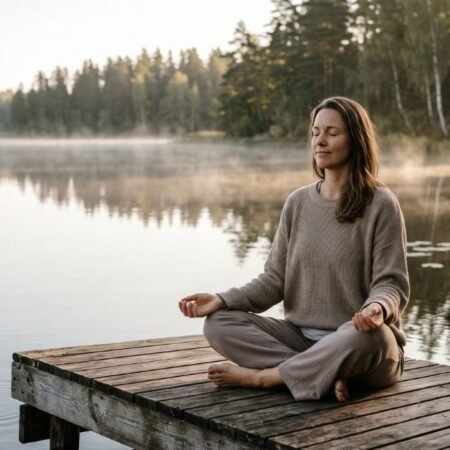
Find a quiet place where you will not be interrupted for at least ten minutes. This does not need to be a monastery or a dedicated prayer room; a quiet corner with a comfortable chair is sufficient. Turn off your phone or put it on silent. Take a few deep breaths and consciously acknowledge that you are in the presence of God. You are not just reading a book; you are opening yourself to a relationship. how to meditate on god’s word.
Step 2: Read the Passage Slowly (Lectio)
Select a short passage of Scripture—perhaps four to eight verses from a Psalm, one of the Gospels, or one of the Epistles. You do not need to cover a large amount of text. A single verse or a short paragraph is ideal. Read the passage slowly, preferably aloud, and read it more than once. Read it attentively, listening for a word or phrase that stands out to you. Do not analyse or rush. Simply notice what resonates. how to meditate on god’s word.
Step 3: Reflect and Repeat (Meditatio)
Take the word or phrase that caught your attention and repeat it gently to yourself. Dwell on it. Let it roll around in your mind. Do not try to extract its intellectual meaning or build a complex theological argument. Instead, let the words speak to you as if God is saying them to you personally. Repeat them again and again, slowly and thoughtfully. This is the heart of the practice—filling your mind with the words and allowing them to settle into your heart.
Step 4: Respond in Prayer (Oratio)
After you have spent some time reflecting on the phrase, respond to God. This can be done silently or in writing. Speak honestly about what the words stirred in you. If the verse brought peace, express gratitude. If it brought conviction, ask for forgiveness. If it brought a question, ask for guidance. This is a conversation, not a performance. how to meditate on god’s word.
Step 5: Rest in God’s Presence (Contemplatio)
Finally, take a few minutes to simply rest. Stop talking, stop thinking, and simply be still. You do not need to do anything or achieve anything. This is a time of quiet listening and love, a time to be attentive to God without words. When you feel ready, slowly open your eyes and return to your day. how to meditate on god’s word.
Building a Sustainable Habit
The most important thing about meditating on God’s word is not the length of your practice, but the consistency. A five-minute daily practice is more valuable than an hour-long session once a month. how to meditate on god’s word.
Start Small
Do not try to meditate for thirty minutes on your first day. Start with five or ten minutes. Choose a short passage and follow the five steps above. As the practice becomes more familiar, you can gradually extend the time. how to meditate on god’s word.
Anchor It to Your Routine
Try to meditate at the same time and in the same place each day. Many people find that first thing in the morning, before the day’s demands begin, is the most sustainable time. You can also use small pockets of time—a lunch break, a commute (using an audio Bible), or the moments before bed. how to meditate on god’s word.
Use Resources
You do not have to do this alone. There are many resources available, including guided Scripture meditation apps, podcasts, and devotional books. Some churches offer courses or small groups that practice Lectio Divina together. If you are new to the Bible, start with the Psalms or the Gospels, which are accessible and rich with comforting, grounding passages.
Be Kind to Yourself
Your mind will wander. You will get distracted. You will miss days. This is normal. The practice is not about perfection; it is about showing up. When you notice your mind has wandered, gently bring it back to the verse. Do not judge yourself. Begin again. how to meditate on god’s word.
When to Seek Professional Help
Meditation on Scripture is a powerful supportive practice, but it is not a substitute for professional mental health care. You should seek help from a GP or a qualified mental health professional if: how to meditate on god’s word.
- You are experiencing persistent low mood, anxiety, or hopelessness.
- Your mental health is significantly affecting your daily life, work, or relationships.
- You are having thoughts of self-harm or suicide. how to meditate on god’s word.
- You are using spiritual practices as a way to avoid dealing with a serious problem or to suppress difficult emotions. how to meditate on god’s word.
In the UK, you can also self-refer to NHS Talking Therapies for confidential, evidence-based help with stress, anxiety, and depression. Many NHS chaplaincy services also offer spiritual and emotional support alongside clinical care. how to meditate on god’s word.
Frequently Asked Questions
What does it mean to meditate on God’s word?
It means to intentionally and prayerfully focus your mind on a passage of Scripture. Unlike secular meditation, which often aims to empty the mind, biblical meditation involves filling the mind with the words of the Bible, repeating them, reflecting on them, and allowing them to shape your thoughts and emotions. how to meditate on god’s word.
How long should I meditate on Scripture?
For beginners, five to ten minutes a day is a good starting point. The goal is consistency, not duration. As the practice becomes more natural, you can extend the time. Even a few minutes of focused reflection can be beneficial. how to meditate on god’s word.
What is Lectio Divina?
Lectio Divina is a traditional Christian practice of meditating on Scripture that involves four or five steps: reading a short passage slowly, reflecting on a word or phrase that stands out, responding in prayer, and resting in God’s presence. It is one of the most widely used methods for biblical meditation. how to meditate on god’s word.
Can meditating on Scripture help with anxiety?
Research suggests that meditating on Scripture can help calm the nervous system, reduce stress, and improve emotional regulation. Many people find it a valuable supportive practice for managing anxiety. However, it should not replace professional treatment for anxiety disorders.
Do I need to be a Bible expert to meditate on Scripture?
No. You do not need any special theological training. The practice is accessible to anyone who can read a short passage and reflect on it. Start with a few verses from the Psalms or the Gospels, and let the words speak for themselves. how to meditate on god’s word.
What if I get distracted?
Getting distracted is a normal part of the practice. The goal is not to have a perfectly blank mind. When you notice you have wandered, gently bring your attention back to the verse. Each time you do this, you are strengthening your ability to focus.
Final Thoughts
Learning how to meditate on God’s word is not about adding another task to your spiritual to-do list. It is about creating a space of stillness and truth in the middle of a noisy, demanding world. It is a practice that engages your mind, your heart, and your body, offering a path to both spiritual depth and emotional calm. how to meditate on god’s word.
Start small. Find a quiet corner, open a short passage, and read it slowly. Repeat a phrase that catches your attention. Speak to God honestly. And then simply rest. That is the whole practice. Over time, those small, consistent moments of stillness can become a source of strength and steadiness that carries you through the most stressful days.
Medical Disclaimer: This article is provided for general information purposes only and is not intended as medical advice, diagnosis, or treatment. Always seek the advice of your doctor or other qualified health professional with any questions you may have regarding a medical condition. Never disregard professional medical advice or delay in seeking it because of something you have read online. how to meditate on god’s word.


5 Best Facts What Is Mindfulness?
5 Best Steps How to Meditate for Beginners




[…] Mindfulness-Based Stress Reduction (MBSR), captures the essence of the practice. It is a quality of awareness that you can cultivate through formal meditation and informal daily […]