



Meditation can wipe away the day’s stress, bringing with it inner peace. See how you can easily learn to practice meditation whenever you need it most.
If stress has you anxious, tense and worried, you might try meditation. Spending even a few minutes in meditation can help restore your calm and inner peace.
Anyone can practice meditation. It’s simple and doesn’t cost much. And you don’t need any special equipment.
You can practice mindfulness wherever you are. You can meditate when you’re out for a walk, riding the bus, waiting at the doctor’s office or even in the middle of a business meeting.
What Is Meditation, Really?
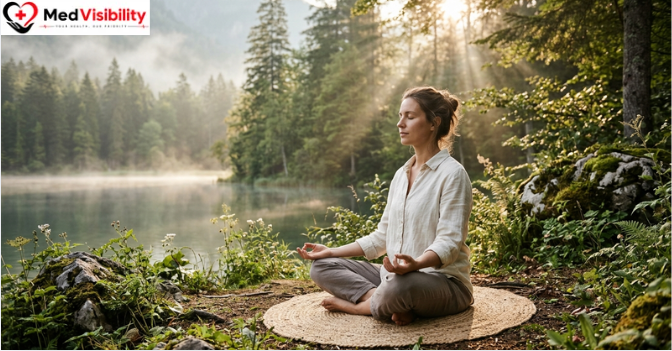
For many people, the word “meditation” brings to mind images of monks sitting cross-legged in silence for hours. But in the modern world, mindfulness is simply a form of mental training.
It is a set of techniques designed to encourage a heightened state of awareness and focused attention. When you meditate, you are not trying to “empty your mind” (which is practically impossible). Instead, you are practicing the art of noticing when your mind has wandered off into a spiral of stressful thoughts, and gently bringing your attention back to the present moment.
This simple act of redirecting your focus is like doing a bicep curl for your brain. The more you practice it, the stronger your ability to stay calm under pressure becomes.
Understanding meditation
Meditation has been around for thousands of years. Early meditation was meant to help deepen understanding of the sacred and mystical forces of life. These days, mindfulness is most often used to relax and lower stress.
Meditation is a type of mind-body complementary medicine. mindfulness can help you relax deeply and calm your mind.
During mindfulness, you focus on one thing. You get rid of the stream of thoughts that may be crowding your mind and causing stress. This process can lead to better physical and emotional well-being.
Benefits of meditation
Meditation can give you a sense of calm, peace and balance that can benefit your emotional well-being and your overall health. You also can use it to relax and cope with stress by focusing on something that calms you. mindfulness can help you learn to stay centered and keep inner peace.
These benefits don’t end when your meditation session ends. mindfulness can help take you more calmly through your day. And meditation may help you manage symptoms of some medical conditions.
Meditation and emotional and physical well-being
When you meditate, you may clear away the information overload that builds up every day and contributes to your stress.
The emotional and physical benefits of mindfulness can include:
- Giving you a new way to look at things that cause stress.
- Building skills to manage your stress.
- Making you more self-aware.
- Focusing on the present.
- Reducing negative feelings.
- Helping you be more creative.
- Helping you be more patient.
- Lowering resting heart rate.
- Lowering resting blood pressure.
- Helping you sleep better.
Meditation and illness
mindfulness also might help if you have a medical condition. This is most often true if you have a condition that stress makes worse.
A lot of research shows that meditation is good for health. But some experts believe there’s not enough research to prove that meditation helps.
With that in mind, some research suggests that mindfulness may help people manage symptoms of conditions such as:
- Anxiety.
- Asthma.
- Cancer.
- Chronic pain.
- Depression.
- Heart disease.
- High blood pressure.
- Irritable bowel syndrome.
- Sleep problems.
- Tension headaches.
Be sure to talk to your healthcare professional about the pros and cons of using meditation if you have any of these or other health conditions. Sometimes, mindfulness might worsen symptoms linked to some mental health conditions.
Meditation doesn’t replace medical treatment. But it may help to add it to other treatments.
Types of meditation
Meditation is an umbrella term for the many ways to get to a relaxed state. There are many types of meditation and ways to relax that use parts of mindfulness. All share the same goal of gaining inner peace.
Ways to meditate can include:
- Guided meditation. This is sometimes called guided imagery or visualization. With this method of mindfulness, you form mental images of places or things that help you relax.You try to use as many senses as you can. These include things you can smell, see, hear and feel. You may be led through this process by a guide or teacher.
- Mantra meditation. In this type of mindfulness, you repeat a calming word, thought or phrase to keep out unwanted thoughts.
- Mindfulness meditation.This type of meditation is based on being mindful. This means being more aware of the present.In mindfulness mindfulness, you focus on one thing, such as the flow of your breath. You can notice your thoughts and feelings. But let them pass without judging them.
- Qigong. This practice most often combines mindfulness, relaxation, movement and breathing exercises to restore and maintain balance. Qigong (CHEE-gung) is part of Chinese medicine.
- Tai chi. This is a form of gentle Chinese martial arts training. In tai chi (TIE-CHEE), you do a series of postures or movements in a slow, graceful way. And you do deep breathing with the movements.
- Yoga. You do a series of postures with controlled breathing. This helps give you a more flexible body and a calm mind. To do the poses, you need to balance and focus. That helps you to focus less on your busy day and more on the moment.
Parts of meditation
Each type of mindfulness may include certain features to help you meditate. These may vary depending on whose guidance you follow or who’s teaching a class. Some of the most common features in meditation include:
- Focused attention. Focusing your attention is one of the most important elements of mindfulness.Focusing your attention is what helps free your mind from the many things that cause stress and worry. You can focus your attention on things such as a certain object, an image, a mantra or even your breathing.
- Relaxed breathing. This technique involves deep, even-paced breathing using the muscle between your chest and your belly, called the diaphragm muscle, to expand your lungs. The purpose is to slow your breathing, take in more oxygen, and reduce the use of shoulder, neck and upper chest muscles while breathing so that you breathe better.
- A quiet setting. If you’re a beginner, meditation may be easier if you’re in a quiet spot. Aim to have fewer things that can distract you, including no television, computers or cellphones.As you get more skilled at meditation, you may be able to do it anywhere. This includes high-stress places, such as a traffic jam, a stressful work meeting or a long line at the grocery store. This is when you can get the most out of mindfulness.
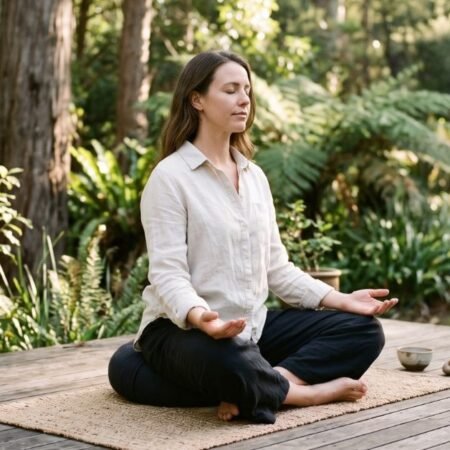
- A comfortable position. You can practice meditation whether you’re sitting, lying down, walking, or in other positions or activities. Just try to be comfortable so that you can get the most out of your meditation. Aim to keep good posture during mindfulness.
- Open attitude. Let thoughts pass through your mind without judging them.
Everyday ways to practice meditation
Don’t let the thought of meditating the “right” way add to your stress. If you choose to, you can attend special meditation centers or group classes led by trained instructors. But you also can practice meditation easily on your own. There are apps to use too.
And you can make meditation as formal or informal as you like. Some people build meditation into their daily routine. For example, they may start and end each day with an hour of mindfulness. But all you really need is a few minutes a day for meditation.
Here are some ways you can practice mindfulness on your own, whenever you choose:
- Breathe deeply. This is good for beginners because breathing is a natural function.Focus all your attention on your breathing. Feel your breath and listen to it as you inhale and exhale through your nostrils. Breathe deeply and slowly. When your mind wanders, gently return your focus to your breathing.
- Scan your body. When using this technique, focus attention on each part of your body. Become aware of how your body feels. That might be pain, tension, warmth or relaxation.Mix body scanning with breathing exercises and think about breathing heat or relaxation into and out of the parts of your body.
- Repeat a mantra. You can create your own mantra. It can be religious or not. Examples of religious mantras include the Jesus Prayer in the Christian tradition, the holy name of God in Judaism, or the om mantra of Hinduism, Buddhism and other Eastern religions.
- Walk and meditate. Meditating while walking is a good and healthy way to relax. You can use this technique anywhere you’re walking, such as in a forest, on a city sidewalk or at the mall.When you use this method, slow your walking pace so that you can focus on each movement of your legs or feet. Don’t focus on where you’re going. Focus on your legs and feet. Repeat action words in your mind such as “lifting,” “moving” and “placing” as you lift each foot, move your leg forward and place your foot on the ground. Focus on the sights, sounds and smells around you.
- Pray. Prayer is the best known and most widely used type of mindfulness. Spoken and written prayers are found in most faith traditions.You can pray using your own words or read prayers written by others. Check the self-help section of your local bookstore for examples. Talk with your rabbi, priest, pastor or other spiritual leader about possible resources.
- Read and reflect. Many people report that they benefit from reading poems or sacred texts and taking a few moments to think about their meaning.You also can listen to sacred music, spoken words, or any music that relaxes or inspires you. You may want to write your thoughts in a journal or discuss them with a friend or spiritual leader.
- Focus your love and kindness. In this type of meditation, you think of others with feelings of love, compassion and kindness. This can help increase how connected you feel to others.
Building your meditation skills
Don’t judge how you meditate. That can increase your stress. mindfulness takes practice.
It’s common for your mind to wander during mindfulness, no matter how long you’ve been practicing meditation. If you’re meditating to calm your mind and your mind wanders, slowly return to what you’re focusing on.
Try out ways to meditate to find out what types of mindfulness work best for you and what you enjoy doing. Adapt meditation to your needs as you go. Remember, there’s no right way or wrong way to meditate. What matters is that meditation helps you reduce your stress and feel better overall.
FAQ’s
How long should I meditate to reduce stress?
Even a three to five-minute session can trigger the relaxation response. For long-term benefits, research suggests aiming for 10 to 20 minutes a day.
Can meditation replace medication for anxiety?
No. Never stop taking prescribed medication without consulting your doctor. Meditation can be a complementary practice that works alongside therapy and medication, but it is not a replacement.
Do I need an app to meditate?
No. While apps like Calm or Headspace can be incredibly helpful for guided sessions, you can practice meditation entirely for free simply by focusing on your breath.
What is the best time of day to meditate?
The best time is whenever you can consistently do it. Many people prefer the morning to set a calm tone for the day, while others prefer the evening to unwind.
Why do I feel more anxious when I try to meditate?
When you stop distracting yourself, you may suddenly notice underlying anxiety or stress. This is normal. Try shorter sessions, guided meditations, or movement-based meditation to ease into the practice.
Conclusion
Stress is an unavoidable part of life, but suffering from it does not have to be. Meditation offers a simple, free, and scientifically backed way to hit the pause button on the chaos.
You do not need to be perfect at it. You just need to show up, breathe, and gently bring your mind back to the present. The peace you are looking for is not somewhere else; it is right here, waiting for you to notice it.
Medical Disclaimer: This article is for informational purposes only and is not a substitute for professional medical advice, diagnosis, or treatment. Always seek the advice of your physician or another qualified health provider with any questions you may have regarding a medical condition.


5 Best Facts What Is ScienceDirect?
5 Best Facts What Is Mindfulness?

No Comment! Be the first one.