



You reach for a brightly coloured can, hoping for a quick jolt of energy to power through a long afternoon. It has become a daily ritual for millions, a seemingly harmless pick-me-up sold right next to the bottled water. But what if that quick fix carried a hidden risk for your heart?
A new, preliminary study presented at the American Heart Association’s Scientific Sessions 2026 has cast a stark new light on these popular beverages, revealing a potential link between energy drinks and serious cardiac events in young adults. The findings are striking, and they are prompting urgent questions about the safety of products many of us consume without a second thought.
This article will break down the key findings of the american heart association energy drink study, explain the science behind why these drinks might be dangerous, compare them to your morning coffee, and offer practical advice for protecting your heart health in a world saturated with stimulants.
Important note: This article is for general information purposes only and is not a substitute for professional medical advice, diagnosis, or treatment. Always speak to your GP or a qualified healthcare professional about any concerns regarding your heart health or before making significant changes to your diet.
The American Heart Association Energy Drink Study: What It Found
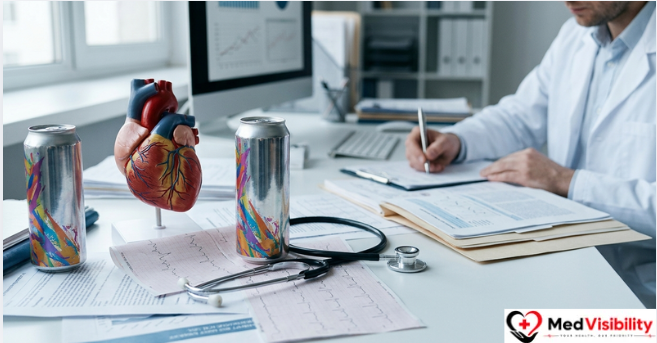
The research, which is preliminary and was presented at a major medical conference, analysed a vast dataset of adverse event reports submitted to the U.S. Food and Drug Administration (FDA) over an eight-year period, from 2017 to 2025. The researchers compared reports involving caffeinated energy drinks and stimulant supplements with reports involving other food products.
The results were striking. The study found that these caffeinated products were disproportionately associated with serious cardiovascular events.
Key Findings at a Glance
The data revealed a worrying pattern, particularly concerning for a demographic not typically considered at high risk for heart problems. Here are the core findings:
- Cardiac Arrest: Reports of cardiac arrest were approximately 11 times more frequent in connection with energy drinks and stimulant supplements compared to other FDA-regulated products.
- Heart Attacks: The reports were nearly 4.5 times more likely to be associated with these products.
- Young Adults at Risk: About 45% of the heart emergency reports involved young adults aged 18 to 34, a group that usually has a low risk of cardiovascular events.
- Other Complications: The study also linked these products to higher reports of ventricular arrhythmias (abnormal heart rhythms), elevated heart rate, chest pain, and fainting (syncope).
Lead study author Sai Samayamanthula, a medical student at the University of Virginia School of Medicine, noted, “These products are marketed as everyday pick-me-ups and sold next to soda and bottled water, so most people assume they carry no real risk”. The study’s findings challenge that assumption head-on.
Why Are Energy Drinks Linked to Heart Problems?
The study establishes a correlation, not a direct cause-and-effect relationship. It shows that these events are reported more often with energy drinks, but it does not definitively prove the drinks caused the events. However, researchers have strong theories as to why these products pose a unique risk. It comes down to three main factors: the amount of caffeine, the additional ingredients, and how they are consumed.
The Caffeine Factor: It’s Not Just About the Amount
Caffeine is a stimulant that affects the brain and nervous system, making you feel more alert. While up to 400 mg of caffeine a day is generally considered safe for most healthy adults, the problem with energy drinks lies in their concentration and delivery.
The study points out that, compared with brewed coffee, some energy drinks contain as much as three times more caffeine per fluid ounce, and some pre-workout supplements contain over 12 times as much. This high concentration can lead to a rapid intake of caffeine, overwhelming the body’s ability to process it safely. american heart association energy drink study.
The “Other” Ingredients
Energy drinks are not just caffeine and water. They often contain a cocktail of other ingredients that can amplify the effects of caffeine. american heart association energy drink study.
- Guarana: A plant extract that is a concentrated source of caffeine.
- Taurine: An amino acid that is often added to these drinks. While generally safe in moderation, its interaction with high doses of caffeine is not fully understood.
- Sugar: Many energy drinks are loaded with sugar. A 500ml can of Monster, for example, contains 55g of sugar, which is more than the NHS recommends an adult consume in a whole day. american heart association energy drink study.
These added ingredients can speed up the absorption of caffeine and spike blood pressure, compounding the stress on the cardiovascular system.
Rapid Consumption and Lack of Regulation
How people consume energy drinks is another critical factor. They are often “chugged” quickly for a fast energy boost, rather than sipped slowly like a hot coffee. This rapid consumption delivers a large dose of caffeine to the system in a short time. american heart association energy drink study.
Furthermore, the study highlights a crucial regulatory gap. In the U.S., the FDA regulates energy drinks and stimulant supplements as foods or dietary supplements, not as medications. This means they do not go through the same rigorous premarket safety testing required for pharmaceutical drugs. This lack of stringent oversight allows products with high and variable caffeine levels to reach the market with relative ease.
How Do Energy Drinks Compare to Coffee?
It is easy to assume a cup of coffee and an energy drink are created equal. They are both caffeinated, after all. But the reality is more complex, and a simple comparison can be misleading. american heart association energy drink study.
A standard cup of coffee contains about 80 to 100 mg of caffeine. A 250ml can of Red Bull contains 80mg. So far, they seem similar. However, the issue is not just the total amount, but the concentration and the way it is consumed. american heart association energy drink study.
A Table Comparison: The Caffeine and Sugar Trap
As the table shows, a can of Monster contains significantly more caffeine and sugar than a standard coffee. Interestingly, some high-street coffees, like a medium cappuccino from Costa, can contain even more caffeine (325mg) than four cans of Red Bull. This highlights that the source of caffeine matters, but the context of consumption is equally important. A coffee is often sipped over time, while an energy drink is frequently consumed rapidly, delivering a more intense physiological shock. american heart association energy drink study.
The Broader Context: A Growing Public Health Concern
The findings from the american heart association energy drink study are not happening in a vacuum. They are part of a growing global conversation about the safety of highly caffeinated products, especially for young people. american heart association energy drink study.
Regulatory Action in the UK
In the UK, the concerns are being taken seriously. In a bid to protect children’s health, the government has announced a ban on the sale of high-caffeine energy drinks to under-16s in England. The ban targets drinks containing more than 150mg of caffeine per litre and includes popular brands like Red Bull, Monster, and Prime. american heart association energy drink study.
The government’s rationale is rooted in protecting physical and mental health, with ministers citing the need to prevent issues such as disrupted sleep, increased anxiety, and poor concentration in young people. This move underscores a growing consensus that these products, marketed as lifestyle beverages, carry risks that demand regulatory oversight.
The Data Behind the Study
The study analyzed over 28,000 adverse event reports submitted to the FDA between 2017 and 2025. Of these, about 850 involved caffeine- or stimulant-containing products. The researchers then compared the frequency of cardiovascular events in these reports to the frequency in reports for other products. american heart association energy drink study.
The finding that cardiac arrest was reported 11 times more often is a powerful signal, even if it is based on a reporting system rather than a controlled clinical trial. It suggests a strong association that warrants further investigation and caution.
Practical Steps for Protecting Your Heart
While the study’s findings are concerning, they do not mean you need to panic if you occasionally have an energy drink. The risk, as the study author noted, is “probably small” for healthy people who consume them occasionally. However, for regular consumers, or those with underlying health conditions, it is a clear call to re-evaluate. american heart association energy drink study.
1. Know Your Limits
The general safe limit for caffeine is 400mg per day for most healthy adults, and 200mg for pregnant women. Start by calculating your intake. Are you having multiple energy drinks a day? Are you also drinking strong coffees? Awareness is the first step. american heart association energy drink study.
2. Read the Label (Carefully)
Do not just look at the front of the can. Check the nutritional information panel for the caffeine content per serving and per 100ml. Be aware that a large can may contain multiple servings. Also, look out for added sugars, which contribute to other health risks like obesity and diabetes.
3. Consider Your Health Status
If you have a pre-existing heart condition, high blood pressure, or are taking medication for a heart-related issue, you should be particularly cautious. The study’s finding of serious events in young people with no conventional risk factors is a stark reminder that these products can affect anyone. It is always best to consult your GP before consuming them regularly.
4. Choose Your Caffeine Source Wisely
If you need a caffeine boost, consider the source. A cup of tea or coffee, consumed slowly, is generally a safer option than a rapid-fire energy drink. The natural balance of compounds in coffee and tea may also offer some protective benefits that isolated, high-dose caffeine products do not. american heart association energy drink study.
When to See a Doctor
While the study highlights a population-level risk, it is crucial to listen to your own body. You should seek medical advice if you experience any of the following symptoms, especially after consuming an energy drink or other stimulant: american heart association energy drink study.
- Chest pain or tightness
- A racing, pounding, or fluttering heartbeat (palpitations)
- Shortness of breath
- Dizziness, lightheadedness, or fainting
- Unusual and persistent fatigue
If you have any underlying heart condition, it is vital to discuss your caffeine intake with your GP. They can provide personalised advice based on your medical history.
FAQs
What did the American Heart Association energy drink study find?
The preliminary study found that reports of serious cardiovascular events, including cardiac arrest (11 times more likely) and heart attacks (4.5 times more likely), were disproportionately associated with energy drinks and stimulant supplements compared to other products. The risks were particularly notable in young adults aged 18 to 34.
Does this study prove that energy drinks cause heart attacks?
No. The study establishes a correlation, not a causation. It shows that these events are reported more often with these products, but further research is needed to definitively prove cause and effect. american heart association energy drink study.
How much caffeine is safe per day?
For most healthy adults, up to 400mg of caffeine a day is considered safe. This is roughly equivalent to four or five cups of brewed coffee. For pregnant women, the NHS recommends limiting intake to 200mg a day. american heart association energy drink study.
Are energy drinks worse for you than coffee?
It depends on the drink and how you consume it. Some energy drinks contain significantly more caffeine per fluid ounce than coffee and are often consumed rapidly. They also frequently contain high amounts of sugar. While a strong coffee can have high caffeine, it is typically sipped slowly. american heart association energy drink study.
Why are young people at higher risk?
The study found that about 45% of heart emergency reports involved young adults aged 18 to 34. This is a group not usually considered at high risk for cardiovascular events, suggesting that the high caffeine and stimulant content in these products may have a more pronounced effect on them. american heart association energy drink study.
What are the UK regulations on energy drinks?
The UK government has announced a ban on the sale of high-caffeine energy drinks (containing more than 150mg of caffeine per litre) to under-16s in England. This is a public health measure to protect children from the risks of excessive caffeine consumption.
Final Thoughts
The american heart association energy drink study serves as a powerful and timely warning. It challenges the perception of energy drinks as harmless lifestyle beverages and forces us to confront the potential cardiovascular risks associated with their high caffeine and stimulant content. american heart association energy drink study.
While an occasional drink may pose a small risk for a healthy person, the findings are particularly concerning for young adults and regular consumers. The study’s call for more research and systematic safety monitoring is a crucial step forward. In the meantime, the message for consumers is clear: be mindful of what you are drinking, read the labels, know your limits, and prioritise your heart health. Your body will thank you for it.
Medical Disclaimer: This article is provided for general information purposes only and is not intended as medical advice, diagnosis, or treatment. Always seek the advice of your doctor or other qualified health professional with any questions you may have regarding a medical condition. Never disregard professional medical advice or delay in seeking it because of something you have read online.
For more updates visit: medvisibility.co.uk

Other Articles

5 Best Facts Central Australian Health Service
5 Best Home Workout for Beginners UK for Weight Loss Male





[…] 45% of the population identifies as Aboriginal. This is not just a demographic statistic; it is the central focus of healthcare planning in the region. The CAHS mission […]