



You are standing at the edge of the Simpson Desert, or perhaps on a dusty road hundreds of kilometres from the nearest city. You feel unwell, and the nearest hospital is not down the road—it is a two-hour drive, or a flight on a small plane. In these vast, remote stretches of Australia, accessing healthcare is not a matter of convenience; it is a matter of survival.
For the roughly 48,000 people living in this sprawling 873,000-square-kilometre region, the Central Australian Health Service (CAHS) is the safety net. It is a unique public health organisation that operates across some of the most rugged and isolated terrain on earth, providing care to a population where nearly half identify as Aboriginal.
This article will explain what the Central Australian Health Service is, the full scope of its work from major hospitals to remote clinics, the unique health challenges it faces, and how it compares to the healthcare systems you might know. Whether you are a healthcare professional considering a move to the Outback, a researcher, or simply curious about how medicine works in remote Australia, this is your guide.
Important note: This article is for general information purposes only. Always consult a qualified healthcare professional for medical advice, diagnosis, or treatment.
What Is the Central Australian Health Service?
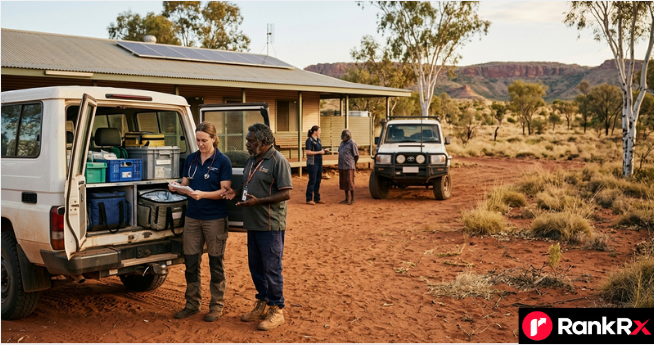
The Central Australian Health Service (CAHS) is a statutory authority established under the Northern Territory’s Health Services Act 2014. It is responsible for the delivery of integrated health services across the southern half of the Northern Territory, an operational area defined by law.
The Geography of Care
To understand CAHS, you must understand its footprint. The service covers approximately 873,000 square kilometres, an area larger than France, Spain, and Portugal combined. This vast expanse includes the Simpson and Tanami Deserts and the Barkly Tablelands.
A significant proportion of the population does not live in the main towns of Alice Springs or Tennant Creek, but rather in remote Aboriginal communities and outstations scattered across this immense landscape. Providing equitable healthcare across this distance is the organisation’s defining challenge.
The Core Mission
CAHS is governed by an independent, skills-based Board and operates with a clear vision: “Better health outcomes for all Central Australians”. Its stated mission is to promote, protect, and improve the health and wellbeing of all people in the region, in partnership with individuals, families, and communities, to ensure the delivery of the best and most appropriate evidence-based care.
The Full Scope of Services: From Hospitals to Remote Clinics
The CAHS is not a single hospital or a single clinic. It is a complex network of interconnected services designed to meet the needs of a highly dispersed population. Its work is divided into two main pillars: hospital services and non-hospital, community-based care.
1. Hospital Services: The Tertiary Centres
The service operates two hospitals, which act as the hubs for specialist and emergency care in the region.
- Alice Springs Hospital (ASH): Located 1,500 kilometres south of Darwin, this is the major referral hospital for Central Australia. It provides 24-hour accident and emergency care, general medicine (including oncology, cardiology, and renal care), general surgery, maternity and child health services, and a range of clinical support including intensive care, pathology, and diagnostic imaging.
- Tennant Creek Hospital (TCH): Located about 500 kilometres north of Alice Springs, this smaller hospital provides 24-hour accident and emergency care, general medicine with a focus on gerontology, rehabilitation, and essential clinical support services.
Both hospitals also provide outreach services to remote health centres, including access to medical evacuation (Medivac) and retrieval services for critically unwell patients.
2. Primary Health Care: The Network of Remote Clinics
Perhaps the most critical part of the CAHS operation is its Primary Health Care (PHC) network. This is delivered through 28 urban and remote centres across Central Australia. These clinics are the first point of contact for many people and are designed to provide comprehensive care close to home.
The scope of PHC includes:
- Health promotion and prevention initiatives.
- Maternal and child health, including antenatal care, postnatal care, and developmental screening.
- Chronic disease management and prevention for conditions like diabetes and renal disease.
- Screening and early detection through regular health checks for all age groups.
Clinics like the Ntaria Health Service (run by CAHS) offer a snapshot of this work, providing access to doctors, nurses, Aboriginal health practitioners, and visiting allied health staff including dietitians, optometrists, podiatrists, and psychologists.
3. Specialised and Community Services
Beyond hospital and primary care, CAHS provides a range of specialised services, including:
- Central Australia Mental Health Services and the Central Australia Mental Health Service.
- Alcohol and Other Drug Services Central Australia.
- Community Services that support people living in the region.
Comparison Table: CAHS Services at a Glance
| Service Type | Key Facilities / Programs | Primary Function |
|---|---|---|
| Tertiary Hospitals | Alice Springs Hospital, Tennant Creek Hospital | Emergency care, surgery, specialist medicine, maternity, intensive care. |
| Primary Health Care | 28 urban and remote clinics (e.g., Ntaria, Papunya, Imanpa) | Prevention, chronic disease management, maternal/child health, health checks. |
| Mental Health | Central Australia Mental Health Services | Assessment, treatment, and support for mental health conditions. |
| Alcohol & Other Drugs | AOD Services Central Australia | Treatment and support for substance use issues. |
The Unique Health Challenges of Central Australia
Delivering healthcare in Central Australia is not simply a logistical challenge; it is a profound public health challenge. The region faces a unique set of circumstances that shape the way services must be delivered.
A Focus on Aboriginal Health
Approximately 45% of the population identifies as Aboriginal. This is not just a demographic statistic; it is the central focus of healthcare planning in the region. The CAHS mission explicitly acknowledges the “far greater predominance of an Aboriginal population” in its service area, requiring a model of care that is culturally safe, accessible, and appropriate.
This has led to a strong emphasis on partnerships. CAHS works alongside Aboriginal Community Controlled Health Services (ACCHSs), such as the Central Australian Aboriginal Congress (Congress), which is the largest Aboriginal community-controlled health service in the Northern Territory. It is also a partner in the Central Australia Academic Health Science Centre (CAAHSC), a consortium focused on closing the health gap through research and comprehensive primary health care.
The Tyranny of Distance
The vast distances are not just an inconvenience; they are a barrier to care. For many people in remote communities, accessing a GP or a specialist requires significant travel, often requiring time away from family, work, and community. This is where the CAHS’s remote clinics and outreach services become vital.
The Role of Telehealth
To help bridge the distance gap, CAHS has heavily invested in TeleHealth. In its first year of operation alone, the service saw TeleHealth appointments grow from 73 to 463 consultations by mid-2015. This technology allows specialists in Alice Springs or Darwin to consult with patients in remote clinics, reducing the need for costly and disruptive travel.
The Central Australian Health Service vs. the NHS: A Comparison
For readers in the UK, understanding how a service like CAHS operates can be illuminating. While both the NHS and CAHS are publicly funded and committed to universal care, their structures and challenges are very different. central australian health service.
The comparison highlights the sheer scale of the logistical challenge facing CAHS. It is a system designed not for volume, but for reach—ensuring that even the most isolated communities have access to essential healthcare. central australian health service.
When to Seek Help: Accessing Care in Central Australia
If you live in or are visiting Central Australia, knowing how to access care is vital. The pathway to care is different depending on where you are and the urgency of your situation.
In an Emergency
For life-threatening emergencies, always call Triple Zero (000). The CAHS operates 24-hour accident and emergency departments at both Alice Springs Hospital and Tennant Creek Hospital. central australian health service.
For Non-Emergency Care
- If you are in Alice Springs or Tennant Creek: You can visit a GP clinic or contact the hospital for advice on non-urgent matters. central australian health service.
- If you are in a remote community: Your first point of contact is usually the local Health Centre or clinic. These centres are staffed by nurses and Aboriginal health practitioners, with visiting doctors and specialists. They can provide advice, treatment, and referrals.
- For general health advice: You can call healthdirect on 1800 022 222 to speak with a registered nurse 24/7.
Contact Details for CAHS
The Central Australian Health Service’s administrative headquarters are located in Alice Springs.
- Address: Level 1 Eurilpa House, Alice Springs NT 0870.
- Phone: (08) 8951 5294. central australian health service.
- Website: www.health.nt.gov.au. central australian health service.
FAQs
What is the Central Australian Health Service?
The Central Australian Health Service (CAHS) is the public health authority responsible for delivering integrated hospital, primary, and community health services across the southern half of the Northern Territory, a vast area of approximately 873,000 square kilometres.
What hospitals are part of the Central Australian Health Service?
CAHS operates two hospitals: Alice Springs Hospital, which is the major referral and tertiary centre for the region, and Tennant Creek Hospital, which provides essential hospital and emergency care in the Barkly region. central australian health service.
How does CAHS deliver healthcare to remote communities?
CAHS operates a network of 28 urban and remote health centres across Central Australia. These clinics provide primary care, chronic disease management, and maternal and child health services close to where people live. The service also uses TeleHealth to connect remote patients with specialists. central australian health service.
What is the Aboriginal health focus of CAHS?
With nearly 45% of the regional population identifying as Aboriginal, CAHS places a strong emphasis on culturally safe care and partnerships with Aboriginal Community Controlled Health Services like the Central Australian Aboriginal Congress.
Can I access CAHS services if I am not an Australian resident?
Access to public healthcare in Australia for non-residents is complex and depends on your visa status and country of origin. It is strongly recommended that visitors have comprehensive travel insurance. For specific advice, contact the hospital or check the Australian Government’s Department of Health website. central australian health service.
What should I do if I need a doctor in a remote area?
If you are in a remote community, go to the local health centre. For emergencies, call 000. For non-urgent advice, you can call healthdirect on 1800 022 222.
Final Thoughts
The Central Australian Health Service is a remarkable example of how a healthcare system can adapt to the most extreme geographical and demographic challenges. It is a service built on a foundation of reach, cultural respect, and a deep commitment to the communities it serves. From the busy emergency departments of Alice Springs Hospital to the quiet, essential clinics in the heart of the desert, CAHS is a lifeline for tens of thousands of people.
Understanding how services like CAHS operate gives us a deeper appreciation for the complexities of healthcare delivery and the dedication of the professionals who work in these unique environments. It is a reminder that while the landscapes may be vast and the distances great, the commitment to care can reach even the furthest corners.
Medical Disclaimer: This article is provided for general information purposes only and is not intended as medical advice, diagnosis, or treatment. Always seek the advice of your doctor or other qualified health professional with any questions you may have regarding a medical condition. Never disregard professional medical advice or delay in seeking it because of something you have read online.
For more updates visit: medvisibility.co.uk

Other Articles
American Heart Association Energy Drink Study 7 Best Facts




No Comment! Be the first one.