



Healthcare is experiencing one of its most exciting shifts in decades. Beyond routine check-ups and standard lab tests, modern medicine increasingly relies on data millions of physiological signals, imaging pixels, and genetic markers processed by intelligent algorithms.
At the crossroads of data science and clinical medicine sits the bwsi medlytics initiative, a pioneering program created by the MIT Beaver Works Summer Institute. By training emerging researchers to apply machine learning to real-world medical challenges, this framework highlights how data analytics is reshaping disease prediction, diagnostic accuracy, and preventive care.
Understanding medical data analytics is no longer just for software engineers or data scientists. As health-tracking wearables, smart diagnostic tools, and AI-assisted screenings become part of everyday life, learning how data science informs clinical decisions empowers us all to take a proactive approach to our health.
What Is BWSI Medlytics and Why Is It Transforming Medical Analytics?
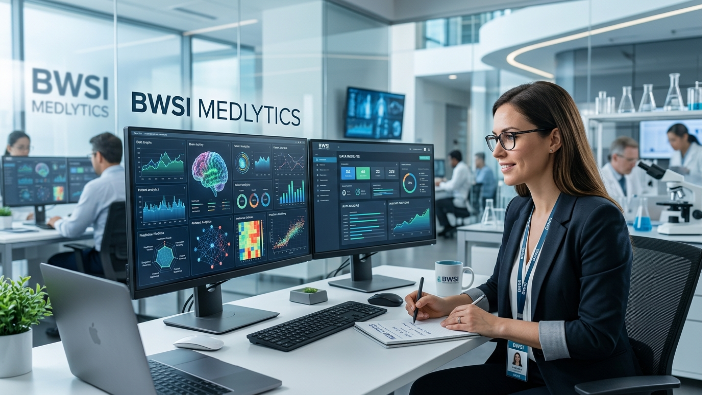
The bwsi medlytics course short for medical data analytics was developed by MIT Lincoln Laboratory and the MIT School of Engineering to introduce advanced machine learning methods directly to complex health datasets. Instead of treating data science as an abstract theoretical subject, it focuses on real clinical problems, such as predicting endocrine disorders, classifying sleep states, and spotting early-stage tumors on imaging scans.
Medical analytics combines several fundamental pillars of modern data science:
- Machine Learning Algorithms: Utilizing decision trees, support vector machines, and convolutional neural networks (CNNs) to recognize patterns in complex patient data.
- High-Resolution Signal Processing: Interpreting continuous biometric streams, such as electrocardiograms (ECGs) and electroencephalograms (EEGs).
- Predictive Modeling: Shifting healthcare from reactive treatment after symptoms appear to early risk identification.
By demonstrating how algorithms parse raw biological information, the program illustrates how data-driven insights can assist physicians in delivering faster, more accurate diagnoses.
How Data Science and Artificial Intelligence Improve Everyday Health
To understand the real-world value of medical data science, it helps to see how raw numbers translate into better care. Modern medicine generates massive quantities of data every second, but without intelligent processing, much of that information remains unread.
Raw Patient Data  ➔  Machine Learning Processing  ➔  Actionable Clinical Insights
(Scans, Labs, Sensors)      (Pattern Recognition)          (Early Prevention & Care)
Here is how key health areas benefit when clinical expertise meets advanced data science:
1. Early Prediction of Hormonal and Metabolic Conditions
Endocrine conditions like hypothyroidism (an underactive thyroid gland) often develop slowly. Patients may experience subtle symptoms such as persistent fatigue, unexplained weight gain, dry skin, or feeling unusually cold that are easy to overlook or attribute to daily stress.
Through predictive data models, algorithms analyze subtle patterns in blood panels, metabolic markers, and demographic factors to flag individuals at higher risk of thyroid dysfunction long before severe symptoms emerge. Early detection allows doctors to initiate timely blood tests and targeted treatment, preventing months of unexplained fatigue and sluggish metabolism.
2. Deeper Analysis of Sleep and Recovery
Sleep is a fundamental pillar of wellness, impacting everything from cardiovascular health and immune function to mental clarity and emotional resilience. Traditional sleep studies (polysomnography) require overnight hospital monitoring with numerous wired sensors.
Machine learning models, such as those explored in the bwsi medlytics curriculum, process physiological signals like heart rate variability (HRV) and respiratory frequency to map sleep stages automatically. This technology helps researchers and clinicians identify sleep apnea, restless sleep patterns, and circadian rhythm disruptions with greater precision.
3. Precision Medical Image Analysis
Radiologists review hundreds of complex scans every day. When evaluating mammograms, chest X-rays, or brain MRIs, human eyes can experience fatigue.
Deep learning models act as a reliable second set of eyes. By training on vast libraries of anonymized imaging data, these algorithms highlight micro-calcifications, subtle tissue irregularities, or early lesions that warrant immediate human review. The result is faster triage, reduced diagnostic delays, and earlier interventions when treatments are most effective.
Key Applications of Medical Data Analytics in Modern Healthcare
To compare how different medical data sources are utilized in research and clinical practice, review the breakdown below:
| Application Area | Primary Data Source | Primary Clinical Goal | Everyday Health Impact |
| Thyroid Risk Screening | Patient lab history & blood biomarkers | Early risk identification of hypothyroidism | Helps prevent metabolic slowdown, chronic fatigue, and hormonal imbalance. |
| Sleep Stage Staging | Physiological signals (ECG, EEG, HRV) | Automated sleep cycle classification | Improves sleep hygiene guidance and aids in sleep disorder diagnosis. |
| Oncology Imaging | Mammography, CT, and MRI scans | Automated detection of tissue abnormalities | Supports early cancer screening and improves long-term prognosis. |
| Cardiovascular Tracking | Continuous ECG & wearable sensor data | Detecting arrhythmias (e.g., Atrial Fibrillation) | Empowers remote patient monitoring and alerts users to irregular heart rhythms. |
| Chronic Disease Management | Continuous Glucose Monitors (CGM) | Predicting blood sugar spikes and drops | Assists in diabetes management through real-time dietary feedback. |
From Research Labs to Consumer Wearables: What It Means for You
While advanced computational frameworks like bwsi medlytics train high-level researchers, the core concepts are already woven into modern consumer wellness tools.
Smartwatches, fitness rings, and digital health apps rely on simplified versions of these exact machine learning algorithms. When your device alerts you to an unusual spike in resting heart rate, flags poor recovery scores, or estimates your deep sleep duration, it is performing continuous health analytics on your biometrics.
Simple Habits for Supporting Your Personal Health Data:
- Track Trends, Not Single Numbers: A single night of poor sleep or a brief heart rate elevation is normal. Look for pattern changes over several weeks.
- Combine Data with How You Feel: Biometric scores provide clues, but subjective well-being matters just as much. If your wearable gives you a high recovery score but you feel exhausted, honor your body’s signal to rest.
- Share Accurate Records with Your Doctor: If you monitor blood pressure, continuous glucose, or heart rhythms at home, keep a clean log to share during routine check-ups.
Limitations, Risks, and the Essential Human Element
Despite the remarkable progress in medical artificial intelligence, algorithms are tools—not replacements for compassionate, experienced human healthcare professionals.
1. The Risk of False Positives and Negatives
No algorithm is 100% accurate. A false positive result can trigger unnecessary anxiety, invasive follow-up testing, and medical expenses. Conversely, a false negative might give a patient unwarranted reassurance, causing them to ignore real physical symptoms.
2. Algorithmic Bias and Data Quality
An AI model is only as good as the data used to train it. If training datasets lack diversity across age, gender, ethnicity, or socioeconomic background, the resulting tool may perform poorly when applied to underrepresented populations.
3. Data Privacy and Security
Medical records contain highly sensitive personal information. Safeguarding patient data through robust encryption, strict anonymization, and ethical oversight remains a critical priority as healthcare becomes increasingly digitized.
Key Principle: Machine learning algorithms excel at spotting statistical patterns across large numbers, but only a qualified doctor can evaluate your unique medical history, conduct physical exams, and provide personalized treatment choices.
When to See a Healthcare Professional
Data analytics and digital health tools provide valuable insights, but they should never delay professional medical evaluation. You should always schedule a consultation with your GP or healthcare provider if you experience:
- Persistent, unexplained fatigue, unexplained weight changes, or changes in mood or temperature sensitivity (which may point to thyroid or hormonal imbalances).
- Ongoing sleep disruptions, chronic insomnia, or loud snoring accompanied by daytime exhaustion.
- New or changing skin lesions, unusual lumps, or unexpected physical changes.
- Wearable notifications indicating persistent irregular heart rhythms, unusual pulse spikes, or unexplained drops in blood oxygen saturation.
- Chest pain, shortness of breath, sudden weakness, or severe dizziness (seek emergency medical care immediately).
Final Thoughts
The evolution of medical data science, highlighted by educational benchmarks like the bwsi medlytics program, marks an exciting chapter in modern medicine. By bridging the gap between raw biometrics and clinical practice, analytics tools help doctors detect illnesses earlier, personalize treatment plans, and make sense of complex human biology.
As these technologies continue to mature, the goal remains clear: combining the analytical power of data science with the empathy, wisdom, and hands-on care of healthcare professionals to help everyone live healthier, longer lives.
FAQs
What does BWSI Medlytics stand for?
BWSI stands for the MIT Beaver Works Summer Institute. “Medlytics” is a blend of “medical” and “data analytics,” referring to the application of machine learning and statistical methods to health datasets.
How is machine learning used in medical analytics?
Machine learning algorithms analyze large medical datasets such as blood tests, genetic profiles, physiological signals, and imaging scans to discover patterns, predict health risks, and assist doctors in diagnosing conditions early.
Can AI replace doctors in diagnosing diseases?
No. AI tools are designed to support clinicians, not replace them. While algorithms process data rapidly and highlight anomalies, diagnosis requires clinical judgement, physical examination, and personalized patient communication.
How does medical data science help in preventive health?
By identifying early subtle markers of disease such as metabolic shifts before diabetes onset or physiological signals indicating sleep disorders medical analytics enables early lifestyle changes or clinical interventions before conditions worsen.
Are personal health wearables related to medical analytics?
Yes. Modern fitness trackers use scaled-down versions of medical analytics algorithms to process heart rate, sleep phases, and physical activity, offering user-friendly health insights.
For more updates visit: medvisibility.co.uk

Other Articles



[…] The mechanism of weight loss is fundamentally simple: you must burn more calories than you consume. While diet handles the vast majority of this equation, physical activity is essential for two critical reasons: increasing your overall energy expenditure and maintaining a healthy metabolism. […]
[…] in the early 1900s was under 35 years, largely due to high infant mortality and infectious diseases. Today, the worldwide average sits at roughly 72 to 73 years. In the UK, according to Office for […]
[…] READ MORE: BWSI Medlytics How Medical Data Science Is Transforming Healthcare […]
[…] the absence of a diagnosed condition. It’s your overall emotional, psychological, and social well-being how you think, feel, handle stress, relate to others, and make decisions. Everyone has mental […]
[…] nurses work alongside physicians during colonoscopies and upper endoscopies, monitor patients before and after sedation, and manage […]
[…] Read more: BWSI Medlytics How Medical Data Science Is Transforming Healthcare […]