



You’re not imagining it. That afternoon slump that never used to happen, the workouts that don’t build muscle the way they used to, the mood that feels flatter than usual these things can creep up so slowly that you start to explain them away as “just getting older” or “just a busy year.” Sometimes that’s exactly what it is. But sometimes, it’s your hormones quietly changing the picture, and testosterone is one of the biggest players in that story.
If you’ve searched for low testosterone symptoms UK, you’re probably trying to work out whether what you’re feeling has a name and whether it’s worth talking to a GP about. This guide walks through the common signs, what typically causes them, how testing and treatment work within the NHS, and the realistic limits of what testosterone can and can’t explain. It’s written to inform, not diagnose only a blood test and a conversation with a doctor can tell you what’s actually going on in your body.
What Is Low Testosterone?
Testosterone is the main male sex hormone, though it’s present in smaller amounts in women too. In men, it’s made mostly in the testicles and plays a role in muscle mass, bone strength, red blood cell production, sex drive, mood regulation, and general energy levels. low testosterone symptoms UK.
Testosterone levels naturally decline with age usually gradually, from around the early-to-mid 30s onward, at roughly 1–2% a year for many men. For most people, this slow decline doesn’t cause noticeable problems. But for some, testosterone drops low enough, or quickly enough, to produce a cluster of symptoms that affect daily life. This is sometimes called low testosterone, testosterone deficiency, hypogonadism, or informally “the male menopause” or “andropause” though that last term is a bit misleading, since the decline is usually gradual rather than a sudden change like the female menopause.
In the UK, healthcare professionals generally look at total testosterone levels alongside symptoms, rather than relying on a number alone. Reference ranges vary between labs, but as a rough guide, many UK clinicians consider levels below roughly 8–12 nmol/L (nanomoles per litre) as low, depending on the specific lab and clinical context. A single low reading isn’t usually enough for a diagnosis GPs typically repeat the test, often on a different day, since testosterone naturally fluctuates (it tends to be highest in the morning).
READ MORE: Digital Marketing for Doctors in the UK A Practical Compliant Guide
Common Low Testosterone Symptoms
Low testosterone symptoms tend to build gradually, which is part of why they’re often mistaken for stress, poor sleep, or normal ageing. They generally fall into a few overlapping categories: physical, sexual, and emotional/cognitive. low testosterone symptoms UK.
Physical Symptoms
- Persistent fatigue that doesn’t improve much with rest or sleep
- Loss of muscle mass or strength, even with regular exercise
- Increased body fat, particularly around the abdomen
- Reduced bone density over time, which can raise the risk of fractures
- Hot flushes or night sweats (less common than in menopause, but reported by some men)
- Reduced body and facial hair growth
- Gynaecomastia — mild breast tissue swelling or tenderness
Sexual Symptoms
- Lower sex drive (libido)
- Erectile dysfunction, or fewer spontaneous erections (including at night)
- Reduced fertility, linked to lower sperm production
- Smaller testicles in some cases
Emotional and Cognitive Symptoms
- Low mood or symptoms resembling mild depression
- Irritability or reduced motivation
- Difficulty concentrating, sometimes described as “brain fog”
- Poor sleep quality, including trouble falling or staying asleep
It’s worth being honest here: none of these symptoms are unique to low testosterone. Fatigue, low mood, and poor concentration are also common in thyroid problems, iron deficiency, sleep apnoea, depression, chronic stress, and simply not getting enough sleep. That overlap is exactly why testing matters rather than self-diagnosing from a symptom list. low testosterone symptoms UK.
Symptoms vs Possible Causes at a Glance
| Symptom Cluster | Also Commonly Linked To |
|---|---|
| Fatigue, low energy | Sleep apnoea, anaemia, thyroid disorders, depression |
| Low libido, erectile changes | Stress, relationship factors, diabetes, cardiovascular disease, some medications |
| Low mood, irritability | Depression, anxiety, chronic stress, sleep deprivation |
| Muscle loss, weight gain | Reduced physical activity, diet changes, other hormonal shifts |
| Poor concentration | Sleep problems, stress, thyroid issues, menopause (in women) |
What Causes Low Testosterone?
Doctors generally split the causes into two broad types. low testosterone symptoms UK.
Primary hypogonadism happens when the testicles themselves aren’t producing enough testosterone. Possible causes include: low testosterone symptoms UK.
- Genetic conditions, such as Klinefelter syndrome
- Testicular injury or infection
- Undescended testicles earlier in life
- Certain cancer treatments, including chemotherapy or radiotherapy
Secondary hypogonadism happens when the testicles are working normally, but a problem elsewhere — usually the pituitary gland or hypothalamus in the brain — means they aren’t being signalled to produce enough testosterone. Possible contributors include: low testosterone symptoms UK.
- Obesity
- Type 2 diabetes
- Chronic illness or severe stress
- Certain medications, including some opioids and steroids
- Pituitary tumours (uncommon)
- Excess alcohol use
Lifestyle factors don’t usually cause clinically low testosterone on their own, but poor sleep, high body fat, heavy drinking, and low physical activity can all push levels lower and make existing symptoms more noticeable. low testosterone symptoms UK.
How Is Low Testosterone Diagnosed in the UK?
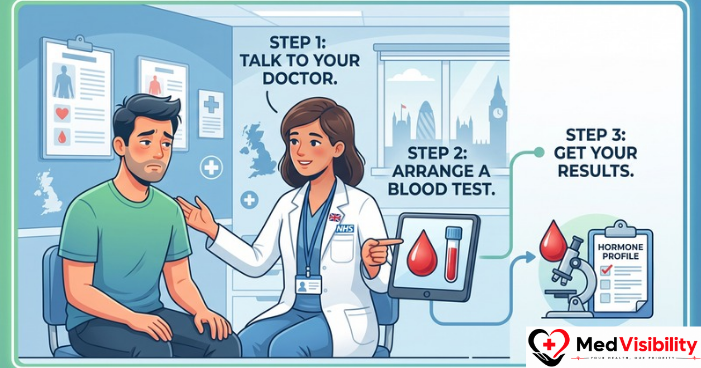
If you speak to a GP about possible low testosterone symptoms, the process usually looks something like this:
- A discussion of your symptoms and medical history, including sleep, mood, medications, and lifestyle.
- A blood test, ideally taken in the morning when testosterone is naturally at its highest, since levels vary through the day. low testosterone symptoms UK.
- A repeat test if the first result is low, often alongside other blood markers (such as thyroid function, blood sugar, and sometimes luteinising hormone) to help work out whether the cause is primary or secondary.
- Ruling out other explanations for the symptoms, since fatigue and low mood have many possible causes beyond hormones. low testosterone symptoms UK.
Testing is available on the NHS, generally starting with a GP appointment. Because so many other conditions share these symptoms, don’t be surprised if your GP investigates several possibilities alongside testosterone rather than jumping straight to a hormone test. low testosterone symptoms UK.
READ MORE: Menopause Symptoms UK What to Expect and When to Get Help
Treatment Options
If blood tests confirm persistently low testosterone alongside relevant symptoms, and other causes have been ruled out or addressed, a doctor may discuss testosterone replacement therapy (TRT). This is typically only offered when there’s a clear clinical case for it, since testosterone therapy carries its own considerations and isn’t suitable for everyone. low testosterone symptoms UK.
TRT can come in several forms, including gels, injections, and patches, and generally requires ongoing monitoring — including regular blood tests — because it can affect red blood cell count, prostate health, and fertility. This is genuinely a decision to make with a doctor, not something to start independently or through unregulated online sources. low testosterone symptoms UK.
Alongside — or sometimes instead of — medical treatment, doctors often recommend addressing contributing lifestyle factors, since these can meaningfully affect testosterone levels and general wellbeing:
- Improving sleep quality and duration — testosterone production is closely tied to sleep
- Regular strength and cardiovascular exercise
- Maintaining a healthy weight, since excess body fat is linked to lower testosterone
- Reducing alcohol intake
- Managing chronic stress, where possible, through practical routines rather than just willpower
- Eating a balanced diet with adequate protein, healthy fats, zinc, and vitamin D, all of which play supporting roles in hormone health
These changes won’t reverse every case of low testosterone, particularly where there’s an underlying medical cause, but they can meaningfully help symptoms in many people and support any treatment a doctor recommends. low testosterone symptoms UK.
When to See a Doctor
It’s worth booking a GP appointment if you’re noticing several of the symptoms above together, especially if they’ve persisted for more than a few weeks and are affecting your daily life, work, relationships, or mood. Specific situations where it’s worth getting checked sooner include:
- Ongoing low mood alongside physical symptoms like fatigue or loss of muscle
- A noticeable and sustained drop in sex drive or erectile function
- Unexplained changes in body composition, such as rapid muscle loss or fat gain
- Symptoms appearing alongside other health changes, such as new fatigue with weight changes or mood shifts
A GP is the right first step. Don’t rely on symptom checklists or online quizzes alone, and be cautious of services that offer to diagnose or treat “low T” without a proper blood test and medical assessment — testosterone therapy is a prescription treatment with real risks if used inappropriately.
Key Takeaways
- Low testosterone symptoms include fatigue, low libido, mood changes, reduced muscle mass, and poor concentration, but none of these are exclusive to low testosterone.
- UK clinicians typically diagnose low testosterone using repeated blood tests alongside a review of symptoms, not a single reading.
- Common causes range from testicular issues to lifestyle and weight-related factors affecting hormone signalling from the brain.
- Testing for low testosterone is available through the NHS, usually starting with a GP appointment.
- Treatment may include testosterone replacement therapy, lifestyle changes, or both, depending on the cause and severity.
- A proper diagnosis requires blood tests and a doctor’s assessment — symptoms alone aren’t enough to confirm low testosterone.
READ MORE: Anxiety Symptoms UK How to Recognise Them and What Helps
A Final Word
Feeling constantly tired, low, or “not quite yourself” is worth taking seriously, whatever the underlying cause turns out to be. Low testosterone is a real and treatable condition, but it’s just one of several possible explanations for the kind of symptoms covered here — which is exactly why a proper blood test, rather than a checklist, is the way to get a clear answer.
FAQs
What are the first signs of low testosterone?
Early signs often include persistent tiredness, reduced motivation, a lower sex drive, and difficulty building or maintaining muscle. These tend to appear gradually rather than suddenly, which is why many people don’t connect them to hormones at first.
At what age does testosterone start to drop in men?
Testosterone typically begins a slow, gradual decline from the early-to-mid 30s onward. This doesn’t cause symptoms for everyone, and the rate of decline varies significantly between individuals.
Can low testosterone be caused by stress or poor sleep?
Yes, chronic stress and poor sleep can lower testosterone production and worsen related symptoms, even when they aren’t the sole underlying cause. Improving sleep is one of the most consistently recommended first steps.
How is low testosterone tested in the UK?
Through a blood test, usually taken in the morning, often repeated to confirm a low result. GPs typically also check for other possible causes of the symptoms before considering a diagnosis.
Is testosterone replacement therapy available on the NHS?
Yes, but only after blood tests confirm persistently low testosterone alongside relevant symptoms, and other causes have been ruled out. It isn’t offered on the basis of symptoms or a symptom checklist alone.
Can women have low testosterone too?
Testosterone plays a smaller but real role in women’s health, including libido, energy, and general wellbeing, and some women — particularly after menopause — may experience symptoms linked to lower levels.
For more updates visit: medvisibility.co.uk

Other Articles






[…] normal. Anxiety is genuinely different from person to person — some people barely notice the physical symptoms and are consumed by racing thoughts; others feel it almost entirely in their body. signs […]
[…] During this stage, ovarian function gradually shifts, causing oestrogen and progesterone levels to fluctuate unpredictably rather than drop in a steady line. all perimenopause symptoms […]
[…] amounts in the ovaries and adrenal glands in women. It’s often framed purely as a “sex hormone,” but that undersells it […]
[…] If several of these symptoms show up together and persist for weeks, it’s worth getting checked rather than […]