



You search for a symptom at 11pm. One result sounds like it was written by a real clinician who’s seen this before. Another reads like a list stitched together to rank on Google. You click the first one and you’re not alone. Most people do the same thing, often without realising there’s a whole discipline behind why that “trustworthy-sounding” page showed up at all.
That discipline is called Medical SEO, and whether you’re a patient trying to understand why some health pages feel more reliable than others, or a healthcare writer, clinic owner, or content marketer trying to get accurate information in front of the right people, understanding how it works matters more now than ever.
This article breaks down what Medical SEO actually is, why Google treats health content differently from almost every other topic online, and what genuinely helpful, trustworthy health content looks like in 2026.
What Is Medical SEO?
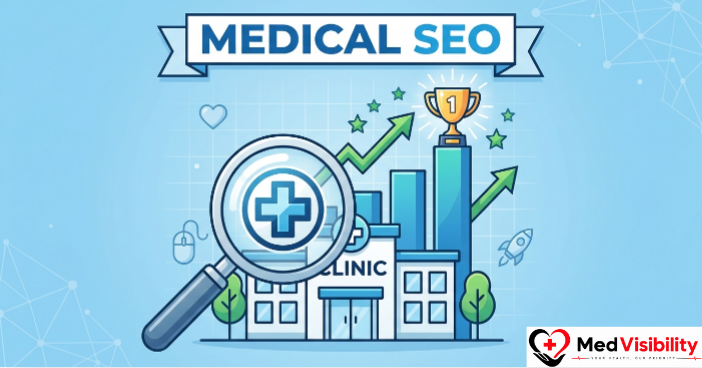
Medical SEO is the practice of optimising health-related websites and content articles, clinic pages, condition guides, treatment explainers so they can be found, understood, and trusted by both search engines and real people searching for health information.
It sits at the intersection of two things:
- Search engine optimisation (SEO): the technical and content work that helps a page rank in Google, AI Overviews, and other search tools.
- Medical accuracy and trust: the standards that make sure what ranks is actually correct, current, and safe for readers to rely on.
Unlike SEO for a recipe blog or a product review site, Medical SEO carries real stakes. If someone searches for symptoms of a stroke, misleading or vague content isn’t just a poor user experience it could delay someone getting urgent care. That’s exactly why Google treats health topics under a special classification.
Why Google Holds Health Content to a Higher Standard
Google groups medical, financial, and safety-related topics under a category called YMYL — Your Money or Your Life. These are subjects where inaccurate information could genuinely harm someone’s health, finances, or safety.
For YMYL topics, Google’s quality guidelines lean heavily on something called E-E-A-T:
| Signal | What It Means in Health Content |
|---|---|
| Experience | The writer has real, lived, or professional familiarity with the topic — not just a summary pulled from other articles |
| Expertise | The information reflects accurate, up-to-date medical or scientific understanding |
| Authority | The website or author is recognised as a credible source on the topic |
| Trust | The site is transparent, secure, accurate, and doesn’t mislead or exaggerate |
Following the May 2026 Google Core Update and the June 2026 AI Search changes, this standard has only tightened. Google — and the AI systems now generating summarised answers alongside search results — increasingly reward content that is clearly written, factually grounded, properly sourced, and updated when new evidence emerges. Thin, generic, or AI-generated-sounding health content that adds nothing beyond what’s already available tends to get pushed further down, or left out of AI-generated answers altogether.
In short: for health topics, being genuinely accurate and useful isn’t just good ethics — it’s also what actually performs well in search.
What Good Medical SEO Actually Looks Like
A lot of people picture SEO as a technical trick — stuffing in keywords, chasing backlinks, gaming an algorithm. For health content, that approach doesn’t hold up, and hasn’t for a while. Effective Medical SEO today is built on a few consistent principles.
1. Writing for the Reader First
The starting point isn’t “what will rank,” it’s “what does this person actually need to know right now.” Someone searching “why am I always tired” wants a clear, honest answer — not a wall of text designed to hit a word count.
2. Referencing Credible Sources
Good health content points to recognised, evidence-based sources — organisations like the NHS, WHO, Mayo Clinic, or findings published through PubMed and peer-reviewed journals — rather than presenting claims with no backing. Referencing sources doesn’t mean over-claiming certainty; it means being honest about what’s well-established and what’s still being studied.
3. Structuring Content for Skimmability
Search engines and AI tools increasingly pull short, direct answers to feature in search results or AI Overviews. That means:
- Clear headings that match what people are actually searching for
- Short, direct paragraphs
- Bullet points and tables where they genuinely aid understanding
- FAQ sections that answer real follow-up questions
4. Keeping Content Current
Health guidance evolves. A page about nutrition recommendations, medication guidelines, or screening ages that hasn’t been reviewed in three years can quietly become outdated — and both readers and search engines notice. Regularly revisiting and updating content is part of the job, not an afterthought.
5. Being Honest About Limitations
Reliable health content distinguishes clearly between general wellness information and something requiring a doctor’s input. It doesn’t promise miracle results, and it doesn’t present one study as settled fact. Saying “research on this is still developing” is more trustworthy — and ultimately more helpful — than pretending certainty that doesn’t exist.
Medical SEO vs. General SEO: Key Differences
| Factor | General SEO | Medical SEO |
|---|---|---|
| Content standard | Helpful and accurate | Helpful, accurate, and evidence-based (YMYL) |
| Author credibility | Nice to have | Central to ranking and reader trust |
| Risk of poor content | Lower engagement | Potential real-world harm |
| Update frequency | As needed | Regular review against current guidelines |
| Tone | Flexible | Calm, clear, non-alarmist |
| Sourcing | Optional | Expected — credible references |
Common Mistakes in Health Content SEO
Even well-intentioned health content can fall into a few recurring traps:
- Keyword stuffing: Repeating a phrase unnaturally, which reads poorly and offers no real value to the reader.
- Vague or generic advice: Content that could apply to any condition, adding nothing specific or useful.
- Overstating certainty: Presenting emerging research or a single study as definitive proof.
- Sensational headlines: Using alarming or exaggerated language to drive clicks, which undermines trust and can cause unnecessary anxiety.
- Ignoring content freshness: Publishing once and never revisiting, even as guidelines or statistics change.
- Skipping professional context: Failing to note when a topic genuinely needs a doctor’s input rather than general information.
Practical Tips If You’re Creating Health Content
If you’re writing or managing health-related content — whether for a personal blog, a clinic website, or a larger publication — a few habits go a long way:
- Base claims on recognised health authorities, and link to them where possible.
- Write in plain English; explain medical terms the first time you use them.
- Keep paragraphs short and scannable — most readers are skimming, often on a phone.
- Add a clear note on when a reader should speak to a healthcare professional.
- Revisit older content periodically to check it still reflects current guidance.
- Avoid promising outcomes (“this will cure…”) — describe what evidence shows, with appropriate caveats.
When to See a Doctor
This article is about how health information is created and found online — not a diagnostic guide. But it’s worth repeating a general principle that applies to any health content you read, including this one: general information is a starting point, not a substitute for personalised medical advice. If you’re dealing with a new, worsening, or concerning symptom, or you’re unsure whether something needs attention, it’s always appropriate to speak with a GP or qualified healthcare professional rather than relying solely on search results.
Key Takeaways
- Medical SEO combines search optimisation with medical accuracy, because health content falls under Google’s strict YMYL category.
- E-E-A-T (Experience, Expertise, Authority, Trust) is central to how health content is evaluated by both Google and readers.
- Following recent Google Core Updates and AI Search changes, clear, well-sourced, regularly updated content performs better than generic or exaggerated content.
- Good health content is written for the reader first — clear, honest, and realistic about its limitations.
- Referencing credible sources like the NHS, WHO, or peer-reviewed research supports both trust and rankings.
- General health information should never replace personalised advice from a healthcare professional.
Conclusion
Medical SEO isn’t about tricking an algorithm — it’s about meeting a genuinely high bar: content that’s accurate, current, honestly written, and actually helpful to someone making decisions about their health. Google’s recent updates have made that bar harder to fake, which, if anything, is good news for readers. The pages that rise to the top increasingly are the ones worth reading. Whether you’re searching for answers or writing them, understanding that connection helps you tell the difference between health content built to inform you and content built only to be found.
FAQs
What does Medical SEO mean in simple terms?
It’s the process of making health-related web content both accurate and easy to find in search results — combining medical trustworthiness with standard SEO techniques.
Why is health content treated differently by Google?
Because inaccurate health information can genuinely affect someone’s wellbeing, Google classifies it as YMYL (Your Money or Your Life) content and applies stricter quality standards, centred on E-E-A-T.
Does Medical SEO mean only doctors can write health content?
Not necessarily. Non-clinicians can write accurate, valuable health content, but it should be well-researched, clearly sourced, and ideally reviewed by a qualified professional before publishing, especially for more clinical topics.
How often should health content be updated?
There’s no fixed rule, but reviewing key statistics, guidelines, and claims at least once a year — or sooner if major new research or guidance emerges — helps keep content accurate and trustworthy.
Can good Medical SEO replace medical advice?
Even the most well-optimised, accurate health content is general information. It can’t account for someone’s individual medical history, and it shouldn’t be used as a substitute for a consultation with a healthcare professional.
Does AI search change how Medical SEO works?
It shifts emphasis rather than replacing the fundamentals. AI-generated answers tend to favour content that’s clear, well-structured, and clearly sourced — meaning the core principles of accuracy and readability matter more, not less.
For more updates visit: medvisibility.co.uk







[…] healthcare providers hospitals, clinics, private practices, dental surgeries, physiotherapists, mental health services, and similar organisations through online channels such as search engines, social media, […]
[…] and “marketing” belong in the same sentence: compliant marketing tends to be more trustworthy marketing, and trust is what turns a website visitor into a patient. legal medical digital […]