



If you’ve ever stood in the kitchen at 2am trying to work out how many millilitres of children’s paracetamol equals the “250 mg” your GP mentioned on the phone, you already know why this conversion trips people up. Milligrams measure how much of a drug you’re giving. Millilitres measure how much liquid you’re pouring. They’re not the same kind of measurement, and mixing them up is one of the most common and most preventable sources of dosing errors at home.
This article explains general unit-conversion concepts related to medicine labels and is for informational purposes only. It is not medical advice and should not be used to determine or adjust any dose. Always follow the instructions provided with your specific medicine, and speak to a pharmacist or doctor about any dosing question.
This guide explains the mg to ml conversion in plain English: what the two units actually measure, the formula pharmacists and nurses use, and where people typically go wrong. It’s written to help you understand the maths on a medicine label you’ve already been given — not to tell you what dose to take. For anything involving your own or your child’s actual dose, that decision always sits with your doctor, pharmacist, or the instructions printed on the medicine itself.
Mg and Ml Are Not the Same Kind of Unit

This is the part that confuses people most, so it’s worth slowing down on.
- Milligrams (mg) measure mass — literally how much “stuff” is in something. It’s a unit of weight, just a very small one (a thousandth of a gram).
- Millilitres (ml) measure volume — how much space a liquid takes up. It’s a thousandth of a litre.
You can’t convert directly between a unit of mass and a unit of volume without knowing one extra piece of information: concentration — how much of the active drug is packed into each millilitre of liquid. Two bottles of the same medicine can have completely different concentrations, which is exactly why the conversion always needs to be worked out per product, using the label in front of you, rather than memorised as a fixed number.
The Formula
Once you know the concentration, the maths itself is simple:
Volume (ml) = Dose (mg) ÷ Concentration (mg/ml)
The concentration is usually printed right on the label or in the patient information leaflet, written as something like “120 mg/5 ml” or “25 mg/ml.” That number tells you exactly how much drug is packed into each millilitre of the liquid.
A Simple Worked Example
Say a bottle is labelled 250 mg/5 ml, and the amount to be given is 250 mg.
Volume = 250 mg ÷ (250 mg / 5 ml) = 5 ml
Because the labelled dose and the amount needed match exactly, the answer is simply the 5 ml stated on the label — no extra calculation needed in this case.
A Slightly Trickier Example
Say a bottle is labelled 125 mg/5 ml, and the amount needed is 62.5 mg.
Volume = 62.5 mg ÷ (125 mg / 5 ml) = 62.5 ÷ 25 = 2.5 ml
Here, the concentration works out to 25 mg per millilitre, so 62.5 mg comes to 2.5 ml.
These examples are for illustration only, using round, generic numbers — they aren’t a recommendation for any real medicine or dose. The concentration and the correct amount for a real prescription always come from the product’s actual label or your pharmacist, never from a general guide like this one.
Why This Conversion Matters So Much in Healthcare
Liquid medicines are especially common for children, older adults, and anyone who struggles to swallow tablets — which means this exact calculation happens in households and hospitals every single day. A few reasons it deserves real care:
Small errors get magnified fast. Because the formula involves division, a small misreading of the concentration (say, mixing up 25 mg/ml with 250 mg/ml) can result in a dose that’s ten times too high or too low.
Concentrations vary between products, brands, and strengths. The same medicine can be sold in more than one concentration — a “double strength” version, for instance, or a different formulation for children versus adults. Always check the specific bottle in hand rather than assuming it matches one you’ve used before.
Household spoons aren’t accurate. A kitchen teaspoon can hold anywhere from 2 ml to 10 ml depending on its shape and size. Liquid medicines should always be measured with the oral syringe, dosing cup, or dropper provided with the product — never an ordinary spoon.
Small doses need small tools. If a calculation comes out to less than 1 ml, a standard 5 ml spoon or cup simply isn’t precise enough. A 1 ml oral syringe, usually available free from a pharmacy, allows for far more accurate measurement.
A Quick Reference Table
| You know | You need | How to find it |
|---|---|---|
| Dose in mg and concentration in mg/ml | Volume in ml | Volume = Dose ÷ Concentration |
| Volume in ml and concentration in mg/ml | Dose in mg | Dose = Volume × Concentration |
| Concentration written as “X mg per Y ml” | mg per 1 ml | Divide X by Y |
| A dose that comes out under 1 ml | The right measuring tool | Use a 1 ml oral syringe, not a spoon or cup |
Common Mistakes People Make
A few patterns show up again and again when this conversion goes wrong:
- Confusing the concentration with the total bottle size. A label might say “120 ml bottle, 250 mg/5 ml” — the “120 ml” is how much liquid is in the whole bottle, not the concentration. It’s the “250 mg/5 ml” figure that matters for the calculation.
- Assuming all liquid medicines of the same name have the same strength. Paediatric and adult formulations of the same drug are sometimes sold in different concentrations specifically to reduce the volume a child needs to swallow.
- Rounding too aggressively. Rounding 2.5 ml up to “about 3 ml” might seem harmless, but for medicines with a narrow safety margin, even small rounding can matter. When in doubt, ask a pharmacist how precise you need to be for a particular medicine.
- Reading mcg (micrograms) as mg. Micrograms are a thousand times smaller than milligrams. Mixing these two up is a well-documented cause of serious dosing errors, so it’s always worth double-checking which unit is actually printed on the label.
- Using a household spoon “just this once.” Even an occasional substitution can throw off a dose meaningfully, especially in children where doses are often calculated by body weight.
Tools That Make This Safer
You don’t need to do this maths under pressure if you have the right tools on hand:
- An oral syringe or dosing pipette in a few sizes (1 ml, 5 ml, 10 ml) for accurate measuring of small and larger doses alike.
- A pharmacist-provided dosing chart, when available, which does the mg-to-ml calculation for you for a specific product and age or weight range. mg to ml.
- A written note of the concentration for any regular medicine, especially useful if you’re a carer managing doses for someone else. mg to ml.
- A reputable online mg to ml calculator, used only as a double-check alongside the actual label — never as a replacement for reading the product’s own instructions. mg to ml.
Mg to Ml Outside of Medicine
Worth a brief mention: this same conversion comes up in cooking, supplements, and laboratory work too, where “mg to ml” often depends on the density of the substance rather than a drug’s concentration. Water is a convenient reference point, since 1 ml of water weighs very close to 1,000 mg (1 gram) at room temperature — but this 1:1 relationship doesn’t hold for other liquids, syrups, or oils, which can be noticeably denser or lighter. For anything you’re consuming, the label’s stated concentration is always the reliable figure to use, not a general assumption based on water. mg to ml.
When to See a Doctor or Pharmacist
This article explains the arithmetic behind a conversion you might see on a medicine label — it isn’t a substitute for professional guidance on what dose is right for you or someone in your care. You should speak to a pharmacist or doctor if: mg to ml.
- You’re unsure what concentration a liquid medicine actually is
- A calculated dose looks unusually large or small compared to what you expected
- You’re measuring a dose for a child, especially one calculated by body weight
- A dose has been given incorrectly, or you suspect it might have been
- You’ve mixed up milligrams and micrograms, or suspect you may have
If a dosing error has already happened and the person is showing signs of being unwell — unusual drowsiness, breathing difficulty, vomiting, or any other concerning symptom — contact emergency services or your local poisons information service straight away rather than waiting. mg to ml.
Key Takeaways
- Milligrams measure mass; millilitres measure volume — you need the concentration to convert between them. mg to ml.
- The formula is: Volume (ml) = Dose (mg) ÷ Concentration (mg/ml).
- Always use the concentration printed on the specific product you have, not a number from memory or a different bottle. mg to ml.
- Household spoons are not accurate enough for measuring medicine — use the syringe, cup, or dropper provided. mg to ml.
- Small doses (under 1 ml) need a small, precise measuring tool.
- When a calculation looks off, or you’re unsure about units, ask a pharmacist rather than guessing.
READ MORE: Medlytics MIT How Data Science Is Reshaping the Future of Healthcare
Conclusion
The mg to ml conversion isn’t complicated once you understand what each unit is actually measuring and where the concentration comes from but it’s exactly the kind of everyday calculation where a small slip can matter. Reading the label carefully, using the right measuring tool, and checking with a pharmacist whenever something looks uncertain will cover the vast majority of situations safely. The formula itself is simple; the label in front of you is what makes it accurate. mg to ml.
FAQs
Is there a single, fixed number to convert mg to ml?
Because mg measures mass and ml measures volume, the conversion always depends on the concentration of the specific product, which varies between medicines and even between different strengths of the same medicine.
Why do children’s and adult medicines sometimes have different concentrations?
Manufacturers often make paediatric versions more concentrated so that a child doesn’t need to swallow a large volume of liquid for their (smaller) dose. This is exactly why checking the label each time matters, rather than assuming. mg to ml.
Can I use a kitchen teaspoon if I don’t have a dosing syringe?
It’s best avoided. Household teaspoons vary widely in actual volume and are not accurate for medicine dosing. Pharmacies typically provide a free oral syringe or dosing cup, and it’s worth asking for one if you don’t have it.
What’s the difference between mg and mcg, and why does it matter here?
A microgram (mcg) is a thousand times smaller than a milligram (mg). Confusing the two in a conversion can lead to a dose that’s a thousand times too high or too low, so it’s always worth double-checking which unit is printed on a label or prescription.
Is 1 ml always equal to 1000 mg?
Only for substances with a density close to water’s, and only as a rough approximation. For medicines, the concentration stated on the specific product — not a general assumption — is what determines the mg to ml relationship. mg to ml.
Should I use an online mg to ml calculator?
A calculator can be a useful double-check, but it should never replace reading the actual concentration on your medicine’s label or checking with a pharmacist if anything seems unclear.
For more updates visit: medvisibility.co.uk

Other Articles

2.5 mg to mL How Medication Conversions Actually Work
10 Simple Tips to Maintain Your Mental Health


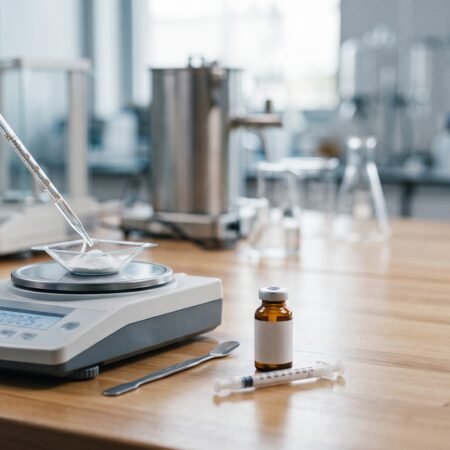
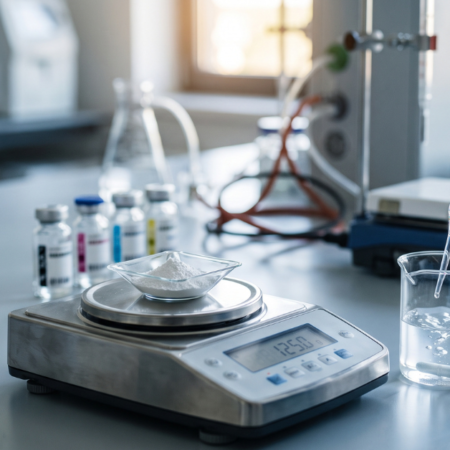

[…] Millilitres (mL) measure volume how much space a liquid takes up. These are two different kinds of measurement, and you can’t convert between them without a third piece of information: […]