



Medical & Operational Disclaimer: The information provided in this article is for educational and informational purposes only and does not constitute medical, legal, or formal professional advice. Healthcare facility procedures, insurance regulations, and administrative job specifications vary across organizations and jurisdictions.
When walking through the doors of a modern hospital, outpatient clinic, or medical facility, the patient journey begins long before a clinician steps into the exam room. At the very center of this crucial entry point sits the patient access specialist. Working at the intersection of clinical operations, revenue cycle management, data security, and patient care, these front-line professionals serve as the administrative gateway to modern healthcare systems.
As healthcare infrastructure becomes increasingly digitized and regulatory standards grow more complex, the role of patient access has evolved far beyond basic front-desk reception. Today, it demands technical fluency in Electronic Health Records (EHR), strict adherence to patient privacy frameworks, precise financial counseling, and exceptional interpersonal communication.
This comprehensive guide explores the multifaceted role of the patient access specialist—examining daily operational responsibilities, essential skills, data privacy impacts, financial workflows, and long-term career growth.
What Is a Patient Access Specialist?
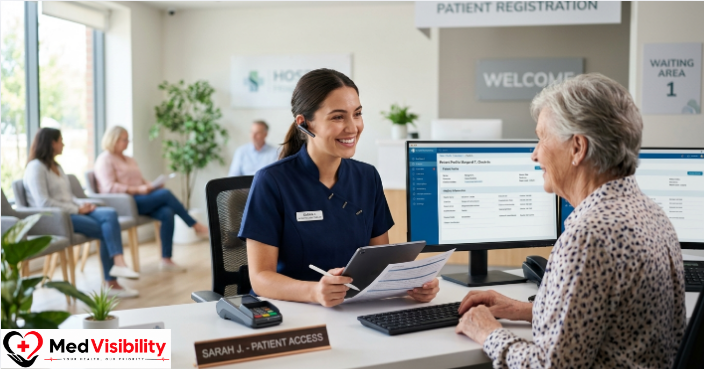
A patient access specialist—sometimes referred to as a patient access representative, patient registrar, or admissions specialist—is a specialized healthcare administrative professional responsible for managing the end-to-end patient onboarding process.
They serve as the primary liaison between the patient, clinical staff, and insurance providers. Their overarching goal is twofold: ensuring that patients experience a smooth, compassionate intake process while guaranteeing that the healthcare organization collects accurate clinical, demographic, and financial data required for care delivery and reimbursement.
┌─────────────────────────────────────────────────────────────┐
│                 PATIENT ACCESS SPECIALIST                   │
│       Front-Line Healthcare Administration & Security       │
└──────────────────────────────┬──────────────────────────────┘
                               │
       ┌───────────────────────┼───────────────────────┐
       ▼                       ▼                       ▼
┌──────────────┐       ┌──────────────┐        ┌──────────────┐
│    Intake    │       │  Financial   │        │ Coordination │
│ & Data Entry │       │ Navigation   │        │ & Scheduling │
└──────────────┘       └──────────────┘        └──────────────┘
While traditionally stationed at physical check-in desks, emergency departments, or registration bays, many patient access specialists now operate in centralized call centers, pre-registration hubs, or fully remote telemedicine workflows.
Read more: Legal Medical Digital Marketing in New York A Practical Guide
Core Duties and Daily Operational Workflows
The daily responsibilities of a patient access specialist span several complex administrative categories. Precision in these tasks directly impacts patient safety, hospital operations, and financial viability.
                   PATIENT INTAKE WORKFLOW

  [ Patient Arrival / Remote Pre-Registration ]
                       │
                       ▼
  [ Identity Verification & Demographic Capture ]
                       │
                       ▼
  [ Real-Time Insurance Eligibility & Pre-Authorization ]
                       │
                       ▼
  [ Financial Counseling & Out-of-Pocket Estimates ]
                       │
                       ▼
  [ Consent Sign-Off & Data Privacy Compliance ]
                       │
                       ▼
  [ Complete EHR Intake & Clinical Hand-off ]
1. Patient Registration and Identity Verification
At the point of contact, accuracy is paramount. A single typographic error in a patient’s name, date of birth, or identification number can lead to fragmented electronic medical records, delayed treatments, or severe clinical misidentifications.
- Identity Confirmation: Verifying government-issued identification and contact details to ensure the record matches the correct individual.
- Demographic Collection: Accurately recording address, emergency contacts, primary care provider, and employment status.
- Master Patient Index (MPI) Search: Cross-checking facility databases to avoid creating duplicate patient profiles, which can fragment clinical history.
2. Insurance Verification and Financial Navigation
Unclear insurance processes are a primary cause of billing disputes and delayed care. Patient access specialists act as financial navigators before treatment occurs.
- Eligibility Checks: Using automated portal tools and real-time clearinghouse queries to confirm active policy coverage and benefit limits.
- Prior Authorization & Referrals: Verifying whether planned diagnostic imaging, procedures, or specialist visits require pre-approval from insurance carriers.
- Co-Payment & Co-Insurance Collection: Calculating estimated out-of-pocket responsibilities and collecting co-pays at check-in.
- Financial Assistance Screening: Guiding uninsured or underinsured patients toward financial assistance programs, sliding-scale options, or Medicaid/government assistance eligibility.
3. Scheduling and Clinical Workflow Coordination
Smooth clinical schedules rely on clear communication between the front office and clinical departments.
- Appointment Booking: Scheduling follow-ups, diagnostic scans, and consultations using enterprise scheduling software.
- Waitlist and Cancellation Management: Filling vacant appointment slots to optimize physician schedules and reduce long waitlists.
- Multi-Department Order Tracking: Ensuring required physician orders and lab requisitions are attached to the patient’s file prior to arrival.
Technical Skills, EHR Systems, and Competencies
Modern patient access specialists work in highly technical environments. Proficiency in specialized software and data management systems is essential.
| System / Skill Area | Core Functions & Industry Tools | Practical Impact |
| EHR / EMR Software | Epic, Cerner (Oracle Health), Meditech, Allscripts | Ensures real-time clinical record updating and seamless inter-departmental communication. |
| Insurance Verification Platforms | Availity, Waystar, Experian Health, direct payer portals | Instantly confirms coverage, deductible balances, and authorization requirements. |
| Medical Terminology & Coding | Basic ICD-10, CPT codes, medical specialty vocabulary | Prevents scheduling errors by matching physician orders with correct procedure codes. |
| Data Protection Standards | Privacy laws, data encryption protocols, access controls | Safeguards sensitive medical histories and personal data against unauthorized access. |
Soft Skills: The Human Element in Patient Access
While technical systems drive operations, human empathy defines patient satisfaction. Patients entering a healthcare facility are often anxious, in pain, or navigating difficult diagnoses.
- Active Listening: Hearing patient concerns clearly without interrupting, ensuring administrative questions do not feel transactional.
- De-escalation and Conflict Resolution: Managing frustrated patients experiencing long wait times, billing confusion, or administrative delays with calm professionalism.
- Clear Communication: Explaining complex insurance rules, deductibles, and hospital policies in plain, non-jargon language.
- Cultural Competence: Interacting respectfully with diverse patient populations, utilizing translation services effectively when language barriers exist.
Patient Access vs. Traditional Medical Receptionist
Although the terms are sometimes used interchangeably, key operational differences exist between a patient access specialist and a standard medical receptionist.
┌─────────────────────────────────────────────────────────────┐
│               MEDICAL RECEPTIONIST                          │
│ • General Greeting & Phone Management                       │
│ • Basic Appointment Scheduling                              │
│ • Initial Form Collection                                   │
└──────────────────────────────┬──────────────────────────────┘
                               │ Advanced Clinical & Financial Focus
                               ▼
┌─────────────────────────────────────────────────────────────┐
│             PATIENT ACCESS SPECIALIST                       │
│ • Real-time Insurance Eligibility & Benefits Verification   │
│ • Complex Prior Authorization & Referral Tracking           │
│ • Financial Counseling & Cost Estimation                    │
│ • Advanced Master Patient Index (MPI) Integrity             │
│ • Multi-Department Clinical Scheduling Workflow              │
└─────────────────────────────────────────────────────────────┘
The Strategic Importance of Patient Access in Healthcare Infrastructure
The effectiveness of front-line intake ripple outward across the entire healthcare ecosystem.
1. Revenue Cycle Integrity
A significant percentage of healthcare claim denials stem from administrative errors made during initial intake—such as invalid policy numbers, missing authorizations, or misspelled names. By capturing clean data at entry, patient access specialists minimize back-end rejections and lower administrative operational costs.
2. Clinical Safety and Patient Care
When a patient access specialist correctly links a patient’s historical records, clinicians gain immediate access to vital medical histories, allergy lists, and prior test results. This accurate record maintenance directly prevents dangerous clinical errors.
3. Protecting Health Data Security
Healthcare facilities handle high volumes of sensitive personal and medical data, making them prime targets for identity theft and cyber threats. Patient access specialists enforce front-line verification protocols, ensuring that patient identity is authenticated before sensitive medical files are accessed or shared.
How to Become a Patient Access Specialist: Education and Credentials
Entering the field of patient access requires a combination of foundational education, administrative skill, and optional professional certifications.
  [ High School Diploma / A-Levels ]
                 │
                 ▼
  [ Associate Degree / Administrative Experience ]
                 │
                 ▼
  [ Professional Certification (CHAA / CHAM) ]
                 │
                 ▼
  [ Specialized Career Advancement ]
Educational Requirements
- Minimum Requirement: A high school diploma, GCSEs/A-Levels, or equivalent standard secondary education.
- Preferred Qualification: An Associate or Bachelor’s degree in Healthcare Administration, Health Information Management, Business Administration, or Public Health.
Key Certifications
Holding a recognized industry certification demonstrates expertise and improves advancement opportunities:
- Certified Healthcare Access Associate (CHAA): Offered by the National Association of Healthcare Access Management (NAHAM), this credential validates core skills in registration, insurance verification, and access operations.
- Certified Healthcare Access Manager (CHAM): An advanced certification designed for specialists transitioning into supervisory, leadership, or managerial roles.
Career Pathway and Future Outlook
The healthcare administration sector continues to grow rapidly. A role as a patient access specialist serves as a springboard into diverse healthcare career tracks.
  [ Patient Access Specialist / Registrar ]
                     │
                     ▼
  [ Senior Patient Access Lead / Shift Supervisor ]
                     │
                     ▼
  [ Patient Access Manager / Director ]
                     │
                     ▼
  [ Revenue Cycle Manager / Health Information Administrator ]
Potential Career Trajectories
- Clinical Administration: Transitioning into clinic management, practice administration, or department operations.
- Revenue Cycle Management: Moving into specialized medical billing, coding, claim auditing, or denial management.
- Health Informatics: Specializing in electronic health record management, health data analytics, or healthcare IT implementation.
Read more: What Is Medlytics Medical Analytics, Simply Explained
FAQs
What does a patient access specialist do every day?
A patient access specialist registers incoming patients, verifies insurance coverage, secures pre-authorizations, schedules clinical appointments, collects co-payments, and ensures patient demographic data is accurately entered into Electronic Health Records (EHR).
Is a patient access specialist a stressful job?
The role can be fast-paced, particularly in emergency departments or busy outpatient facilities. Balancing technical accuracy, phone calls, and face-to-face patient interactions requires strong organizational skills, adaptability, and emotional composure.
Can a patient access specialist work from home?
Yes. Many hospital networks, health systems, and telemedicine companies employ remote patient access specialists to manage pre-registration, insurance eligibility checks, authorization coordination, and virtual scheduling.
What is the difference between CHAA and CHAM certifications?
The Certified Healthcare Access Associate (CHAA) certification is designed for front-line access staff and entry-to-mid-level specialists. The Certified Healthcare Access Manager (CHAM) certification is intended for experienced professionals, supervisors, and administrative managers.
What software platforms do patient access specialists use most?
They commonly work with leading enterprise EHR platforms such as Epic, Cerner (Oracle Health), and Meditech, alongside specialized insurance clearinghouses, scheduling tools, and secure payment processing portals.
For more updates visit: medvisibility.co.uk

Other Articles






[…] a positive screening result does not automatically mean someone has the disease. Further diagnostic tests may be […]