



Most of us have watched someone change in front of our eyes on social media, but few transformations have felt as honest as this one. Country star Jelly Roll born Jason DeFord has gone from topping 500 pounds to somewhere in the mid-260s, and instead of disappearing to do it quietly, he talked about nearly every part of it in public: the fear, the blood tests, the relapses, the boring Tuesday-afternoon walks that started it all.
That openness is a big part of why so many people search for details on his journey. It doesn’t read like a celebrity diet fad. It reads like something closer to recovery because, in his own telling, that’s exactly what it was. jelly roll weight loss.
This article pulls together what Jelly Roll has actually said, across interviews and public appearances, about how he lost the weight, what setbacks he’s faced, and what his story can (and can’t) teach the rest of us about sustainable change. It’s not medical advice, and it’s not a plan to copy step for step. Think of it as an honest look at one very public journey, with some general, doctor-approved context added around it.
Who Is Jelly Roll, and Why Does His Weight Loss Story Get So Much Attention?

Jelly Roll is a Grammy-nominated country and hip-hop artist known for songs like “Need a Favor” and “Son of a Sinner,” as well as for being remarkably candid about his past. He has spoken openly about addiction to alcohol, cocaine and codeine earlier in his life, and about spending time in the justice system as a teenager.
That history matters for understanding his weight loss, because he has repeatedly described his relationship with food using the same language he uses for those earlier struggles: something he had to recognize as a compulsion before he could actually change it.
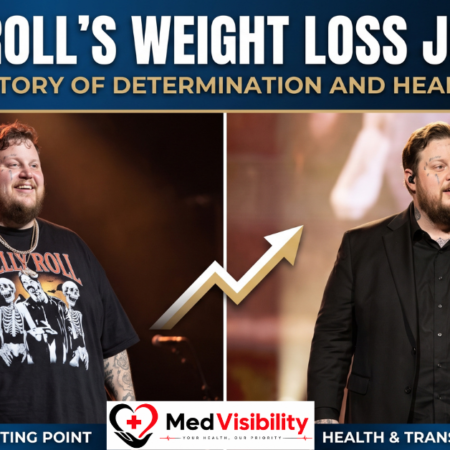
By his own account, he reached a peak weight of somewhere around 540 pounds. Today, most recent interviews place him at roughly 265 to 280 pounds, depending on the point in his journey and any regain he’s spoken about along the way.
How Much Weight Has Jelly Roll Lost?
The number moves depending on when you look, because this has been a multi-year process with real ups and downs, not a single before-and-after moment.
- He has said he began taking his health seriously around 2020–2022, after blood work reportedly left doctors surprised he was managing as well as he was.
- By late 2024, he had lost more than 100 pounds and was speaking about it publicly at award shows.
- By early 2026, in a Men’s Health cover feature, he discussed having lost roughly 275 pounds from his highest weight.
- Later in 2026, he was open about regaining some weight after the holidays and an injury, before recommitting to training for his first marathon.
The takeaway isn’t a single tidy figure — it’s that his weight loss has been a long, non-linear process, which is far more typical of real-world weight management than the dramatic “after” photo alone suggests.
| Approximate Period | What Jelly Roll Has Said |
|---|---|
| 2020–2022 | Peak weight around 520–540 lbs; described concerning blood work results |
| 2022–2024 | Began therapy for food addiction, started walking, lost first 100+ lbs |
| Late 2024 | Around 100–110 lbs down; spoke about it publicly at the CMAs |
| Early 2026 | Reported roughly 275 lbs lost total, around 265 lbs |
| Mid-2026 | Discussed a setback and some regain after holidays and a collarbone injury |
| 2026 (ongoing) | Training for the New York City Marathon; new goal of losing an additional 40–50 lbs |
The Turning Point: Treating Food Like an Addiction
The part of Jelly Roll’s story that tends to stick with people isn’t the diet or the workouts — it’s the mental health piece he says came first.
In his Men’s Health interview, he explained that before he changed a single meal, he sought therapy specifically to address compulsive overeating. He has described applying the same framework he used to get sober from cocaine and codeine years earlier: recognizing the behavior as an addiction, understanding what it was covering up emotionally, and treating it with the same seriousness as any other substance dependency.
This is a meaningful distinction from a typical “diet and exercise” story. Research on emotional eating and food addiction (a term still debated among researchers, but widely used in clinical and self-help settings) generally supports the idea that lasting change is harder to sustain when the underlying emotional drivers of overeating are never addressed. The NHS and most obesity specialists now recommend that any serious, sustained weight loss effort include support for the psychological side of eating, not just calorie counting.
Why This Approach Matters for Everyday Readers
You don’t need a public platform or a documented food addiction to take something from this. The general principle — understanding why you reach for food, not just what you’re eating — is echoed by NHS guidance on healthy weight and by most reputable behavior-change programs. It’s one reason many structured weight-management services now build in access to counselling or behavioral support alongside nutrition plans.
Did Jelly Roll Use Ozempic or Weight-Loss Medication?
This question comes up constantly, and the honest answer is nuanced. Jelly Roll has said he largely avoided GLP-1 medications such as Ozempic or Mounjaro because he didn’t want what he called an “asterisk” attached to his transformation — he wanted to show it was achievable without them. However, an editor’s note in his Men’s Health feature clarified that he did briefly try an unnamed weight-loss medication for about two weeks before stopping.
He has also said he underwent hormone therapy after blood work revealed low testosterone, which he has connected to both his weight and his energy levels.
It’s worth being clear here: GLP-1 medications are a legitimate, NHS- and NICE-recognized treatment option for some people with obesity, prescribed and monitored by a doctor. Choosing not to use them is a personal decision, not evidence that they don’t work or aren’t appropriate for someone else’s situation.
What Does Jelly Roll’s Diet Actually Look Like?
Jelly Roll has worked with a chef and a sports nutritionist, particularly while touring, to move away from the fast food and irregular eating patterns of life on the road. Publicly, he’s described the general shape of his approach as:
- Prioritizing protein at most meals
- Cutting back sharply on the ultra-processed, fast-food-heavy eating pattern he says defined his touring life for years
- Working with a nutritionist to plan meals in advance, rather than eating reactively
- Allowing himself flexibility rather than pursuing extreme restriction, which he’s said contributed to earlier setbacks jelly roll weight loss
He hasn’t published a specific meal-by-meal plan, and MedVisibility isn’t going to invent one on his behalf. If you’re looking for a structured eating plan for your own weight-loss goals, that’s a conversation for a GP, registered dietitian, or NHS weight-management service — not a celebrity interview.
Jelly Roll’s Exercise Routine: From Short Walks to Marathon Training
One of the more relatable parts of his journey is how small it started. Jelly Roll has said he began with short daily walks when he was too unfit and too heavy to do much else. Over time, walking became jogging, jogging became structured cardio, and he added boxing and strength training with a coach. jelly roll weight loss
By 2026, his ambitions had grown considerably: he announced he was training for his first New York City Marathon, working with a running coach and logging double-digit mileage weeks — something he’s admitted has come with real physical strain, including sore knees, hips and back. jelly roll weight loss
That progression (walk, then jog, then structured training) lines up well with general NHS and physiotherapy guidance for people returning to exercise after a long period of inactivity or significant weight loss: start low-impact, build gradually, and let your joints and cardiovascular system adapt before adding intensity.
Setbacks Are Part of the Story, Not a Failure of It
Jelly Roll has been unusually candid about the parts most celebrities edit out. In 2026, he described “losing his way” after hitting a weight goal right before the holidays, deciding to relax his habits over Thanksgiving and Christmas, and then breaking his collarbone in December, which further disrupted his routine. He’s spoken about the anxiety of stepping back on a scale after a break like that. jelly roll weight loss
His response has reportedly been what he calls a short memory: acknowledging the setback, not spiraling into shame about it, and returning to his routine the next day rather than waiting for a symbolic “fresh start.”
This pattern — progress, plateau or regain, recommitment — is extremely common in real-world weight management, even though it rarely gets the same airtime as the dramatic transformation photo. Clinical weight-management literature consistently shows that some regain after significant weight loss is typical, and that how someone responds to a setback matters more long-term than whether a setback happens at all.
Beyond the Scale: What Else Has Changed
Jelly Roll has talked about benefits that go beyond the number on the scale, including:
- Having more energy to be present with his children
- Feeling less physically limited in daily tasks jelly roll weight loss
- Improved confidence and reduced shame around his body
- Describing the process as spiritually meaningful, not just physical
Non-scale progress like this — sleep quality, mobility, mood, stamina — is something NHS weight-management guidance also encourages people to track, precisely because focusing on weight alone can make a long journey feel discouraging even when real progress is happening. jelly roll weight loss
When to See a Doctor About Weight Loss or Weight-Related Health Concerns
Jelly Roll’s story involved supervised blood work, hormone testing and, at points, medical guidance — this wasn’t a solo DIY project, even though the day-to-day habits were his own. That’s a useful model. You should speak to a GP or healthcare professional if: jelly roll weight loss
- You want to lose a significant amount of weight and haven’t had recent blood work or a general health check
- You’re experiencing symptoms like extreme fatigue, joint pain, breathlessness, or signs of conditions such as type 2 diabetes or sleep apnea jelly roll weight loss
- You suspect a compulsive or addictive relationship with food, which may benefit from psychological support rather than diet advice alone jelly roll weight loss
- You’re considering weight-loss medication or surgery, which should only be undertaken with medical supervision jelly roll weight loss
- You’ve lost weight rapidly without trying, which can sometimes signal an underlying health issue unrelated to lifestyle changes jelly roll weight loss
What You Can Take From Jelly Roll’s Weight Loss Journey
You don’t need a private chef or a nutritionist on retainer to apply the underlying ideas here. A few general, low-risk principles that align with his story and with mainstream NHS guidance include: jelly roll weight loss
- Start smaller than feels impressive. A short daily walk was the actual starting point, not a marathon.
- Address the “why,” not just the “what.” Support for emotional or compulsive eating patterns can matter as much as the food itself. jelly roll weight loss
- Expect setbacks and plan for them. A holiday, an injury, or a stressful month isn’t evidence that the whole effort has failed. jelly roll weight loss
- Loop in a professional early. Blood work, hormone levels and mental health support were all part of Jelly Roll’s process, not an afterthought. jelly roll weight loss
- Track more than weight. Energy, mood and mobility are real markers of progress too.
Key Takeaways
- Jelly Roll has lost approximately 275 pounds since starting his journey around 2020–2022.
- His process began with mental health therapy to address food addiction, not diet changes.
- He worked with a chef, nutritionist and doctors, including hormone therapy after low testosterone was identified. jelly roll weight loss
- He has been open about regaining weight after setbacks, treating this as normal rather than failure.
- His exercise routine progressed gradually from daily walks to marathon training. jelly roll weight loss
- His story highlights psychological support and gradual progress over quick fixes.
A Final Word
Jelly Roll’s weight loss journey stands out not because it was flawless, but because he’s let people see the parts that weren’t. For anyone thinking about their own relationship with food, weight or exercise, that’s arguably the most useful takeaway of all: progress rarely moves in a straight line, and that doesn’t mean it isn’t real. jelly roll weight loss
This article is for general informational purposes only and is not a substitute for professional medical advice, diagnosis or treatment. If you’re considering significant changes to your diet, exercise routine, or are concerned about your relationship with food, please speak to a GP or another qualified healthcare professional.
FAQs
How much weight has Jelly Roll lost in total?
Jelly Roll has said he lost roughly 275 pounds from a peak of around 540 pounds, though the exact figure has shifted somewhat with reported setbacks and regains along the way.
Did Jelly Roll use Ozempic to lose weight?
He has said he largely avoided GLP-1 medications, though an editor’s note in his Men’s Health interview clarified he briefly tried an unnamed medication for about two weeks before stopping.
What is Jelly Roll’s diet?
He hasn’t shared a detailed meal plan, but has described working with a chef and nutritionist on higher-protein, less processed meals, particularly while touring.
How did Jelly Roll start exercising?
He began with short daily walks before gradually progressing to jogging, boxing, strength training, and, more recently, marathon training.
Has Jelly Roll gained any weight back?
In 2026, he spoke openly about regaining weight after the holidays and a collarbone injury, and about recommitting to his routine afterward.
Is Jelly Roll’s approach something I can copy exactly?
exactly, and that’s fine. His journey involved a private chef, a nutritionist, hormone therapy and ongoing medical supervision — resources not everyone has access to. The underlying principles (gradual movement, addressing emotional eating, professional support) are more useful to borrow than the specifics.
For more updates visit: medvisibility.co.uk





[…] and Use the NHS App: The app allows you to view hospital referral status, check test results, and manage appointments without waiting on hold over […]
[…] ways people hurt themselves at home, where there’s no trainer around to notice bad form. Spending three to five minutes on dynamic movement — marching on the spot, arm circles, hip openers, a few […]
[…] READ MORE: Jelly Roll Weight Loss What Actually Happened […]
[…] of serotonin syndrome. Regarding oral contraceptives, induction of CYP3A4 and P-glycoprotein lowers hormone levels, creating a clinical concern around breakthrough bleeding, contraceptive failure, and […]