



Most people imagine that high blood pressure comes with clear, obvious warnings a thumping heart, flushed cheeks, or a persistent dull ache behind the eyes. In reality, elevated blood pressure rarely makes a dramatic entrance. According to the National Health Service (NHS), around one in three adults in the UK has high blood pressure, yet millions have no idea because it usually produces no noticeable symptoms at all.
This stealthy nature is precisely why doctors often refer to the condition as a “silent killer”. Leaving elevated pressure unmonitored over time puts unnecessary strain on your blood vessels, heart, brain, and kidneys.
Understanding the early signs of hypertension UK guidelines highlight and learning how to check your numbers accurately is one of the most effective preventive health steps you can take. Here is a clear, practical look at what to watch for, what your numbers mean, and how to protect your cardiovascular health.
Why Is High Blood Pressure Called a “Silent Killer”?
Your circulatory system relies on a consistent level of pressure to move oxygenated blood from your heart to every organ in your body. When the walls of your arteries lose elasticity or narrow, your heart has to work much harder to push blood through them.
Because your blood vessels adapt to this gradually increasing pressure, your body rarely sounds an alarm in the early stages. You might feel completely energetic, active, and healthy while your systemic blood pressure remains consistently high.
Recognising the early signs of hypertension UK medical professionals flag means recognizing that the primary “sign” is often just a number on a monitor rather than a physical feeling. Relying solely on how you feel can lead to years of unmanaged arterial stress.
Subtle Clues That Warrant a Blood Pressure Check
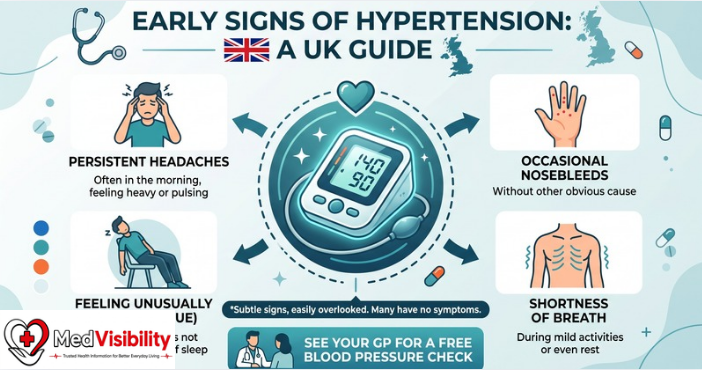
While primary hypertension typically develops without obvious discomfort, some individuals do experience vague, non-specific symptoms when pressure begins creeping upwards. These subtle signs are often brushed off as everyday fatigue or stress, but they can be a gentle nudge from your body to check your readings.
1. Early-Morning Headaches
While routine tension headaches are common, headaches caused by elevated blood pressure tend to happen early in the morning, often around the top or back of the head. They typically ease as you get upright and start moving, but recurring morning dull aches deserve a quick blood pressure test.
2. Occasional Visual Disturbances
Tiny blood vessels supply the retina at the back of your eyes. When blood pressure fluctuates to higher levels, it can cause transient blurred vision, slight spotty vision, or temporary eye strain that isn’t explained by tired eyes alone.
3. Mild Shortness of Breath During Routine Effort
If climbing a familiar flight of stairs or taking a brisk walk suddenly leaves you feeling more out of breath than usual, your heart may be pushing against increased arterial resistance.
4. Dizziness or Unsteadiness
Lightheadedness when standing up quickly can sometimes indicate fluctuating pressure levels. While low blood pressure is a frequent cause of postural dizziness, rapid spikes in high blood pressure can also alter balance and inner-ear sensation.
5. Frequent Nosebleeds
Nosebleeds are common and usually harmless, often triggered by dry air or minor irritation. However, recurring or unexpected nosebleeds can occur when delicate nasal blood vessels are under increased physical pressure.
Key takeaway: Having one or more of these symptoms does not automatically mean you have high blood pressure. Conversely, having none of them doesn’t mean your pressure is ideal. The only definitive answer comes from an accurate measurement.
Understanding Blood Pressure Readings in the UK
When you get your blood pressure measured at a GP surgery, a local pharmacy, or at home, you will receive two numbers measured in millimetres of mercury (mmHg):
- Systolic pressure (top number): The force exerted when your heart beats and pumps blood.
- Diastolic pressure (bottom number): The force when your heart rests between beats.
Guidelines from the National Institute for Health and Care Excellence (NICE) and the NHS categorize readings into distinct ranges:
| Category | Clinic Reading (mmHg) | Home Reading Average (mmHg) | What It Means |
| Ideal | 90/60 to 120/80 | 90/60 to 120/80 | Healthy range; maintain good lifestyle habits. |
| Pre-High / High Normal | 121/81 to 139/89 | 121/81 to 134/84 | Elevated risk; lifestyle adjustments recommended. |
| High Blood Pressure (Stage 1) | 140/90 or higher | 135/85 or higher | Medical review recommended; diagnosis confirmed via home/ambulatory monitoring. |
| Severe High Blood Pressure | 180/120 or higher | 150/95 or higher (severe home) | Requires prompt medical assessment by a GP or NHS 111. |
Note: Home readings are slightly lower than clinic readings because being in a healthcare environment can cause temporary stress—a phenomenon known as “white coat syndrome”.
Who Is Most at Risk in the UK?
Anyone can develop hypertension, but certain factors significantly raise the likelihood. Identifying your personal risk profile helps you decide how often you should get checked.
Non-Modifiable Factors
- Age: Blood pressure naturally tends to rise as blood vessels lose flexibility over time.
- Ethnicity: Adults from Black African, Black Caribbean, and South Asian backgrounds face a higher statistical risk of developing high blood pressure at an earlier age. early signs of hypertension UK.
- Family History: Having a parent or sibling with high blood pressure increases your genetic susceptibility.
Modifiable Lifestyle Factors
- Excess Dietary Salt: High sodium intake causes your body to retain fluid, driving up arterial pressure.
- Inactivity: A sedentary routine weakens the heart muscle over time, requiring it to work harder to circulate blood.
- Alcohol & Caffeine Consumption: Regularly drinking more than 14 units of alcohol per week or heavy caffeine intake can elevate baseline blood pressure.
- Persistent Stress: Chronic stress triggers cortisol and adrenaline surges, which constrict blood vessels.
Where to Get Your Blood Pressure Checked in the UK
Checking your blood pressure is quick, painless, and readily available across the UK:
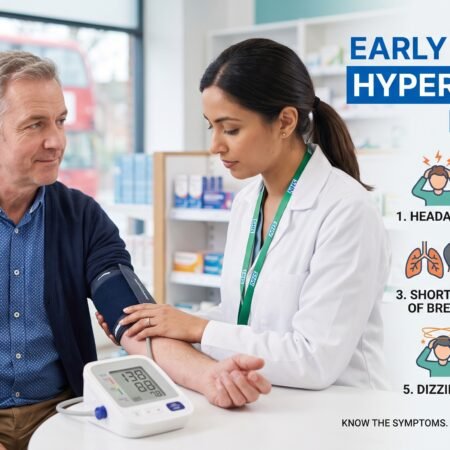
- Free NHS Pharmacy Checks: If you are aged 40 or over and live in England, hundreds of high-street pharmacies offer free blood pressure checks without an appointment.
- GP Surgeries: Your local GP practice or practice nurse can take a reading or provide a 24-hour monitor for continuous tracking. early signs of hypertension UK.
- NHS Health Checks: Adults aged 40 to 74 in England are invited for a free general health check every five years, which includes cardiovascular assessment.
- Validated Home Monitors: You can buy a British and Irish Hypertension Society (BIHS) approved upper-arm monitor for convenient testing at home.
Practical Steps to Keep Your Blood Pressure Healthy
If your readings fall in the high-normal zone or early stage 1 hypertension, simple, consistent lifestyle changes can make a meaningful difference.
- Reduce Salt Intake: Aim for under 6 grams of salt per day (about one teaspoon). Watch out for hidden salt in ready meals, bread, and sauces. early signs of hypertension UK.
- Move Every Day: Aim for at least 150 minutes of moderate aerobic activity weekly—such as brisk walking, cycling, or swimming.
- Embrace Potassium-Rich Foods: Bananas, spinach, sweet potatoes, and lentils help your body balance sodium levels naturally.
- Maintain a Healthy Weight: Losing even a few kilograms can noticeably reduce workload on your heart.
- Limit Alcohol and Quit Smoking: Keeping alcohol under 14 units weekly and avoiding tobacco protects the structural health of your arterial walls.
When to See a Doctor
Because identifying the early signs of hypertension UK guidelines describe usually relies on screening rather than waiting for pain, proactive checks are key.
Book a routine appointment with your GP if:
- Your home monitor consistently shows readings of 135/85 mmHg or higher.
- You are over 40 and haven’t had a blood pressure check in the last five years.
- You have a strong family history of stroke, heart attack, or kidney disease.
Seek urgent medical advice (NHS 111 or A&E) if you experience:
- A sudden, severe headache accompanied by blurred vision or confusion.
- Chest pain, tightness, or difficulty breathing. early signs of hypertension UK.
- Sudden weakness, numbness, or difficulty speaking (potential stroke symptoms).
Conclusion
High blood pressure rarely announces itself with obvious warning signs, but that doesn’t mean you are powerless against it. By recognizing that screening is your primary defense, keeping an eye on subtle physical signals, and utilizing accessible NHS checks, you can take firm control of your long-term cardiovascular wellness. early signs of hypertension UK.
READ MORE: How Long Can Humans Live Maximum Lifespan? 5 Truths
Frequently Asked Questions
Can stress cause high blood pressure?
Stress causes temporary spikes in blood pressure due to hormone releases like adrenaline. While short-term stress isn’t a direct cause of permanent hypertension, coping with stress through unhealthy habits—such as smoking, drinking, or poor diet—can contribute to high blood pressure over time.
Is a single high reading a diagnosis of hypertension?
No. Blood pressure naturally fluctuates throughout the day based on movement, hydration, anxiety, and caffeine. A doctor will usually request multiple readings over several days or use a 24-hour ambulatory monitor before confirming a diagnosis.
Are home blood pressure monitors reliable?
Yes, provided you choose a monitor that is clinically validated by the British and Irish Hypertension Society (BIHS) and uses an upper-arm cuff rather than a wrist monitor. Always follow instructions on sitting quietly for five minutes before taking a measurement.
Why do South Asian and Black adults have a higher hypertension risk in the UK?
Genetic factors influence how the kidneys process salt and regulate blood vessel tone. Additionally, higher rates of related metabolic conditions like Type 2 diabetes play a role, making routine screening especially important for these communities.
For more updates visit: medvisibility.co.uk

Other Articles



[…] an autoimmune condition where the pancreas stops making insulin almost entirely, usually appearing suddenly and often in childhood. Type 2 diabetes tends to develop gradually, usually in adults, and is […]
[…] knowing that experience can vary by background. Some research indicates women from Black ethnic backgrounds are more likely to report severe and longer-lasting hot flushes, which is a useful reminder that […]
[…] isn’t only “in your head” — it produces very real physical sensations, which is one reason it’s often mistaken for a physical illness […]
[…] Read more: Early Signs of Hypertension UK What to Watch For […]