



You’re lying in bed at 2am, heart thudding, mind replaying a conversation from three days ago that probably meant nothing. Or maybe it’s the tight chest on the Monday commute, the stomach that won’t settle before a meeting, the constant feeling that something bad is about to happen even though nothing is actually wrong. If any of that sounds familiar, you’re not overreacting, and you’re not alone.
Anxiety is one of the most common mental health experiences in the UK, and it shows up in the body just as much as the mind. The tricky part is that anxiety symptoms often masquerade as something else entirely a stomach bug, a heart problem, ordinary tiredness which means many people spend months, sometimes years, not realising what’s actually going on. This guide walks through what anxiety symptoms UK look like in real life, what’s considered “normal” worry versus something worth getting checked, and what support is actually available through the NHS and beyond.
This article is written to inform, not diagnose. If anything here sounds like your own experience, please read through to the “When to See a Doctor” section further down.
What Is Anxiety, Really?
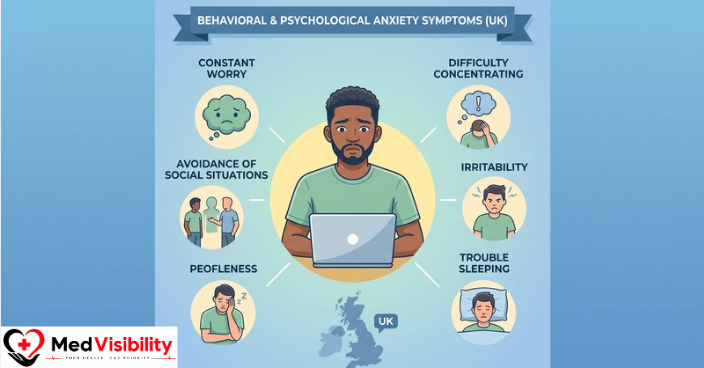
Anxiety is your body’s alarm system. It’s designed to switch on when there’s danger a genuine threat and switch off again once the danger has passed. A racing heart before a job interview or a knot in your stomach before an exam is this system working exactly as intended. anxiety symptoms UK.
The problem starts when the alarm won’t switch off, or when it goes off for things that aren’t actually dangerous: an email from your boss, a busy supermarket, a thought about something that might happen next year. When worry becomes constant, disproportionate, or starts interfering with daily life, it moves from “normal stress” into what’s often described as an anxiety disorder.
Anxiety isn’t one single condition. It’s an umbrella term covering several related experiences, including generalised anxiety disorder (GAD), panic disorder, social anxiety, health anxiety, phobias, and others. Each has its own pattern, but many of the underlying symptoms overlap.
Common Anxiety Symptoms UK Adults Report
Anxiety symptoms tend to fall into three broad categories: physical, mental, and behavioural. Most people experience a mix of all three, though the balance is different for everyone.
Physical Symptoms
- A racing or pounding heart, or heart palpitations
- Shortness of breath or a feeling of tightness in the chest
- Sweating, trembling, or shaking
- Nausea, stomach cramps, or a churning “butterflies” feeling
- Dizziness or light-headedness
- Muscle tension, particularly in the neck, shoulders, and jaw
- Headaches
- Difficulty sleeping, or waking up feeling unrested
- Fatigue, even after a full night’s sleep
- Needing the toilet more often, or digestive changes
Mental and Emotional Symptoms
- A constant sense of dread or feeling that something bad is about to happen
- Racing thoughts that are hard to switch off
- Difficulty concentrating, or your mind going blank
- Feeling on edge, restless, or unable to relax
- Irritability
- Overthinking situations, replaying conversations, or imagining worst-case outcomes
- Feeling detached from yourself or your surroundings (sometimes called depersonalisation)
Behavioural Symptoms
- Avoiding situations, places, or people that trigger anxious feelings
- Seeking frequent reassurance from others
- Checking behaviours (repeatedly checking your body for signs of illness, checking locks, checking messages) anxiety symptoms UK.
- Difficulty making decisions
- Withdrawing from social contact or activities you’d normally enjoy
- Struggling to go to work, or taking time off due to how you’re feeling
A panic attack is a related but distinct experience a sudden, intense episode of fear that can bring on shortness of breath, a racing heart, nausea, and sweating, often triggered by something that isn’t immediately obvious. These episodes are frightening in the moment, but they are not medically dangerous, and they do pass. anxiety symptoms UK.
Symptoms vs Possible Triggers: A Quick Overview
| Symptom Type | Common Signs | Everyday Triggers That May Set It Off |
|---|---|---|
| Physical | Racing heart, tight chest, nausea | Deadlines, public speaking, financial pressure |
| Mental | Racing thoughts, dread, poor focus | Uncertainty, health worries, big life changes |
| Behavioural | Avoidance, reassurance-seeking | Social events, crowded places, past panic attacks |
| Sleep-related | Trouble falling or staying asleep | Late-night scrolling, unresolved worry, caffeine |
This table is a general guide, not a diagnostic tool the same symptom can have several different causes, and only a healthcare professional can properly assess what’s going on for you.
Is It Anxiety, or Just Everyday Stress?
This is one of the most searched questions around anxiety, and it’s a fair one. Stress and anxiety overlap a lot, but there’s a useful distinction. anxiety symptoms UK.
Stress is usually tied to a specific, identifiable cause — a work deadline, an argument, moving house — and tends to ease once that cause is resolved. Generalised anxiety disorder, by comparison, is thought to affect up to around 5% of the UK population, and is slightly more common in women, with onset most often occurring between the ages of 35 and 59.
The key difference is persistence and proportion. Feeling nervous before a driving test is stress. Feeling a background hum of dread most days, about a wide range of things, for weeks or months, without an obvious single cause, leans more towards an anxiety disorder. <cite index=”10-1″>The main sign of generalised anxiety disorder is ongoing stress or worry that’s hard to control and starts affecting everyday life, rather than anxiety tied to one particular event. anxiety symptoms UK.
It’s also worth knowing that anxiety conditions often travel together. Someone with generalised anxiety disorder may also experience panic attacks, or a specific phobia, at the same time.
Health Anxiety: When Worry Focuses on the Body
One pattern worth flagging on its own is health anxiety — when worry about your physical health becomes so persistent it starts to take over daily life. This can create a frustrating loop: anxiety itself produces physical symptoms like a racing heart or headaches, which then get mistaken for signs of a serious illness, which fuels more anxiety, which produces more physical symptoms.
People experiencing health anxiety often find themselves repeatedly checking their body for symptoms, seeking reassurance from others, or searching health information online.If this sounds familiar — including compulsively Googling symptoms — it’s a genuinely common experience, and support for it is available through the same routes as other anxiety conditions.
What Causes Anxiety?
There’s rarely one single cause. Anxiety tends to develop from a combination of factors, including:
- Life circumstances — money worries, work pressure, housing insecurity, relationship difficulties
- Past experiences — earlier trauma, bullying, or difficult childhood experiences
- Personality and temperament — some people are naturally more prone to worry
- Physical health — some medical conditions and medications can produce anxiety-like symptoms
- Family history — anxiety can run in families, though this doesn’t mean it’s guaranteed
- Ongoing stress — ‘accumulated’ stress from juggling multiple pressures over a long period
- Lifestyle factors — poor sleep, high caffeine or alcohol intake, and lack of physical activity can all make anxiety symptoms worse
Understanding a possible cause can be helpful, but it isn’t necessary in order to get support. Many people never pin down a single “reason” for their anxiety, and that’s completely normal. anxiety symptoms UK.
Everyday Ways to Manage Mild Anxiety
For anxiety that’s mild or occasional, there are practical, realistic habits that many people find genuinely useful. These aren’t cures, and they won’t resolve a diagnosed anxiety disorder on their own, but they can take the edge off day-to-day. anxiety symptoms UK.
- Move your body regularly. Even a brisk 20-minute walk can lower physical tension and improve mood for several hours afterwards.
- Watch your caffeine intake. Caffeine can mimic and intensify physical anxiety symptoms like a racing heart, particularly later in the day.
- Prioritise sleep routine. Going to bed and waking at consistent times helps regulate the nervous system over time.
- Try slow breathing techniques. Breathing out for longer than you breathe in (for example, in for 4 counts, out for 6) can calm the body’s stress response within minutes.
- Limit late-night scrolling. Doom-scrolling news or social media before bed is a common, underrated anxiety trigger. anxiety symptoms UK.
- Write worries down. Getting anxious thoughts onto paper — rather than looping them in your head — can reduce their intensity.
- Reduce alcohol as a coping tool. Alcohol can worsen anxiety symptoms the following day, even if it feels calming in the moment.
- Stay connected. Isolation tends to amplify anxious thinking; regular contact with people you trust helps.
None of these replace professional treatment if your symptoms are persistent or severe — think of them as supportive habits alongside proper care, not a substitute for it. anxiety symptoms UK.
When to See a Doctor
It’s worth speaking to a GP or seeking professional support if:
- Anxiety is affecting your work, relationships, or daily routine
- You’re avoiding places, people, or situations because of anxious feelings
- Your worry feels constant, disproportionate, or hard to control
- You’re experiencing regular panic attacks
- Sleep, appetite, or energy have changed significantly
- You’ve started relying on alcohol or other substances to cope
- Physical symptoms (chest pain, breathlessness, dizziness) are new, severe, or you’re unsure of the cause
- You’ve been feeling this way for several weeks with no improvement
If you ever feel unable to keep yourself safe, or are having thoughts of harming yourself, this is a medical emergency. In the UK, you can call 999, go to your nearest A&E, or call NHS 111 for urgent mental health advice. You can also contact the Samaritans free, any time, on 116 123.
For non-urgent anxiety symptoms, a GP is a sensible first stop. In England, adults can also self-refer to NHS Talking Therapies for anxiety and depression without needing to see a GP first, which can speed up access to support like cognitive behavioural therapy (CBT). anxiety symptoms UK.
Treatment Options Available in the UK
Getting a proper assessment matters because the right treatment depends on what’s actually going on — and this is genuinely a decision for you and a healthcare professional, not something to self-manage from an article.
Talking therapies. Cognitive behavioural therapy (CBT) is one of the most well-evidenced treatments for anxiety disorders and is widely available on the NHS. In England, you can self-refer to psychological therapy services in your area without needing a GP referral first.
Medication. For some people, a GP or psychiatrist may discuss medication options. Antidepressants such as SSRIs (selective serotonin reuptake inhibitors) are sometimes prescribed for anxiety conditions</cite> alongside or instead of therapy. This is a decision made individually with a prescriber, weighing benefits and possible side effects — never something to start, stop, or adjust without medical guidance.
Self-help resources. NHS-endorsed digital tools, guided self-help books (often free through local libraries via the Reading Well scheme), and charity helplines can complement formal treatment.
Private therapy. <cite index=”6-1″>For those who can afford it or want to avoid NHS waiting lists, private therapy is available, typically from around £35 per session upward, with some lower-cost options starting around £15 through charities.</cite> The British Association for Behavioural and Cognitive Psychotherapies and the British Psychological Society both maintain directories of accredited practitioners.
Recovery isn’t always linear. <cite index=”8-1″>Many people find their anxiety becomes manageable with treatment, though some may need ongoing support, and symptoms can occasionally worsen for periods even during treatment.That’s a normal part of the process, not a sign that treatment has failed.
The Bigger Picture: Anxiety Is Common, and Support Exists
If there’s one thing worth taking from this article, it’s that anxiety — in all its physical, mental, and behavioural forms — is extremely common, and effective support genuinely exists. <cite index=”2-1″>Yet NHS research has found that many people delay seeking help because they believe their symptoms “aren’t serious enough,” and a notable proportion don’t seek help at all.
READ MORE: Digital Marketing for Doctors in the UK A Practical Compliant Guide
There’s no minimum threshold of suffering required before you’re “allowed” to ask for support. If anxiety is affecting your life in any way that matters to you, that’s reason enough to reach out.
A Final Word
Anxiety can feel isolating, even though it’s one of the most common mental health experiences in the UK. Recognising the pattern — the physical symptoms, the racing thoughts, the avoidance — is often the first real step towards feeling better. You don’t need to have all the answers before reaching out for support; a GP or NHS Talking Therapies referral is a reasonable place to start for almost anyone unsure of where to begin.
FAQs
What are the first signs of anxiety?
Early signs often include restlessness, a racing heart, trouble concentrating, muscle tension, and difficulty switching off worried thoughts. Physical symptoms like a churning stomach or shallow breathing are also common early indicators.
Can anxiety cause physical symptoms like chest pain?
Anxiety can produce very real physical symptoms, including chest tightness, palpitations, and breathlessness. That said, chest pain should always be taken seriously — if it’s new, severe, or you’re unsure of the cause, seek medical attention to rule out other causes first.
How long do anxiety symptoms usually last?
This varies enormously. A stress response to a specific event may ease within days. Generalised anxiety, left unaddressed, can persist for months or years, which is part of why early support tends to help.
Is anxiety the same as a panic attack?
Anxiety is typically an ongoing state of worry or unease, while a panic attack is a sudden, intense episode of fear with strong physical symptoms that usually peaks and passes within around 5 to 30 minutes.
Can I refer myself for anxiety treatment on the NHS?
In England, yes — adults can self-refer to NHS Talking Therapies for anxiety and depression without a GP referral. Access routes vary slightly elsewhere in the UK, so checking with your GP or local NHS board is a good starting point.
Does exercise actually help with anxiety?
Regular physical activity is well-supported as a helpful addition to anxiety management, partly by reducing physical tension and improving sleep. It works best alongside, not instead of, professional treatment for diagnosed anxiety disorders.
For more updates visit: medvisibility.co.uk

Other Articles

Menopause Symptoms UK What to Expect and When to Get Help
Type 2 Diabetes Symptoms UK What to Watch For



[…] said, honesty matters here. Much of this evidence is observational, meaning it shows a strong association rather than definitive proof that diet […]
[…] kitchen staples used medicinally (honey, ginger, garlic). It can also stretch to complementary therapies such as acupuncture or aromatherapy, though those work through a different mechanism entirely and […]
[…] and in short bursts, it’s completely normal and even useful. A flutter of nerves before a job interview or a driving test is anxiety doing its […]
[…] meaning fewer raw clicks for purely informational content. On the other hand, being one of the sources an AI summary cites is itself a visibility and credibility signal — patients notice which […]
[…] READ MORE: Anxiety Symptoms UK How to Recognise Them and What Helps […]