



Picture your plate right now. Chances are it looks a bit different from one in Crete or southern Italy more beige, less olive oil, fewer vegetables taking up space. That’s not a criticism, it’s just how eating habits evolved here. But a growing number of people across Britain are borrowing ideas from the Mediterranean table, and the reasons go well beyond taste.
The Mediterranean diet UK trend isn’t about flying to Greece for your groceries. It’s a way of eating built around vegetables, olive oil, whole grains, fish, and modest portions of meat and dairy and it happens to be one of the most thoroughly studied eating patterns in the world. The NHS Eatwell Guide already leans on many of the same principles, which makes this less of a foreign import and more of a familiar idea, dressed slightly differently.
This guide walks through what the Mediterranean diet actually involves, what the evidence really says (and doesn’t), how to make it work with a British shopping list and budget, and when it makes sense to speak to a doctor or dietitian before making changes.
What Is the Mediterranean Diet, Exactly?

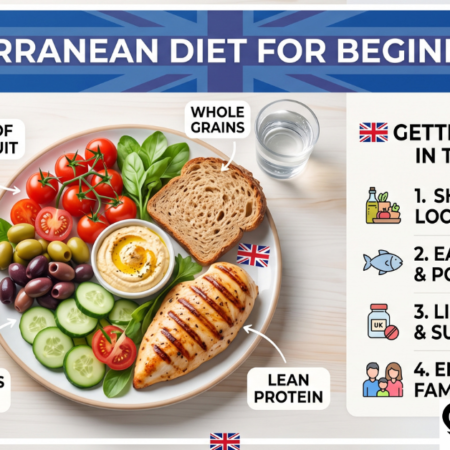
The Mediterranean diet is inspired by the traditional eating habits of countries bordering the Mediterranean Sea Greece, Italy, Spain, and parts of southern France. It isn’t a single fixed meal plan, more a pattern of choices repeated meal after meal, day after day.
The core ideas are simple:
- Vegetables, fruit, beans, lentils, nuts, and whole grains form the bulk of meals
- Olive oil is the main added fat, replacing butter and other saturated fats
- Fish and seafood appear regularly, often a couple of times a week
- Poultry, eggs, and dairy (yoghurt, cheese) show up in moderate amounts
- Red and processed meat is eaten occasionally rather than daily
- Meals are often social, unhurried, and paired with plenty of water
It’s worth saying clearly: this is not a weight-loss fad or a rigid rulebook. It’s a flexible lifestyle pattern that can be adapted to different budgets, cultures, and tastes including a British one. Mediterranean diet UK.
READ MORE: Navigating Modern Wellness Your Essential UK Health Blog Guide
Why the Mediterranean Diet UK Conversation Is Growing
Search interest in Mediterranean-style eating has climbed steadily across the UK, and it’s not hard to see why. Heart disease remains one of the country’s leading causes of death, type 2 diabetes rates continue to rise, and more people are looking for an eating pattern that feels sustainable rather than restrictive.
Major UK health organisations have leaned into this pattern for a reason. The British Heart Foundation, NHS trusts, and the British Dietetic Association all point to Mediterranean-style eating as one of the better-supported approaches for heart and metabolic health, largely because the evidence base is unusually broad spanning decades of population studies alongside large clinical trials.
What Does the Evidence Actually Show?
This is where it’s important to be careful and honest rather than sensational.
Some of the strongest evidence comes from the Spanish PREDIMED trial, a large randomised study that found people following a Mediterranean-style diet supplemented with extra virgin olive oil or nuts had notably fewer major cardiovascular events compared with a low-fat diet group. It remains one of the most cited pieces of nutrition research of the past two decades. Mediterranean diet UK.
Closer to home, a large UK cohort study following around 110,000 adults found that those with the highest adherence to a Mediterranean lifestyle had a meaningfully lower risk of dying from cancer and a lower risk of premature death from any cause, compared with those who followed the pattern least. A separate Greek study following roughly 2,000 people over several years reported a substantially lower rate of cardiovascular problems among high adherers. Mediterranean diet UK.
Research has also linked Mediterranean-style eating with:
- Lower LDL (“bad”) cholesterol and triglyceride levels
- Modestly reduced blood pressure
- Lower risk of type 2 diabetes
- Some evidence of reduced risk for certain cancers
- Potential benefits for gut health, since the diet is naturally high in fibre and plant diversity
- Interest from researchers studying brain health, with related eating patterns like the MIND diet showing associations with lower rates of cognitive decline
That said, honesty matters here. Much of this evidence is observational, meaning it shows a strong association rather than definitive proof that diet alone causes these outcomes — people who eat this way often also exercise more, smoke less, or have different socioeconomic circumstances, which can influence results. The clinical trial evidence, like PREDIMED, is more robust, but no single diet is a guaranteed shield against disease. Genetics, activity levels, sleep, stress, and overall lifestyle all play a role too. Mediterranean diet UK.
Mediterranean Diet vs Typical UK Diet: A Quick Comparison
| Aspect | Traditional Mediterranean Pattern | Typical UK Diet |
|---|---|---|
| Main fat source | Olive oil | Butter, sunflower oil, mixed fats |
| Vegetables & fruit | Large, frequent portions | Often below recommended intake |
| Grains | Wholegrain bread, pasta, bulgur | Mix of white and wholegrain, often refined |
| Protein | Fish, legumes, poultry; red meat occasional | Higher red and processed meat intake |
| Dairy | Moderate, often yoghurt and cheese | Varies widely, often higher in processed dairy |
| Snacking | Nuts, fruit, olives | Higher in packaged, processed snacks |
| Alcohol | Wine in moderation with meals (optional) | Varies; often consumed separately from meals |
This isn’t about British food being “bad” — it’s simply a different pattern, and small, realistic swaps can shift things gradually without an overhaul. Mediterranean diet UK.
How to Follow a Mediterranean Diet UK-Style (Without Moving to Greece)
You don’t need imported ingredients or a Mediterranean climate to eat this way. Most supermarkets across the UK now stock everything needed. Mediterranean diet UK.
Practical Everyday Swaps
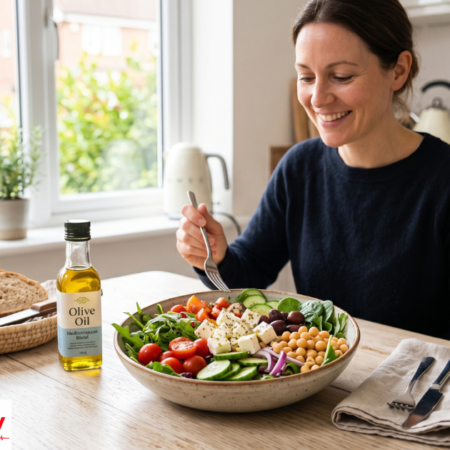
- Swap butter for extra virgin olive oil in cooking and dressings
- Choose tinned or frozen oily fish (mackerel, sardines, salmon) — budget-friendly and widely available
- Base meals around vegetables first, protein second
- Switch white bread and pasta for wholegrain versions
- Snack on a handful of unsalted nuts or fruit instead of crisps or biscuits
- Add a tin of beans or lentils to soups, stews, and curries for extra fibre
- Aim for at least one meat-free meal a week using pulses as the protein source
- Keep red and processed meat to a couple of times a week rather than daily
A Simple Day on a Mediterranean Diet UK Plate
- Breakfast: Greek-style yoghurt with berries, oats, and a drizzle of honey
- Lunch: Wholegrain pitta with hummus, roasted vegetables, and olives
- Dinner: Grilled mackerel or a lentil-based stew, with a large side salad dressed in olive oil and lemon
- Snack: A small handful of walnuts or almonds
None of this requires exotic shopping trips — most of it is available in a standard UK supermarket, often at a similar or lower cost than heavily processed convenience food. Mediterranean diet UK.
READ MORE: Digital Marketing for Doctors in the UK A Practical Compliant Guide
Benefits and Realistic Limitations
Where the Evidence Is Strong
- Consistent links to better cardiovascular markers across dozens of studies
- Naturally high in fibre, healthy fats, and antioxidants
- Flexible enough to suit vegetarians, pescatarians, and most cultural food preferences
- Supported by NHS-aligned dietary advice, so it fits well alongside existing UK health guidance
Where Caution Is Needed
- It is not a quick weight-loss method, and results vary from person to person
- Olive oil and nuts are calorie-dense, so portion awareness still matters if weight management is a goal
- People with certain conditions (like kidney disease) may need modified versions, particularly around potassium-rich foods
- If wine is included, it’s important to remember that UK guidance recommends no more than 14 units a week, spread across several days, and that alcohol still carries cancer risk regardless of any small heart-related benefits some studies suggest
- Fibre increases should happen gradually, particularly for anyone with a sensitive digestive system, to avoid bloating or discomfort
Is the Mediterranean Diet Suitable for Everyone?
For most healthy adults, this eating pattern is considered safe and is actively encouraged by UK health bodies. However, it may need adjusting for: Mediterranean diet UK.
- People managing diabetes, who may need guidance on carbohydrate portions from grains and fruit
- Those with chronic kidney disease, where legumes, nuts, and certain vegetables may need to be limited
- People taking blood-thinning medication, since consistent vitamin K intake from leafy greens matters for some individuals
- Anyone with a history of disordered eating, who should approach any structured eating pattern with professional support rather than alone
When to See a Doctor or Dietitian
Changing how you eat is generally low-risk, but it’s worth getting professional advice before making significant changes if you: Mediterranean diet UK.
- Have an existing heart condition, diabetes, or kidney disease
- Take regular medication that interacts with diet (such as blood thinners or diabetes medication)
- Are pregnant or breastfeeding and want tailored nutrition advice
- Experience unexplained weight loss, persistent digestive symptoms, or fatigue
- Want a personalised plan rather than general guidance
A GP or registered dietitian can help tailor Mediterranean-style eating to your specific health needs, rather than applying a one-size-fits-all approach. Mediterranean diet UK.
READ MORE: Menopause Symptoms UK What to Expect and When to Get Help
Conclusion
The Mediterranean diet UK conversation isn’t about chasing a trend — it’s about borrowing a well-studied, flexible way of eating that already overlaps closely with NHS dietary advice. Swapping butter for olive oil, eating more fish and pulses, and building meals around vegetables are small, realistic changes rather than a total lifestyle overhaul. The evidence supporting heart, metabolic, and general health benefits is genuinely strong, though it’s not a guarantee against illness, and it works best alongside other healthy habits like movement, sleep, and not smoking. Start with a few swaps, keep it enjoyable, and let the rest follow gradually.
FAQs
Is the Mediterranean diet expensive to follow in the UK?
Not necessarily. Tinned fish, frozen vegetables, dried beans, lentils, and seasonal produce are all budget-friendly and widely available in UK supermarkets, making the pattern accessible on most budgets.
Can the Mediterranean diet help with weight loss?
It can support weight management as part of a balanced approach, mainly because it’s high in fibre and whole foods, but it isn’t designed as a rapid weight-loss plan and results vary between individuals.
Do I have to drink wine to follow this diet?
Wine is an optional, traditional element in some Mediterranean cultures, not a requirement. UK alcohol guidance still applies, and plenty of people follow the diet’s food principles without drinking at all.
Is olive oil really better than other cooking oils?
Extra virgin olive oil is rich in monounsaturated fats and polyphenols, and much of the Mediterranean diet’s supporting evidence specifically involves olive oil, but other unsaturated oils like rapeseed oil also fit within a heart-healthy pattern.
How quickly will I notice health benefits?
Some markers, like cholesterol or blood pressure, may shift within weeks to months for some people, but the strongest evidence for long-term outcomes (like reduced disease risk) comes from sustained eating patterns over years, not short-term changes.
Is the Mediterranean diet suitable for vegetarians?
The diet’s emphasis on vegetables, legumes, whole grains, nuts, and olive oil makes it naturally adaptable for vegetarians, with fish simply omitted or replaced with additional plant protein sources.
For more updates visit: medvisibility.co.uk

Other Articles

Menopause Symptoms UK What to Expect and When to Get Help


[…] READ MORE: Mediterranean Diet UK A Simple, Realistic Guide […]
[…] READ MORE: Mediterranean Diet UK A Simple, Realistic Guide […]
[…] READ MORE: Mediterranean Diet UK A Simple, Realistic Guide […]
[…] READ MORE: Mediterranean Diet UK A Simple, Realistic Guide […]