



Maybe it was a strange rash, a persistent cough, or a question about a medication your GP mentioned in passing. Within seconds, you had a page of results some from the NHS, some from private clinics, a few forums, and one site that looked suspiciously like it was trying to sell you something. How do you know which one to trust?
That gap between “information that ranks high” and “information that’s actually reliable” is exactly where a healthcare SEO service comes in. It’s not a medical term. It’s a marketing one. But it shapes what you see, in what order, every time you search for a health answer. Understanding it helps you become a sharper, safer searcher of your own health information.
This article isn’t medical advice it’s a plain-English guide to what healthcare SEO services actually do, how they influence the health content you read, and how to tell a well-optimised, trustworthy page from one that’s simply good at gaming search engines.
What Does “Healthcare SEO Service” Actually Mean?
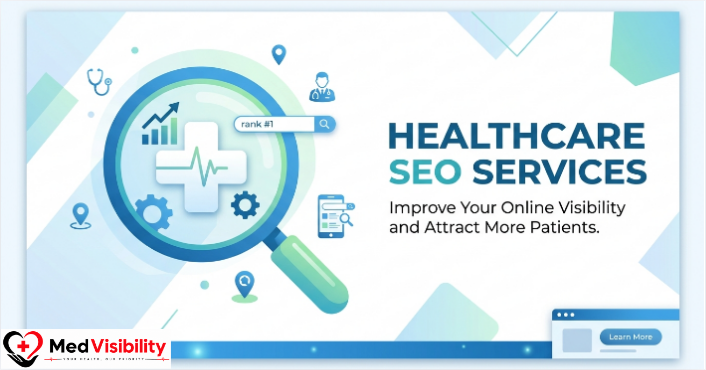
A healthcare SEO service is a specialised form of search engine optimisation (SEO) aimed at hospitals, clinics, GP practices, dentists, therapists, pharmacies, and health information websites. The goal is straightforward: help a healthcare provider or publisher appear higher in Google search results when someone searches for related terms — “dentist near me,” “physiotherapy for back pain,” or “signs of low iron,” for example.
Unlike general SEO, healthcare SEO has to work inside a stricter set of rules because health content falls under what Google calls YMYL Your Money or Your Life. YMYL topics are ones where inaccurate information could genuinely harm someone’s health, finances, or safety. Google holds these pages to a higher bar, checking for what’s known as E-E-A-T: Experience, Expertise, Authoritativeness, and Trustworthiness.
In practice, a legitimate healthcare SEO service focuses on:
- Making sure medical content is accurate, current, and reviewed by qualified professionals
- Structuring pages so both readers and search engines can quickly find the answer
- Building genuine authority citations from bodies like the NHS, WHO, or peer-reviewed journals
- Improving site speed, mobile usability, and accessibility healthcare seo service
- Local search optimisation, so nearby patients can find real-world care (clinics, pharmacies, specialists)
- Ethical link-building and citations from reputable medical or health directories
Why This Matters to You as a Reader, Not Just to Clinics
It’s easy to think of SEO as a business concern — something clinics and content teams worry about, not patients. But every time you search for a health question, SEO has already influenced what you’re seeing.
Here’s the honest picture: SEO can be used to build genuinely more helpful, accurate, and accessible health content — or it can be used to game rankings with thin, keyword-stuffed pages that add little real value. The difference usually comes down to intent. A responsible healthcare SEO service pushes providers toward the first approach, because Google’s own algorithms increasingly reward it and penalise the second.
Read more: Healthy Lifestyle Tips UK A Realistic Guide for Everyday Life
That’s good news for you as a reader. Since Google’s May 2026 Core Update and the broader shift toward AI-powered search summaries, low-quality, generic health content has become noticeably harder to find at the top of search results. Pages that survive tend to share a few traits: clear authorship, cited sources, regularly updated information, and content written for real patient understanding rather than just keyword density.
How Healthcare SEO Has Changed With Recent Google Updates
Search hasn’t stood still, and neither has the way health content gets found.
The Shift Toward People-First Content
Google’s “people-first” content approach asks a simple question of every page: was this written primarily to help a real person, or primarily to rank in search? Health content that reads like it was assembled purely to hit keyword targets — with vague claims, no named sources, and repetitive filler — tends to be filtered out or ranked lower, especially after the May 2026 Core Update tightened scrutiny of YMYL pages specifically.
AI Overviews and Featured Snippets
With AI-generated summaries now appearing above traditional search results, healthcare SEO has had to adapt again. Content that answers a question clearly and concisely near the top of the page — in plain language, often within the first 40–60 words — has a better chance of being pulled into these AI summaries or featured snippets. This has pushed health publishers toward clearer structure: short direct answers, followed by more detailed explanation, rather than long, meandering introductions. healthcare seo service
Greater Weight on Real Expertise
Search engines are also getting better at distinguishing between content that merely mentions medical review and content that genuinely involves one. Author bios, named medical reviewers, and citation of primary sources (rather than other blogs) increasingly separate the pages that rank well from those that don’t.
Healthcare SEO vs. General SEO: What’s Different
| Aspect | General SEO | Healthcare SEO |
|---|---|---|
| Content standard | Helpful and relevant | Must also be medically accurate and reviewed (YMYL/E-E-A-T) |
| Regulatory considerations | Minimal | May involve advertising standards, patient privacy, and clinical accuracy rules |
| Trust signals | Backlinks, domain authority | Backlinks plus citations from NHS, WHO, PubMed, peer-reviewed studies |
| Local search | Helpful for many businesses | Often essential — patients frequently search “near me” for care |
| Content lifespan | Can stay relevant for years | Needs regular review as medical guidance updates |
| Risk of poor SEO | Lost traffic | Potential for readers to act on outdated or inaccurate health information |
How to Spot Trustworthy Health Content (A Quick Reader’s Checklist)
Whether or not a site uses a healthcare SEO service, you can judge the content itself with a few quick checks:
- Is there a named author or reviewer? Genuine health content usually credits who wrote or checked it, ideally someone with relevant qualifications. healthcare seo service
- Are sources cited? Look for references to the NHS, WHO, Mayo Clinic, or specific studies — not just “experts say.” healthcare seo service
- Is there a publish or last-updated date? Health guidance changes; content without dates is harder to trust.
- Does it avoid absolute claims? Phrases like “guaranteed cure,” “miracle fix,” or “doctors don’t want you to know this” are red flags. healthcare seo service
- Does it encourage professional consultation? Reliable health content tells you when to see a doctor rather than positioning itself as a replacement for one.
- Is the tone measured? Calm, balanced explanations tend to be more trustworthy than sensational or fear-driven language. healthcare seo service
The Benefits of Well-Executed Healthcare SEO
When done responsibly, healthcare SEO genuinely improves the experience of searching for health information and care:
- Faster access to accurate answers. Well-optimised pages surface clear, structured information instead of burying it in dense paragraphs.
- Easier discovery of local care. Local SEO helps patients find nearby GPs, pharmacies, or specialists more efficiently, particularly useful in urgent (though non-emergency) situations.
- More accessible content. SEO best practices around readability, mobile design, and page speed often make health information easier to use — especially for older adults or those with limited digital literacy.
- Reduced spread of low-quality content. As search engines reward accuracy and authority, thin or misleading health pages naturally lose visibility over time.
The Limitations and Risks Worth Knowing
It’s worth being balanced here, since SEO — including healthcare SEO — isn’t inherently good or bad; it’s a tool.
- Ranking well isn’t the same as being medically correct. A page can be excellently optimised and still contain outdated or oversimplified information.
- Commercial incentives can blur objectivity. Clinics or health brands using SEO to promote their own services may present information in a way that favours what they sell.
- Aggressive SEO tactics still exist. Some sites use manipulative techniques — content farms, unreviewed AI-generated text, or exaggerated claims — despite Google’s efforts to filter them out.
- Search visibility can create a false sense of authority. Readers sometimes assume “top of Google” means “most accurate,” which isn’t always true.
Read more: Early Signs of Hypertension UK What to Watch For
This is exactly why reading with a critical eye — checking sources, authorship, and tone — still matters, no matter how well a page is optimised.
When to See a Doctor Instead of Searching Online
No SEO strategy, however well-executed, can replace a clinical assessment. It’s worth stepping back from the screen and contacting a healthcare professional if you experience:
- Sudden, severe, or worsening symptoms
- Chest pain, difficulty breathing, or signs of a stroke
- Symptoms that persist beyond what feels normal for a minor illness
- Any health concern where online information leaves you feeling more confused or worried rather than reassured
Search engines — no matter how well health content is optimised for them — are a starting point for understanding, not a diagnostic tool.
Practical Tips for Searching Health Topics More Safely
- Cross-check information across two or three reputable sources (e.g., NHS, a peer-reviewed study summary, and a well-reviewed health site) rather than relying on the first result.
- Be cautious of pages pushing a specific product, supplement, or paid service within a symptom-related article.
- Use search terms that include “NHS” or “official guidance” when you want a more clinical, less commercially influenced source.
- Bookmark a small set of sites you’ve verified as trustworthy, rather than starting from scratch with every new search.
- Treat AI-generated search summaries as a starting point, not a final answer — click through to the original source.
Conclusion
A “healthcare SEO service” might sound like something that only matters to clinics and content marketers, but it quietly shapes the health information landscape you rely on every time you search for symptoms, treatments, or local care. The best healthcare SEO doesn’t just chase rankings it helps genuinely useful, accurate, well-reviewed health content reach the people who need it, faster. As a reader, understanding how this works gives you one more tool for telling trustworthy health information apart from content that’s simply good at gaming the algorithm.
Read more: Navigating Modern Wellness Your Essential UK Health Blog Guide
FAQs
What is a healthcare SEO service in simple terms?
It’s a specialised marketing service that helps healthcare providers and health websites appear higher in search results, while meeting stricter accuracy and trust standards because health content affects real decisions.
Is healthcare SEO different from regular SEO?
Healthcare SEO must account for Google’s YMYL standards, meaning content needs stronger accuracy, sourcing, and professional review compared to general topics like travel or entertainment.
How can I tell if a health article ranking high on Google is actually trustworthy?
Look for named authors or medical reviewers, citations to recognised health authorities, a recent update date, and balanced, non-sensational language.
Does good SEO mean the medical information is accurate?
Not necessarily. SEO affects visibility, not clinical accuracy. Ranking well is a signal worth noticing, but it should never replace checking sources or speaking with a healthcare professional.
Why do healthcare websites need local SEO?
Because many health searches — “GP near me,” “urgent care today” — are about finding real-world care quickly, not just reading information, local SEO helps connect patients to nearby, relevant services.
How has AI search changed healthcare SEO?
AI-generated summaries now pull from clearly structured, well-sourced content more often, pushing healthcare SEO toward concise, plain-language answers backed by credible citations, rather than long, keyword-heavy pages.
For more updates visit: medvisibility.co.uk

Other Articles

Jelly Roll Weight Loss What Actually Happened
Mounjaro on the NHS UK What’s Actually Available in 2026




[…] networks known as Integrated Care Systems (ICSs). These regional bodies coordinate doctors, local hospitals, community clinics, and mental health teams so that health and social care work […]
[…] about staying healthy, recognising when something may need medical attention, preventing illness and finding the right healthcare […]
[…] a restaurant or a hairdresser. People searching for a doctor are often dealing with some level of worry, discomfort, or urgency, and they tend to move quickly from search to decision. A few points worth […]