



You don’t need a perfect diet, a gym membership, or four hours of free time a day to feel healthier. Most people who search for “healthy lifestyle tips UK” aren’t looking for a total life overhaul they’re looking for small, doable changes that actually fit around work, family, weather, and a fridge that’s rarely fully stocked.
This guide pulls together what current UK health guidance from the NHS, the UK’s Chief Medical Officers, and public health bodies actually says about food, movement, sleep, and mental wellbeing, and turns it into practical steps you can start this week. Nothing here is a miracle fix. It’s a grounded look at what genuinely moves the needle, and what’s worth skipping.
A quick note before we start: this article shares general wellness information, not medical advice. If you have a health condition, are on medication, or are planning a major change to your diet or exercise routine, it’s worth checking in with your GP or a registered healthcare professional first.
What Does a “Healthy Lifestyle” Actually Mean in the UK Context?
There’s no single official checklist for a healthy lifestyle, but UK public health guidance generally groups it into a few connected areas: healthy lifestyle tips UK.
- Eating well — following a balanced pattern like the NHS Eatwell Guide, rather than restrictive diets
- Moving regularly — meeting UK physical activity guidelines for your age group
- Sleeping enough — most adults need around 7–9 hours a night
- Managing stress and mental wellbeing — not just the absence of illness, but a sense of coping and connection
- Avoiding or reducing known risk factors — smoking, excess alcohol, and prolonged inactivity
- Preventive care — attending screenings, check-ups, and vaccinations when invited
The UK context matters here too. Shorter daylight hours in winter, a food culture built around convenience, and a famously unpredictable climate all shape what “realistic” healthy habits look like for people living here — which is why generic global advice doesn’t always translate well.
Why Small, Consistent Habits Beat Big Overhauls
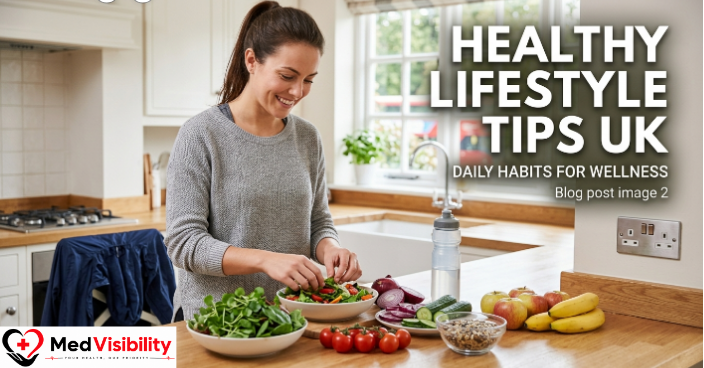
Research on behaviour change consistently points to the same finding: habits that are small, specific, and repeated are far more likely to stick than dramatic short-term changes. A 30-day extreme detox might feel productive, but most people return to old patterns once it ends — partly because restrictive changes are hard to sustain, and partly because they don’t build any lasting routine.
This is why most credible UK health guidance, including NHS advice, tends to focus on gradual, sustainable shifts rather than quick fixes. Think of it less as “getting healthy” and more as slowly making the healthy option the easy option. healthy lifestyle tips UK.
Healthy Eating Tips for a UK Lifestyle
Food is usually where people start — and where most confusion lives, thanks to conflicting diet trends online. The NHS Eatwell Guide remains the UK’s official reference point for balanced eating, and it’s a useful anchor because it isn’t tied to any commercial diet plan. healthy lifestyle tips UK.
The Basics of the Eatwell Guide
The guide recommends building most meals around:
- Fruit and vegetables — aiming for at least 5 portions a day, fresh, frozen, tinned, dried, or juiced (with juice and smoothies counting as one portion combined, due to sugar content)
- Starchy carbohydrates — ideally higher-fibre or wholegrain versions like wholemeal bread, brown rice, or potatoes with skins on, making up just over a third of what you eat
- Protein sources — beans, pulses, fish, eggs, and meat, with at least two portions of fish a week, one of which is oily (like salmon or mackerel)
- Dairy or dairy alternatives — lower-fat and lower-sugar options where possible
- Small amounts of unsaturated oils and spreads, used sparingly
- Less frequent foods high in fat, salt, and sugar — not banned, just not the foundation of most meals
Practical UK-Friendly Food Swaps
Small swaps are often easier to maintain than full recipe overhauls. A few realistic examples:
| Instead of | Try | Why it helps |
|---|---|---|
| White bread | Wholemeal or seeded bread | More fibre, keeps you fuller for longer |
| Fried breakfast daily | Porridge or eggs on wholemeal toast a few times a week | Lower saturated fat, steadier energy |
| Sugary fizzy drinks | Sparkling water with fruit, or no-added-sugar squash | Cuts free sugar intake significantly |
| Crisps as a daily snack | Unsalted nuts, fruit, or oatcakes | More fibre and nutrients, less salt |
| Takeaway several nights a week | One homemade “fakeaway” swap (e.g. oven-baked chips, homemade curry) | Similar flavours, less salt and fat |
None of these require cutting anything out completely — occasional treats are a normal part of a balanced diet, and the NHS itself frames healthy eating around overall patterns, not individual meals.
Hydration and Alcohol
Adults are generally advised to drink around 6–8 glasses of fluid a day, with water, lower-fat milk, and sugar-free drinks all counting. UK alcohol guidance recommends not regularly drinking more than 14 units a week, spread across three or more days, with several drink-free days included. If you don’t currently drink, the guidance isn’t suggesting you start. healthy lifestyle tips UK.
Physical Activity: What UK Guidelines Actually Recommend
Exercise doesn’t have to mean the gym. UK Chief Medical Officers’ guidelines recommend that adults aim for:
- At least 150 minutes of moderate-intensity activity a week (like brisk walking, cycling, or gardening), or
- 75 minutes of vigorous activity (like running or fast swimming), or a mix of both
- Muscle-strengthening activities on at least two days a week
- Reducing time spent sitting, and breaking up long periods of inactivity where possible
That 150 minutes sounds like a lot until it’s broken down — it’s roughly 20–30 minutes a day, and it doesn’t need to happen in one block. A brisk 10-minute walk at lunch, cycling to the shops, and a Saturday walk with the dog can add up faster than people expect. healthy lifestyle tips UK.
Realistic Ways to Move More in Daily UK Life
- Take phone calls standing up or while walking around the house
- Get off the bus one stop early, or park further from the entrance
- Try a “movement snack” — 5–10 minutes of stretching or bodyweight exercises between tasks
- Use stairs where reasonably possible instead of lifts or escalators
- Join a local walking group, park run, or community sports session — many are free
For anyone managing a health condition, joint pain, or recovering from injury, activity levels should be adjusted with guidance from a GP or physiotherapist, since “more activity” isn’t automatically the right advice for every individual. healthy lifestyle tips UK.
Sleep: The Most Underrated Health Habit
Sleep is often the first thing people sacrifice when life gets busy, yet it affects nearly everything else on this list — appetite regulation, mood, concentration, and immune function. Most adults need somewhere between 7 and 9 hours of sleep a night, though individual needs vary. healthy lifestyle tips UK.
Simple Sleep Habits Worth Trying
- Keep a fairly consistent wake-up time, even on weekends
- Limit caffeine in the afternoon and evening
- Dim screens or use night mode an hour before bed
- Keep the bedroom cool, dark, and used mainly for sleep
- Avoid heavy meals or alcohol close to bedtime, as both can disrupt sleep quality
If sleep problems are persistent — regularly taking a long time to fall asleep, waking frequently, or feeling exhausted despite enough hours in bed — this is worth raising with a GP rather than managing alone long-term, as it can sometimes point to an underlying issue. healthy lifestyle tips UK.
READ MORE: Navigating Modern Wellness Your Essential UK Health Blog Guide
Mental Wellbeing and Stress Management
Physical health guidance often gets more attention, but UK health bodies increasingly treat mental wellbeing as an equal part of a healthy lifestyle, not a separate topic. The NHS’s “Five Ways to Wellbeing” framework — connect, be active, take notice, keep learning, and give — is widely used across UK public health messaging because it’s simple and backed by wellbeing research. healthy lifestyle tips UK.
Practical Ways to Support Mental Wellbeing
- Connect — regular contact with friends, family, or community groups, even briefly
- Be active — movement has a genuine, evidence-based link to improved mood, not just physical fitness
- Take notice — pausing to notice surroundings, sensations, or small positive moments (sometimes called mindfulness)
- Keep learning — picking up a new skill or hobby, which supports confidence and a sense of purpose
- Give — small acts of kindness or volunteering, linked in research to improved wellbeing for the giver
Stress itself isn’t inherently harmful in short bursts — it’s chronic, unmanaged stress that’s linked to wider health effects over time, including sleep disruption and increased risk of some physical health issues. If stress, low mood, or anxiety are persistent and affecting daily life, that’s a sign to speak with a GP or a mental health professional rather than trying to manage it alone. healthy lifestyle tips UK.
Preventive Care: The Healthy Habit People Forget
A genuinely healthy lifestyle isn’t only about daily habits — it includes staying on top of preventive care, which is free through the NHS for eligible groups. This includes:
- Attending invited NHS health checks (offered to adults aged 40–74 without an existing relevant condition)
- Keeping up with screening programmes you’re invited to (such as cervical, breast, or bowel screening, depending on age and sex)
- Staying current with recommended vaccinations, including seasonal flu jabs where eligible
- Regular dental and eye check-ups, which can also flag early signs of broader health issues
- Monitoring blood pressure, which is often symptomless but a significant risk factor when raised over time
These checks are easy to postpone because they don’t feel urgent — but early detection is one of the most effective, evidence-backed ways to catch potential health issues before they become bigger problems.
Common Barriers — And Realistic Ways Around Them
Most people already know the broad advice above. The harder part is applying it around real UK life: expensive gym memberships, long commutes, unpredictable weather, and busy family schedules. A few honest workarounds: healthy lifestyle tips UK.
- No time for the gym? Bodyweight exercises at home, or a brisk 20-minute walk, count toward activity guidelines
- Cost of living pressures on food? Frozen fruit and veg are just as nutritious as fresh and often cheaper; tinned beans and pulses are a low-cost protein source
- Dark winter evenings? Lunchtime walks make use of daylight hours; indoor activities like swimming or a home workout video can fill the gap
- Motivation dips? Habits tied to an existing routine (like stretching while the kettle boils) tend to stick better than ones that need extra willpower each day
Healthy Lifestyle Tips UK: Quick Reference Table
| Area | UK Guideline | Simple Starting Point |
|---|---|---|
| Fruit & veg | At least 5 portions a day | Add one extra portion to your usual lunch |
| Physical activity | 150 mins moderate activity/week + strength work twice weekly | Two 10-minute walks a day |
| Sleep | 7–9 hours a night for most adults | Fix a consistent wake-up time |
| Alcohol | No more than 14 units/week, with drink-free days | Pick 2–3 alcohol-free days weekly |
| Mental wellbeing | Five Ways to Wellbeing framework | One small “connect” or “give” action daily |
| Preventive care | Attend NHS-invited checks and screenings | Book any overdue check-up this month |
When to See a Doctor
Lifestyle changes support general wellbeing, but they aren’t a substitute for medical care. It’s worth contacting a GP if you experience: healthy lifestyle tips UK.
- Unexplained weight loss or gain
- Persistent fatigue that doesn’t improve with better sleep
- Ongoing low mood, anxiety, or changes in appetite lasting more than two weeks
- Chest pain, breathlessness, or irregular heartbeat during activity
- Any new or worsening symptom that concerns you, even if it seems minor
If you ever feel your health is at immediate risk, contact NHS 111, your GP, or emergency services rather than relying on general lifestyle information. healthy lifestyle tips UK.
Key Takeaways
- Small, consistent habits are more sustainable than dramatic overhauls
- The NHS Eatwell Guide, not restrictive diets, is the UK’s core reference for balanced eating
- 150 minutes of weekly moderate activity can be broken into short daily sessions
- Sleep and mental wellbeing are core parts of a healthy lifestyle, not extras
- Preventive checks and screenings are a free, often-overlooked part of staying healthy
- Lifestyle changes support wellbeing but never replace medical advice or treatment
Content Freshness Note
This article should be reviewed periodically to reflect any updates to NHS Eatwell Guide recommendations, UK Chief Medical Officers’ physical activity guidelines, alcohol unit guidance, or NHS health check/screening eligibility criteria, as these are periodically revised by UK public health bodies. healthy lifestyle tips UK.
Medical Review Note
This content is written for general wellness purposes and should ideally be reviewed by a qualified healthcare professional (e.g. a GP, registered dietitian, or public health specialist) before publishing, to confirm alignment with current NHS and UK clinical guidance. healthy lifestyle tips UK.
READ MORE: Mediterranean Diet for Beginners UK Easy Meal Plan & Guide
The Bottom Line
A healthy lifestyle in the UK isn’t about perfection, expensive supplements, or following the latest online trend it’s a combination of steady habits: eating in a reasonably balanced way, moving regularly, sleeping enough, looking after mental wellbeing, and not skipping preventive checks. None of these need to happen all at once. Picking one or two areas from this guide and building consistency there is a far more realistic and sustainable starting point than trying to change everything overnight. healthy lifestyle tips UK.
FAQs
What are the easiest healthy lifestyle changes to start with in the UK?
Small, low-effort changes tend to stick best — adding one extra portion of vegetables to a meal, taking a 10-minute daily walk, or setting a consistent bedtime. Starting with one habit rather than several at once tends to be more sustainable.
How much exercise do UK adults actually need each week?
UK guidelines recommend at least 150 minutes of moderate activity (or 75 minutes of vigorous activity) weekly, plus muscle-strengthening activity on two or more days. This can be broken into short sessions across the week rather than done in one go. healthy lifestyle tips UK.
Is the NHS Eatwell Guide the same as a weight-loss diet?
The Eatwell Guide is a general framework for balanced eating, not a weight-loss plan. It’s designed to support long-term health for most people rather than deliver quick results.
Can lifestyle changes replace medication or medical treatment?
Lifestyle habits can support overall health and may help manage some risk factors, but they aren’t a replacement for prescribed medication, diagnosis, or treatment. Always speak with a GP before changing or stopping any treatment.
How many alcohol-free days should I aim for each week?
UK guidance suggests spreading the recommended weekly limit (14 units or fewer) across three or more days and including several drink-free days, rather than saving all units for one or two sessions.
Do I need supplements for a healthy lifestyle in the UK?
Most people can get the nutrients they need from a balanced diet. The NHS specifically recommends a vitamin D supplement during autumn and winter for most UK adults, due to limited sunlight, but other supplements should generally be discussed with a GP or pharmacist first rather than taken routinely.
For more updates visit: medvisibility.co.uk

Other Articles

Mediterranean Diet for Beginners UK Easy Meal Plan & Guide



[…] are the classic winter trio, and also the most researched home remedies […]
[…] do with dumbbells, especially when your form and consistency improve over time. best home workout for beginners […]
[…] “Best” doesn’t mean fastest, and it doesn’t mean the plan with the most dramatic before-and-after photos. In nutrition science, “best” usually means three things at […]
[…] (rebooking a check-up, attending a screening, completing a treatment plan) is usually more cost-effective. Simple, well-timed communication — appointment reminders, post-visit check-ins, seasonal health […]
[…] very vigorous activity like HIIT counts toward the vigorous side of that equation, done in short bursts. HIIT workout for weight loss […]