



Introduction
Imagine a world where computers can spot early signs of disease before a doctor notices anything wrong. Where machines analyse thousands of medical images in minutes, flagging potential cancers that might otherwise be missed. medlytics mit with where hospitals can predict which patients are at risk of complications and intervene early.
This isn’t science fiction. It’s the promise of medlytics, a field that sits at the intersection of medicine and data analytics.
The term ‘medlytics’ is short for ‘medical data analytics’. And one of the most exciting places where this field is being taught and advanced is at the Massachusetts Institute of Technology (MIT), through a programme called the Beaver Works Summer Institute (BWSI) Medlytics course.
But what exactly is medlytics? How is MIT using it to train the next generation of healthcare innovators? And what does all this mean for you whether you’re a patient, a healthcare professional, or simply someone interested in the future of medicine?
Let’s explore.
What Is Medlytics?
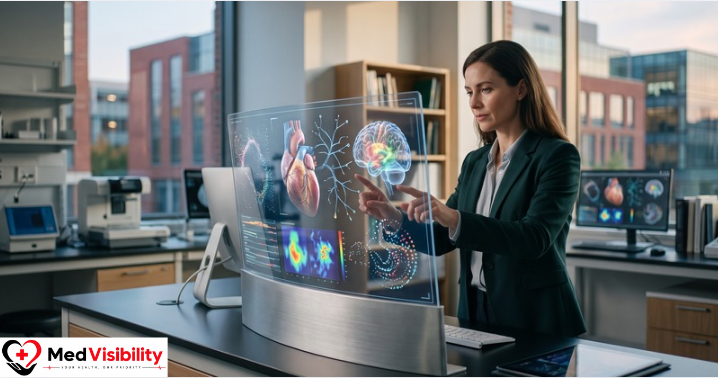
At its core, medlytics is the application of data science, machine learning, and artificial intelligence to medical problems. It’s about taking the vast amounts of data generated by modern healthcare—from electronic health records and medical imaging to wearable devices and genetic information—and using it to improve patient outcomes.
Think of it this way: doctors have always used data to make decisions. They look at your symptoms, your test results, and your medical history. But the human brain can only process so much information at once. Medlytics supercharges this process by using computers to analyse data at a scale and speed that would be impossible for any person to match.
As one medical data expert put it, many severe conditions go undetected because doctors simply don’t have the time to manually analyse complex tables of lab values during a busy hospital shift. Medlytics tools can do this automatically, in real time, flagging patients who need attention.
The MIT Connection
MIT’s Beaver Works Summer Institute (BWSI) offers a Medlytics programme that gives high school students hands-on experience applying machine learning to real medical challenges.
The course covers everything from the fundamentals of probability and statistics to advanced machine learning techniques like convolutional neural networks. Students work through a series of weekly challenges that mirror real-world medical problems:
- Week 1: Diagnosing hypothyroidism from patient data
- Week 2: Classifying sleep stages using physiological signals
- Week 3: Analysing mammograms to spot potential cancers
- Week 4: A capstone project where students design their own health application prototype
The programme is rigorous — it’s designed for “talented high school students from across the country” — but it reflects a broader truth: the skills needed to work at the intersection of data science and medicine are becoming essential for the future of healthcare.
How Medlytics Is Used in Real Healthcare
While the MIT programme is educational, the concepts behind it are being applied in real hospitals and health systems around the world. Here are some of the most important ways medlytics is changing healthcare.
1. Early Warning Systems
One of the most powerful applications of medlytics is the AI early warning system. These tools run alongside hospital lab systems, monitoring up to 135 different lab parameters per patient in real time.
When the system detects abnormal patterns that could indicate an emerging health problem — such as acute kidney injury or sepsis — it automatically generates an alert and sends it to the patient’s digital records. This gives doctors a chance to intervene early, potentially preventing serious complications.
As one expert explained, “With the AI early warning system, the group of patients needing monitoring or screening can be reliably narrowed down, allowing staff resources to be much more effectively focused on those patients at risk.”
In other words, instead of trying to monitor every patient for every possible problem—an impossible task in a busy hospital—medlytics helps staff focus their attention where it’s needed most.
2. Population Health Management
Another key application is population health management. This involves using data to understand the health needs of entire groups of people — whether that’s a local community, a region, or a specific patient population with a particular condition.
Companies like MedlyticsAi, for example, offer platforms that leverage natural language processing, machine learning, and other technologies to standardise healthcare data and support the transition to value-based care. The goal is to help hospitals improve workflows, reduce physician burnout, and enable doctors to see more patients per day while maintaining quality of care.
3. Predictive Analytics
Medlytics also powers predictive analytics — using historical data to forecast future health outcomes. For example, some platforms use AI and real-time data from wearable and connected medical devices to predict medical risks and enable proactive chronic disease management.
This is particularly valuable for conditions like diabetes and hypertension, where early intervention can make a huge difference. Instead of waiting for a patient to develop complications, medlytics can help identify who’s at risk and suggest preventive measures.
4. Medical Imaging Analysis
The medlytics curriculum at MIT includes a week focused on image processing, where students learn to use computer vision and convolutional neural networks to analyse mammograms. This reflects a growing trend in healthcare: using AI to assist radiologists in detecting abnormalities in medical images.
AI can sometimes spot subtle patterns that human eyes might miss, acting as a second pair of eyes to improve diagnostic accuracy.
The Companies Bringing Medlytics to Life
Several companies are working to turn the concepts taught in programmes like MIT’s Medlytics into real-world products and services. Here are a few worth knowing about:
These companies represent different facets of the medlytics field — from clinical decision support to operational efficiency to chronic disease management. But they all share a common thread: using data to make healthcare better.
Why Medlytics Matters for Patients
You might be wondering: what does all this mean for me, as a patient?
Here’s the short answer: medlytics has the potential to make healthcare more accurate, more proactive, and more personalised.
- More accurate: AI can help catch things that might otherwise be missed, from early signs of kidney injury to subtle patterns in medical images.
- More proactive: Instead of waiting for problems to develop, medlytics can flag risks early, allowing for preventive care. medlytics mit.
- More personalised: By analysing vast amounts of data, medlytics can help doctors tailor treatments to individual patients rather than using a one-size-fits-all approach. medlytics mit.
Of course, this technology is still evolving. Not every hospital has an AI early warning system. Not every doctor uses predictive analytics. But the trend is clear: data-driven healthcare is the future, and medlytics is at the forefront. medlytics mit.
Challenges and Limitations
It’s important to be realistic about the challenges facing medlytics. While the potential is enormous, there are significant hurdles to overcome. medlytics mit.
Data Privacy
Medical data is some of the most sensitive personal information there is. In the European Union, strict GDPR rules require that patient data stay within the hospital’s control. This means medlytics systems often need to be installed on local servers rather than in the cloud — which can be technically challenging and expensive. medlytics mit.
Certification and Regulation
Any algorithm used for diagnosis must be certified as a medical device, which is a costly and complex process. This creates a barrier to entry for many developers and can slow down innovation. medlytics mit.
Integration with Existing Systems
Hospitals have very different IT systems, and setting up medlytics tools to work with each one takes time and resources. This isn’t a simple plug-and-play solution. medlytics mit.
The Human Element
Finally, it’s worth remembering that medlytics is a tool to support — not replace — healthcare professionals. As one expert put it, there are two major areas for AI in healthcare: Medical AI (which supports physician decision-making) and Process AI (which helps organisations run more efficiently). Both are valuable, but neither removes the need for skilled, compassionate human care. medlytics mit.
The Future of Medlytics
So where is Medlytics heading?
The MIT Beaver Works Summer Institute continues to expand, offering Medlytics as both a summer programme and a year-round online course. This reflects growing interest in the field from students, educators, and employers alike. medlytics mit.
In the broader healthcare landscape, we can expect to see: medlytics mit.
- More AI early warning systems in hospitals, helping to catch problems earlier
- Greater use of wearables and remote monitoring, generating more data for analysis
- Improved interoperability between different health systems, making it easier to share and analyse data
- More personalised medicine, with treatments tailored to individual patients based on their unique data profiles
As one industry observer noted, medlytics is about “standardising data for all healthcare systems to enable interoperability and precision health”. The ultimate goal is a healthcare system where patients are truly at the centre, and data is used to improve outcomes for everyone. medlytics mit.
When to See a Doctor
This article is for informational purposes only. If you have concerns about your health, always consult a qualified healthcare professional. Medlytics tools and AI systems are aids for healthcare providers — they are not a substitute for professional medical advice, diagnosis, or treatment. medlytics mit.
If you’re experiencing symptoms, have a family history of a particular condition, or simply feel something isn’t right, don’t rely on online information or AI tools alone. See your doctor. Medlytics mit.
Key Takeaways
- Medlytics is the application of data science and machine learning to medical problems.
- MIT’s Medlytics programme trains high school students to use AI for real medical challenges, from diagnosing hypothyroidism to analysing mammograms. medlytics mit.
- AI early warning systems can monitor lab data in real time and flag at-risk patients, potentially preventing serious complications. medlytics mit.
- Companies like MedlyticsAI and Medlytic are bringing Medlytics tools to hospitals and health systems.
- Challenges include data privacy, regulatory certification and integration with existing hospital systems.
- The future of medlytics includes more personalised medicine, greater use of wearables, and improved interoperability between health systems. medlytics mit.
Content Freshness Note
This article was written based on information available as of September 2026. The field of medical data analytics and AI in healthcare is evolving rapidly. Readers should check for updated guidance from sources such as the NHS, WHO, and relevant medical journals for the most current information. Specific statistics, company details, and programme offerings may change over time. medlytics mit.
Medical Review Note
This content is for informational purposes only and has not been medically reviewed. MedVisibility recommends that all health content be reviewed by a qualified healthcare professional before publication to ensure accuracy and appropriateness for the intended audience. medlytics mit.
Read more: BWSI Medlytics How Medical Data Science Is Transforming Healthcare
Conclusion
Medlytics — the application of data science and machine learning to medicine — is transforming healthcare in profound ways. From AI early warning systems that catch problems before they become serious to predictive analytics that help manage chronic disease, the field is making medicine more accurate, proactive, and personalised. medlytics mit.
MIT’s Medlytics programme is training the next generation of innovators who will drive this transformation forward. By giving high school students hands-on experience with real medical data and machine learning techniques, the programme is helping to build a future where data and medicine work hand in hand.
For patients, this means better care. For healthcare professionals, it means better tools. And for everyone, it means a healthcare system that’s smarter, faster, and more responsive to individual needs. medlytics mit.
The future of medicine is data-driven. And medlytics is leading the way. medlytics mit.
FAQs
What does ‘medlytics’ mean?
Medlytics is short for medical data analytics. It refers to the use of data science, machine learning, and artificial intelligence to analyse medical data and improve healthcare outcomes.
What is the MIT Medlytics programme?
The MIT Medlytics programme is part of the Beaver Works Summer Institute (BWSI), a rigorous STEM programme for high school students. Students learn to apply machine learning to real medical problems, including diagnosing hypothyroidism, classifying sleep states, and analysing mammograms.
How is medlytics used in hospitals?
Medlytics is used in hospitals for AI early warning systems that monitor lab data in real time and flag at-risk patients, population health management, predictive analytics, and medical imaging analysis.
Is medlytics the same as AI in healthcare?
Medlytics is a specific application of AI in healthcare focused on data analytics. It’s part of the broader field of AI in healthcare, which also includes areas like robotics, natural language processing, and clinical decision support. medlytics mit.
What skills do you need for a career in medlytics?
Key skills include programming (especially Python), machine learning, statistics, data analysis, and an understanding of healthcare and medical data. The MIT Medlytics programme also emphasises communication skills and the ability to convey technical concepts clearly.
Can medlytics replace doctors?
Medlytics is a tool to support healthcare professionals, not replace them. It helps doctors analyse data more efficiently and spot patterns they might otherwise miss, but clinical judgement and patient care remain essential human skills.
For more updates visit: medvisibility.co.uk

Other Articles

Finding the Right MedScope Contact Number A Complete Guide




No Comment! Be the first one.