



You’ve been putting it down to a busy few months. More trips to the loo, a thirst that a full glass of water never quite fixes, that bone-deep tiredness by mid-afternoon. It’s easy to explain away small changes like these until you stop and wonder if something else might be going on.
Type 2 diabetes symptoms in the UK often show up this quietly. There’s rarely a single dramatic moment. Instead, small signs build up over months, sometimes years, until a routine blood test or a nagging feeling that something isn’t right brings them into focus. type 2 diabetes symptoms UK.
This guide walks through what those symptoms actually look like, who tends to be more at risk in the UK, when it’s worth speaking to a GP, and what happens if you are diagnosed. It’s written to inform, not diagnose only a healthcare professional can tell you what’s happening in your own body.
What Is Type 2 Diabetes, in Plain English?
Your body runs on glucose (sugar) for energy, and a hormone called insulin is what moves that glucose out of your blood and into your cells. In type 2 diabetes, either your body doesn’t respond properly to insulin anymore (known as insulin resistance), or your pancreas can’t produce enough of it to keep up. Glucose then builds up in the bloodstream instead of being used properly.
It’s worth separating this from type 1 diabetes, which is an autoimmune condition where the pancreas stops making insulin almost entirely, usually appearing suddenly and often in childhood. Type 2 diabetes tends to develop gradually, usually in adults, and is closely linked with weight, activity levels, and genetics.
According to the NHS, roughly 90% of people living with diabetes in the UK have type 2, and the total number of people diagnosed has climbed sharply over the past three decades a trend widely linked to rising obesity rates, ageing populations, and lifestyle changes.
The Main Type 2 Diabetes Symptoms UK Doctors Look For
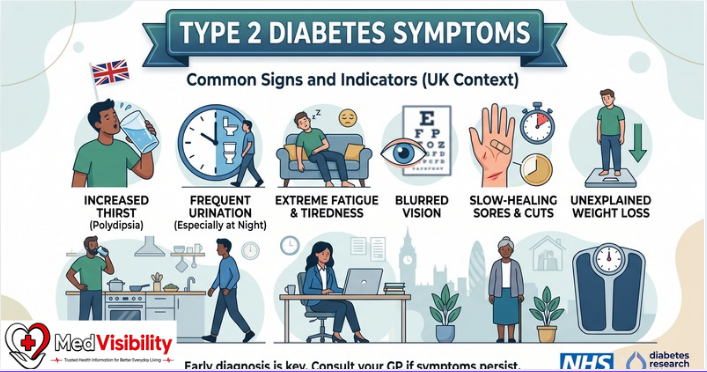
Here’s the part that catches many people off guard: type 2 diabetes doesn’t always cause noticeable symptoms, especially early on. Some people live with it for years before a routine check-up flags it. When symptoms do appear, the NHS points to four that are most common.
READ MORE: Digital Marketing for Doctors in the UK A Practical Compliant Guide
The Four Most Common Signs
- Feeling unusually tired — not just “long week” tired, but a persistent fatigue that doesn’t lift with rest
- Needing to urinate more than usual, including waking up at night to go
- Feeling thirsty most of the time, even after drinking water
- Losing weight without trying to, particularly if your eating habits haven’t changed
Other Symptoms That Can Appear
- Blurred vision
- Cuts, grazes, or wounds that take longer than usual to heal
- Recurring thrush or itching around the genitals
- Tingling or numbness in the hands or feet (usually a later sign, linked to nerve changes)
These symptoms apply to both adults and children, though type 2 diabetes remains far less common in children in the UK. If symptoms do appear, they usually build up slowly rather than arriving all at once which is part of why so many cases go unnoticed for a while.
Symptoms vs What’s Actually Happening in the Body
| Symptom | Why it happens |
|---|---|
| Excess thirst | High blood glucose pulls water from your tissues, triggering dehydration signals |
| Frequent urination | Your kidneys work to flush out excess glucose, taking extra fluid with it |
| Fatigue | Cells aren’t getting the glucose they need for energy, even though blood sugar is high |
| Unexplained weight loss | The body starts breaking down fat and muscle for fuel instead of glucose |
| Blurred vision | High glucose levels can temporarily change the shape of the eye’s lens |
| Slow-healing wounds | High blood sugar can affect circulation and the body’s healing response |
Why These Symptoms Are So Easy to Miss
There’s a reason type 2 diabetes has been called a “silent” condition by health professionals. Blood glucose levels tend to rise gradually often over several years so your body slowly adjusts to what would otherwise feel like an obvious problem. A slightly higher glucose level today doesn’t feel wildly different from yesterday, so the shift can pass unnoticed for a long time.
It also doesn’t help that the early symptoms overlap with ordinary, everyday explanations. Tiredness gets blamed on poor sleep or a demanding job. Increased thirst gets put down to warmer weather or more time exercising. A bit of unexplained weight loss might even feel like good news at first. None of this is a personal failing it’s simply how the condition tends to present, which is exactly why routine checks matter more than waiting for symptoms to feel undeniable.
Type 2 Diabetes Risk Across UK Communities
Type 2 diabetes doesn’t affect everyone in the UK equally, and understanding why can help explain some of the age and background guidance GPs use. People of South Asian, Black African, and Black Caribbean heritage are, on average, at higher risk, and tend to develop the condition at a younger age than the general population which is why NHS guidance lowers the recommended screening age to 25 for these groups, rather than 40.
Deprivation is another factor researchers and public health bodies have consistently linked to higher rates of type 2 diabetes across the UK, likely tied to a combination of diet, access to healthcare, activity levels, and broader social and environmental conditions. None of this is about blame it’s about understanding who might benefit from being a little more proactive about getting checked, rather than waiting for symptoms to appear.
Who Is More Likely to Get Type 2 Diabetes in the UK?
Some risk factors are outside your control, and some aren’t. Knowing both matters, because catching the condition early tends to make it far easier to manage.
READ MORE: The Essential Guide to Google Business Profile for Doctors
Factors you can’t change:
- Being over 40 (or over 25 if you’re from a South Asian, Chinese, Black African, or Black Caribbean background, where risk starts earlier)
- Having a parent, sibling, or close relative with type 2 diabetes
- A personal history of gestational diabetes during pregnancy
Factors you may be able to influence:
- Carrying excess weight, particularly around the waist
- Low levels of physical activity
- Having high blood pressure or a history of heart disease
- Existing prediabetes (blood glucose that’s raised but not yet in the diabetic range)
None of these guarantee you’ll develop type 2 diabetes, and having none of them doesn’t rule it out either. That’s exactly why unexplained symptoms are worth checking rather than assuming.
When to See a Doctor
You don’t need to be certain something is wrong to book an appointment that’s what GPs are there to help figure out. It’s worth arranging a check-up if:
- You or your child are experiencing any of the symptoms above, even mildly
- You fall into one or more higher-risk categories, even without symptoms
- You’re aged 40–74 and haven’t had an NHS Health Check recently these are free and designed to flag risks like this early
- A close family member has recently been diagnosed with type 2 diabetes
Diagnosis is done through a blood test measuring your glucose levels (commonly an HbA1c test), with results usually available within a few days. It’s a straightforward process, and getting tested is the only reliable way to know one way or the other guessing based on symptoms alone isn’t enough, since, as the NHS notes, plenty of people with type 2 diabetes don’t experience noticeable symptoms at all.
Living With a Diagnosis
If a test comes back showing type 2 diabetes, it’s completely normal to feel unsettled by it, even overwhelmed. That reaction doesn’t mean you’re not coping — it’s a lot to take in.
The reassuring part is that type 2 diabetes is one of the more manageable long-term conditions, particularly when it’s caught early. Management commonly involves:
- Dietary adjustments — often focused on more whole grains, vegetables, lean proteins, and fewer refined carbohydrates and sugary drinks
- Regular movement — the NHS generally recommends building toward around 150 minutes of moderate activity a week, though your care team will tailor this to you
- Weight management, where relevant, since even modest weight loss can meaningfully improve insulin sensitivity for some people
- Medication, such as metformin, if lifestyle changes alone aren’t enough to keep glucose levels in a healthy range
- Regular monitoring and check-ups with your diabetes care team, including eye and foot checks, since diabetes can affect circulation and nerves over time
Some people are able to bring their blood glucose down to a non-diabetic range through sustained lifestyle changes, sometimes referred to as remission — though this isn’t achievable or appropriate for everyone, and it isn’t a guaranteed outcome. It’s a conversation to have with your own healthcare team rather than a general expectation to aim for.
Practical Everyday Habits That May Help Lower Risk
None of the following guarantees you won’t develop type 2 diabetes — genetics and age play a role no lifestyle change can fully offset. But general health guidance consistently points to a handful of everyday habits that can support healthier blood glucose levels over time:
- Swap refined carbs for slower-release ones — think wholegrain bread and brown rice instead of white versions, which tend to cause smaller spikes in blood sugar
- Build movement into ordinary routines — a brisk walk after meals, taking the stairs, or short daily walks can be more sustainable than committing to intense workouts you won’t keep up
- Watch liquid calories — sugary drinks and fruit juices raise blood glucose quickly and are one of the easier things to cut back on without overhauling your whole diet
- Prioritise consistent sleep — poor sleep has been linked in research to reduced insulin sensitivity over time
- Get your waist measurement checked, not just your weight — where you carry weight can matter as much as how much you carry
- Don’t skip your NHS Health Check invite if you’re in the eligible age range — it’s one of the simplest ways to catch a raised risk early
Small, consistent changes tend to matter more than short bursts of dramatic ones. If you’re not sure where to start, a GP, practice nurse, or dietitian can help you figure out which changes would be most worthwhile for your own circumstances.
Possible Long-Term Complications if Left Untreated
This isn’t meant to alarm it’s meant to explain why early detection is emphasised so consistently in UK health guidance. Left unmanaged over a long period, persistently high blood glucose can gradually affect blood vessels and nerves throughout the body, which is why diabetes care in the UK includes regular monitoring of the eyes, feet, kidneys, and heart, not just blood sugar itself. Potential long-term effects can include:
- Reduced or blurred vision, and in some cases more serious eye conditions
- Nerve damage, often felt first as tingling or numbness in the feet or hands
- Slower wound healing, particularly in the feet, which is why regular foot checks are part of standard diabetes care
- Increased risk of heart disease and stroke, linked to the impact of high glucose on blood vessels over time
- Kidney function changes, which is why kidney health is usually checked as part of ongoing monitoring
The reassuring counterpoint is that these risks are precisely what earlier diagnosis and consistent management aim to reduce. Many people diagnosed with type 2 diabetes go on to manage it well and avoid serious complications, particularly when it’s caught in its earlier stages.
A Balanced View: What This Article Can and Can’t Tell You
It’s worth being upfront about the limits here. This article can help you recognise patterns worth getting checked it can’t tell you whether you have type 2 diabetes, and it isn’t a substitute for a blood test. Symptoms like fatigue or thirst overlap with dozens of other conditions, from simple dehydration to thyroid issues, so self-diagnosing from a symptom list is more likely to cause unnecessary worry than clarity. If in doubt, a five-minute conversation with a GP or pharmacist is a far more reliable next step than searching your symptoms further.
READ MORE: BWSI Medlytics How Medical Data Science Is Transforming Healthcare
Key Takeaways
- The four most common type 2 diabetes symptoms are fatigue, excess thirst, frequent urination, and unexplained weight loss
- Many people have type 2 diabetes for months or years with no noticeable symptoms at all
- Risk increases with age, family history, ethnicity, weight, and inactivity but anyone can develop it
- A simple blood test (usually HbA1c) is the only reliable way to confirm a diagnosis
- Early diagnosis generally makes the condition easier to manage through diet, activity, and, if needed, medication
- Free NHS Health Checks are available for adults aged 40–74 and are a good starting point if you’re unsure of your risk
FAQs
What is usually the first noticeable sign of type 2 diabetes?
There’s no single “first” sign for everyone, but increased thirst and needing to urinate more often are among the earliest symptoms people tend to notice, when symptoms appear at all.
Can you have type 2 diabetes with no symptoms at all?
Yes this is actually common. Many people are diagnosed through a routine blood test or NHS Health Check rather than because they noticed symptoms.
Is type 2 diabetes the same as type 1 diabetes?
Type 1 is an autoimmune condition that usually appears suddenly, often in children or young adults. Type 2 develops gradually, is more common in adults, and is more closely linked to lifestyle and genetic risk factors.
How is type 2 diabetes diagnosed in the UK?
Through a blood test, most commonly an HbA1c test, which measures your average blood glucose levels. Your GP can arrange this.
Can type 2 diabetes be reversed?
Some people achieve remission blood glucose levels returning to a non-diabetic range through sustained changes to diet, weight, and activity. This isn’t guaranteed or suitable for everyone, and it should be discussed with your own care team rather than assumed.
Who should get checked for type 2 diabetes risk?
Anyone with symptoms, a family history, or other risk factors like being over 40, overweight, or from a higher-risk ethnic background. Adults aged 40–74 without an existing condition are also eligible for a free NHS Health Check.
For more updates visit: medvisibility.co.uk

Other Articles

Anxiety Symptoms UK How to Recognise Them and What Helps
How to Lose Weight Fast in the UK Safely and Sustainably





[…] that aren’t actually dangerous: an email from your boss, a busy supermarket, a thought about something that might happen next year. When worry becomes constant, disproportionate, or starts interfering […]
[…] management isn’t just “calories in, calories out” applied identically to everyone. For women, several biological and social factors shape […]
[…] PEOPLE CAN ALSO READ THIS: Type 2 Diabetes Symptoms UK What to Watch For […]