



You keep waking up at 4am with your heart already racing. Or you’ve cancelled plans with friends three weekends in a row because just thinking about leaving the house feels exhausting. Maybe you’ve told yourself it’s “just stress” so many times that the phrase has stopped meaning anything.
If any of that sounds familiar, you’re far from alone. Anxiety is one of the most common mental health experiences in the UK, and it doesn’t always look like what people expect. It isn’t always visible panic or obvious worry sometimes it shows up as a stomach ache that won’t go away, a short temper, or a mind that simply won’t switch off at night.
This article walks through the signs of anxiety UK adults commonly experience, how they show up in the body and mind, what tends to trigger them, and when it’s worth speaking to a GP or another healthcare professional. Nothing here is a diagnosis think of it as a clear, friendly starting point for understanding what you (or someone you care about) might be going through.
What Is Anxiety, Really?
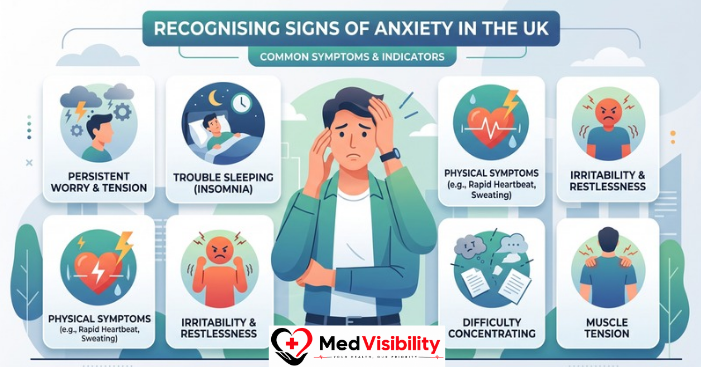
Anxiety is your body’s natural alarm system. When your brain senses a threat real or perceived it triggers a “fight, flight, or freeze” response: your heart beats faster, your muscles tense, and your senses sharpen. This response evolved to protect us from genuine danger, and in short bursts, it’s completely normal and even useful. A flutter of nerves before a job interview or a driving test is anxiety doing its job.
The difficulty starts when this alarm system doesn’t switch off, goes off too often, or reacts strongly to things that aren’t actually dangerous. When anxiety becomes frequent, disproportionate to the situation, or starts to interfere with daily life work, relationships, sleep, or basic routines it may point toward an anxiety disorder rather than everyday stress. signs of anxiety UK.
It’s worth being clear: feeling anxious sometimes doesn’t automatically mean you have a mental health condition. Most people experience anxiety at various points in life. What matters is the pattern how often it happens, how intense it feels, and how much it’s getting in the way.
READ MORE: Anxiety Symptoms UK How to Recognise Them and What Helps
Common Signs of Anxiety UK Residents Report
Anxiety doesn’t look the same for everyone. Some people mostly notice physical symptoms; others experience it as constant mental noise. Many notice a mix of both. Below are the signs that come up again and again in NHS guidance and mental health resources. signs of anxiety UK.
Emotional and Psychological Signs
- Persistent worry that feels hard to control, even about everyday things
- A sense of dread or feeling that something bad is about to happen
- Restlessness, or feeling constantly “on edge” and unable to relax
- Irritability, snapping at people more easily than usual
- Difficulty concentrating, or your mind going blank
- Rumination — replaying conversations or situations over and over
- Feeling detached from yourself or your surroundings, as though you’re watching life from a distance
- Wanting frequent reassurance from others, or worrying people are upset with you
Physical Signs
Anxiety isn’t only “in your head” — it produces very real physical sensations, which is one reason it’s often mistaken for a physical illness at first. signs of anxiety UK.
- A pounding or racing heart
- Shortness of breath or a tight chest
- Sweating, trembling, or shaky hands
- Nausea, stomach cramps, or digestive issues such as IBS-type symptoms
- Headaches or dizziness
- Muscle tension, particularly in the shoulders, neck, and jaw
- Fatigue, even after a full night’s sleep
- Sleep problems — difficulty falling asleep, staying asleep, or restless, unsatisfying sleep
Behavioural Signs
- Avoiding situations, places, or people that trigger anxious feelings
- Procrastinating on tasks that feel overwhelming
- Checking things repeatedly (messages, locks, symptoms)
- Withdrawing from social activities or isolating yourself
- Turning to alcohol, caffeine, or other substances to cope
No one experiences every item on this list, and that’s normal. Anxiety is genuinely different from person to person — some people barely notice the physical symptoms and are consumed by racing thoughts; others feel it almost entirely in their body. signs of anxiety UK.
Signs of Anxiety: Symptoms vs Possible Everyday Triggers
It can help to see how common anxiety symptoms map to situations that often bring them on. This isn’t a diagnostic tool — just a starting point for noticing patterns.
| Symptom | Common Everyday Trigger | Might Point Toward |
|---|---|---|
| Racing heart, shallow breathing | Public speaking, crowded spaces | Panic attacks, social anxiety |
| Persistent, hard-to-control worry | Ongoing life stress, health concerns | Generalised anxiety disorder (GAD) |
| Avoiding social situations | Parties, meetings, unfamiliar people | Social anxiety disorder |
| Intense fear of a specific thing | Flying, heights, spiders, injections | Specific phobia |
| Flashbacks, nightmares | Reminders of a past traumatic event | Post-traumatic stress disorder (PTSD) |
| Repetitive checking or intrusive thoughts | Fear of contamination, harm, disorder | Obsessive-compulsive disorder (OCD) |
| Fear about open spaces or being unable to escape | Public transport, crowds, being far from home | Agoraphobia |
If a pattern here feels familiar, that’s worth noting down — it can help you describe things clearly if you do speak to a GP. signs of anxiety UK.
Anxiety in the Body: Why It Feels So Physical
One of the most confusing things about anxiety is how physical it feels. Many people first go to their GP or even A&E convinced something is wrong with their heart, only to discover the cause is anxiety. This happens because the stress hormones released during an anxious episode — adrenaline and cortisol — act directly on the body. signs of anxiety UK.
Adrenaline increases heart rate and redirects blood flow to your muscles, which is why you might feel shaky or notice your chest pounding. Cortisol affects digestion, which is part of why anxiety is so closely linked with stomach issues and conditions like irritable bowel syndrome. Over time, chronically high stress hormones can also affect sleep quality, immune function, and energy levels — which is why long-term anxiety often leaves people feeling constantly tired. signs of anxiety UK.
None of this means the physical symptoms are “imaginary.” They’re a genuine physiological response — it’s just that the trigger is a thought or feeling rather than a physical injury or illness. signs of anxiety UK.
Panic Attacks: A Specific and Intense Form of Anxiety
A panic attack is a sudden, intense wave of fear that can feel frightening, especially the first time it happens. It can come on with little or no warning and often peaks within about ten minutes. Symptoms can include:
- A racing or pounding heart
- Chest pain or tightness
- Feeling like you can’t get enough air
- Sweating and trembling
- Dizziness or feeling faint
- A sense of losing control, or fear that something terrible is happening
Because these symptoms overlap with those of a heart attack, panic attacks understandably send many people to emergency departments. If you’re ever unsure whether what you’re experiencing is a panic attack or something else — particularly chest pain — always seek urgent medical attention to rule out a physical cause first. signs of anxiety UK.
What Causes Anxiety?
There’s rarely a single cause. Anxiety tends to develop from a combination of factors, including:
- Genetics and family history — anxiety can run in families
- Brain chemistry — differences in how the brain regulates fear and stress responses
- Life experiences, including trauma, childhood adversity, or ongoing stress
- Current life circumstances, such as financial pressure, work stress, relationship difficulties, or health worries
- Physical health conditions, including thyroid problems, which can mimic or worsen anxiety symptoms
- Substance use, including high caffeine intake, alcohol, or recreational drug use, and withdrawal from certain substances
Understanding the “why” isn’t always necessary to start feeling better, but it can help make sense of why anxiety has shown up now, or why it feels particularly strong around certain situations. signs of anxiety UK.
Signs of Anxiety in Different Groups
Signs of Anxiety in Adults at Work
Workplace anxiety often shows up as difficulty concentrating, procrastination followed by last-minute panic, perfectionism, avoiding meetings or emails, and physical tension by the end of the day. Some people describe a persistent low-level dread on Sunday evenings that builds through the working week.
Signs of Anxiety in Teenagers and Young People
In children and teens, anxiety can look different from adult anxiety. Watch for clinginess or separation anxiety, reluctance to go to school, stomach aches with no clear medical cause, irritability, or sudden changes in sleep or appetite. Because younger people may struggle to name what they’re feeling, anxiety often comes across as behavioural rather than emotional. signs of anxiety UK.
Health Anxiety
Health anxiety involves persistent worry about having or developing a serious illness, often alongside frequent symptom-checking, repeated GP visits, or extensive online searching for reassurance. It’s related to OCD in how the checking and reassurance-seeking cycle works, and it can be just as distressing as anxiety focused on other areas of life. signs of anxiety UK.
Self-Help Strategies That May Support You
These aren’t a replacement for professional support if you need it, but many people find the following genuinely helpful for managing day-to-day anxiety: signs of anxiety UK.
- Slow, controlled breathing — even a few minutes of slow breathing can calm the body’s stress response
- Limiting caffeine and alcohol, both of which can worsen anxiety symptoms
- Regular movement, even a short daily walk, which can lower stress hormone levels
- Consistent sleep routines — anxiety and poor sleep often feed each other
- Grounding techniques, such as naming five things you can see, four you can hear, and so on, to bring attention back to the present moment
- Writing worries down, which can help interrupt rumination
- Talking to someone you trust, rather than carrying it alone
- NHS-approved self-help tools, including free online CBT-based courses and workbooks, which many GP practices can point you toward
Small, consistent habits tend to make more difference than occasional big changes. If anxiety is mild and situational, these steps alone may be enough to bring it back under control. signs of anxiety UK.
When to See a Doctor
It’s a good idea to speak to a GP if: signs of anxiety UK.
- Anxiety is present most days for several weeks or more
- It’s starting to affect your work, relationships, or ability to do everyday tasks
- You’re avoiding more and more situations because of it
- You’re using alcohol or other substances to cope with the feelings
- You’re having panic attacks
- Physical symptoms (like chest pain, breathlessness, or persistent digestive issues) need to be checked to rule out other causes
- You’re having thoughts of harming yourself, or life feels not worth living
Your GP is a good first point of contact. They can talk through what you’re experiencing, rule out physical causes, and — if appropriate — refer you to local NHS mental health or talking therapy services (in England, you can also self-refer to NHS Talking Therapies without going through a GP first). If you feel you’re in immediate danger, call 999, or contact the Samaritans free on 116 123, available any time, day or night.
Treatment Options: A Brief Overview
Treatment for anxiety in the UK typically falls into a few categories, often used in combination:
- Talking therapies, particularly cognitive behavioural therapy (CBT), which helps identify and gradually change unhelpful thought and behaviour patterns
- Self-help and guided self-help, including structured online CBT programmes
- Lifestyle changes, such as those covered above
- Medication, which a GP or psychiatrist may discuss for moderate to severe anxiety — this is a decision made individually with a prescriber, weighing benefits and possible side effects, and is not something to start or stop without medical guidance
There’s no single “right” treatment — what works varies from person to person, and it’s common to try more than one approach before finding what helps. signs of anxiety UK.
Key Takeaways
- Anxiety involves emotional, physical, and behavioural signs, and it looks different for everyone
- Occasional anxiety is normal; it may be worth professional attention when it’s frequent, intense, or interferes with daily life
- Physical symptoms like a racing heart or stomach issues are a genuine bodily response to stress hormones, not “just in your head”
- Panic attacks are intense but generally short-lived, though they can feel alarming
- Self-help strategies can support mild anxiety, but ongoing or severe symptoms deserve a conversation with a GP signs of anxiety UK.
- Free, confidential support is available in the UK through your GP, NHS Talking Therapies, and charities like Samaritans and Mind
READ MORE: Low Testosterone Symptoms UK What to Watch For and When to Get Checked
A Note on This Article
This article is for general information only and is not a substitute for a diagnosis, medical advice, or treatment from a qualified healthcare professional. Anxiety can present differently in every person, and only a GP or mental health professional can properly assess your individual situation. If you’re concerned about your mental or physical health, please speak to your GP or another qualified professional.
FAQs
What are the first signs of anxiety?
Early signs often include restlessness, trouble concentrating, a racing heart in situations that didn’t used to bother you, and sleep that feels lighter or more disrupted than usual. Everyone’s early warning signs are slightly different.
Can anxiety cause physical symptoms like chest pain or stomach problems?
Anxiety triggers the release of stress hormones that affect the heart, muscles, and digestive system, which can cause chest tightness, a racing heartbeat, nausea, or stomach discomfort. That said, chest pain should always be checked by a medical professional to rule out other causes first.
How do I know if it’s anxiety or just normal stress?
Stress is usually tied to a specific, identifiable cause and tends to ease once the situation passes. Anxiety can persist even without an obvious trigger, and it may feel out of proportion to the situation or hard to switch off. If it’s ongoing or worsening, it’s worth speaking to a GP.
Is anxiety common in the UK?
Yes, anxiety is one of the most common mental health experiences reported in the UK, affecting people of all ages and backgrounds. Rates of reported anxiety have been a focus of NHS mental health services in recent years.
Can anxiety go away on its own?
Mild, situational anxiety often eases once the stressful period passes, especially with support and healthy coping habits. Persistent or severe anxiety is less likely to resolve without some form of support, whether that’s self-help resources, talking therapy, or medical treatment.
Where can I get free support for anxiety in the UK?
You can speak to your GP, self-refer to NHS Talking Therapies (in England), or contact charities such as Mind, Anxiety UK, or the Samaritans (116 123), all of which offer free, confidential support.
For more updates visit: medvisibility.co.uk

Other Articles



[…] program. Instead, it reflects the dietary habits historically observed in olive-growing regions surrounding the Mediterranean Sea during the mid-20th […]
[…] It helps reduce swelling and can loosen mucus, easing discomfort without any downsides for most adults. home remedies […]